A freeway breakdown can turn dangerous in seconds, especially on I-10, Loop 303, US-60, or I-17 where traffic moves fast and drivers may have little room to react. This safe freeway shoulder waiting guide explains what to do from the moment you notice trouble until a qualified roadside or towing operator arrives.
The goal is not to repair the vehicle on the shoulder if you can avoid it. Your first job is to get yourself, your passengers, and your vehicle out of the active travel lanes. Your second is to make your location easy to find without putting yourself in more danger.
Get Off the Travel Lane Early
If your vehicle is still moving, do not wait for the engine to quit completely or for a flat tire to destroy the wheel. Turn on your hazard lights immediately, reduce speed gradually, and look for the widest available shoulder, an exit ramp, or a safe parking area. A freeway exit is usually safer than a narrow shoulder, provided you can reach it without forcing the vehicle.
Avoid sudden braking or sharp steering. A vehicle with a blown tire, overheating engine, steering problem, or low oil pressure may not respond normally. Keep both hands on the wheel, ease off the accelerator, and guide the vehicle to the right as smoothly as possible.
If you cannot make it to the shoulder and are stopped in a travel lane, turn on hazards and call 911. Stay belted in unless remaining in the vehicle creates a more immediate danger, such as smoke, fire, or a location where another vehicle is likely to strike you. Do not stand in a live lane trying to wave traffic around your car.
Position the Vehicle for Visibility
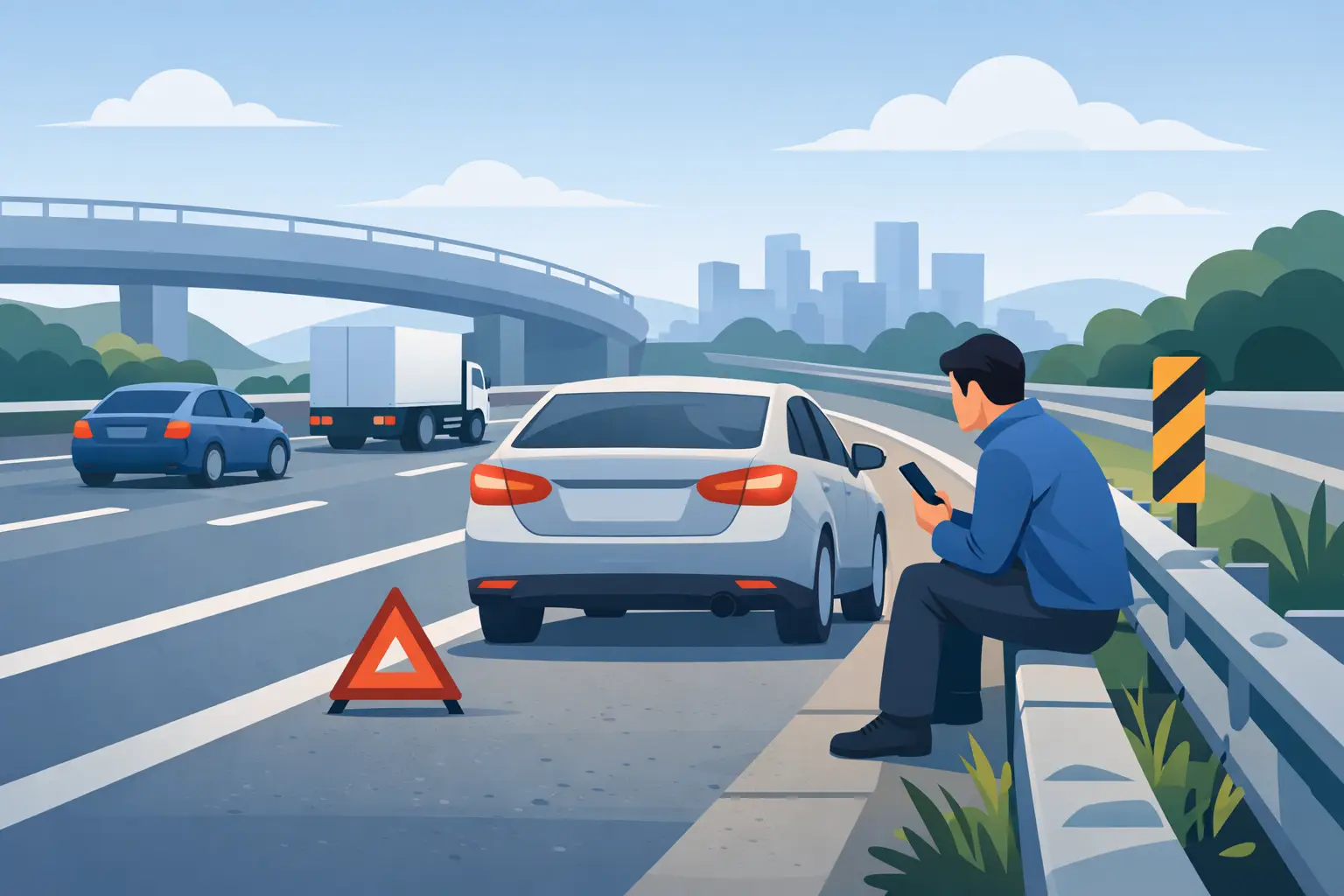
Once you are on the shoulder, pull as far to the right as conditions allow. Every additional foot between your vehicle and freeway traffic matters. Stop on level ground when possible, set the parking brake, and keep the wheels pointed away from traffic if you are parked beside a roadway.
Leave your hazard lights on. At night, during dust storms, or in heavy rain, turn on your parking lights or headlights as well if the vehicle can safely run. Visibility is a major concern on Arizona freeways, where bright sun, sudden monsoon weather, and high closing speeds can make a stopped vehicle hard to recognize.
If you have reflective triangles or road flares, use them only when you can place them without walking into traffic. On a narrow shoulder, crossing behind your vehicle or walking along the lane-side edge may create more risk than the warning devices reduce. Do not use open flames near leaking fuel, dry brush, or an overheating vehicle.
Should You Stay in the Vehicle or Get Out?
There is no single answer for every freeway shoulder. The safest choice depends on the shoulder width, traffic speed, visibility, vehicle condition, weather, and whether there is a barrier or open space away from traffic.
In many freeway situations, staying inside the vehicle with seat belts fastened is safer than standing on the shoulder. Keep the doors locked, especially if you are alone, and remain on the side farthest from traffic. If a tow truck is on the way, wait until the operator arrives, identifies themselves, and gives you clear instructions.
Get out only when there is a clear immediate threat inside the vehicle or when you can move safely to a protected area well away from the roadway. Fire, smoke, the smell of fuel, rising water, or a vehicle stopped where it may be struck are examples. Exit through the passenger-side doors if possible. Move behind a guardrail if one is available, then stay well beyond the end of the barrier rather than directly beside it.
Never wait between your vehicle and a guardrail. That narrow space can become a crush zone if another car hits your vehicle. Do not sit on the barrier, stand beside the driver-side door, or remain directly in front of or behind the disabled vehicle.
Call for Help With Useful Location Details
A fast, accurate response starts with a usable location. Tell the dispatcher the freeway name, direction of travel, closest exit, mile marker, major cross street, and a visible landmark if you have one. “On Loop 303 near Peoria” is less helpful than “northbound Loop 303, just south of the Peoria Avenue exit, on the right shoulder.”
Describe the vehicle by color, make, model, and any distinctive features. Explain what happened: flat tire, no-start, collision damage, overheating, locked keys, dead battery, or a vehicle stuck off pavement. Let the dispatcher know whether you are blocking a lane, have children or pets with you, or need specialty handling for a motorcycle, lowered car, classic vehicle, or luxury vehicle.
If the vehicle is damaged, do not guess that it can be driven or towed with two wheels on the ground. A proper recovery plan may require a flatbed, soft straps, dollies, winching equipment, or additional securement. The right truck and equipment protect the vehicle and reduce time spent exposed on the shoulder.
Do Not Attempt a Shoulder Repair Near Fast Traffic
A simple tire change can become a serious roadside incident when traffic is passing a few feet away at freeway speed. Even if you have a spare and know how to use a jack, the shoulder may be too narrow, soft, sloped, or unsafe for the job.
The same applies to checking under the hood, attaching jumper cables, or crawling beneath a vehicle. Heat, moving traffic, poor visibility, and uneven ground change the risk. A jump start or flat-tire service may be appropriate only when the vehicle is well off the roadway in a genuinely safe location.
If you have a mechanical issue and can safely stay inside, let a trained operator assess the scene. Pride Transport & Towing can dispatch 24/7 roadside and towing service throughout Surprise, the West Valley, and the Metro Phoenix freeway corridor, using equipment suited to the vehicle and conditions.
Protect Passengers, Pets, and Personal Safety
Keep everyone together and away from the traffic side of the vehicle. Children should remain buckled inside unless you have moved the group to a safe protected location. Do not allow passengers to wander toward the roadway, even if they are looking for shade or a better phone signal.
Arizona heat adds another decision point. A vehicle without air conditioning can become uncomfortable quickly, but walking along a freeway shoulder in extreme heat can be even more dangerous. If you must exit to reach a protected area, take your phone, water, and any essential medications. If remaining in the vehicle is safe, conserve battery power and use the air conditioning only as conditions allow.
Be cautious with strangers who stop to help. A good Samaritan may mean well, but you are not required to accept a ride or let anyone work on your car. You can thank them, tell them help is already on the way, and remain in the locked vehicle if that is the safer choice. If someone makes you feel unsafe, call 911.
What to Expect When the Tow Truck Arrives
When a towing operator reaches you, they will first evaluate traffic, shoulder space, vehicle damage, and the safest way to load or service the vehicle. Follow instructions about where to stand, when to exit, and whether to remain in the cab. The operator may position the tow truck to create a buffer between your vehicle and traffic before beginning work.
For a disabled vehicle, a flatbed is often the safest loading option, particularly for all-wheel-drive vehicles, collision damage, low-clearance cars, collector vehicles, and vehicles with unknown mechanical issues. Proper soft-strap securement and controlled loading matter more than rushing through the process.
Keep your keys, registration, insurance information, and destination details available. If you need a ride, ask before loading begins so the operator can explain passenger rules and the safest plan. Do not stand near cables, winch lines, ramps, or the traffic-facing side of either vehicle unless directed to do so.
A Few Minutes of Caution Can Change the Outcome
A freeway shoulder is not a safe parking spot. It is a temporary refuge while you get visible, get positioned, and get professional help moving. Make the conservative choice when conditions are uncertain: stay out of traffic, avoid roadside repairs, provide a precise location, and let trained help handle the recovery.
When you are stranded, the best next move is the one that keeps you safely away from moving vehicles until the problem can be resolved.