A car can be mechanically fine and still be one bad loading angle away from expensive damage. Splitters, air dams, side skirts, exhaust components, and low-mounted body panels do not get much room for error. That is why low clearance car towing is not a job for a basic hook-up and a rushed pull onto the nearest truck.
For lowered daily drivers, classic cars, luxury sedans, exotics, and modified vehicles across Surprise and the West Valley, the right equipment matters. So does the operator’s judgment. A safe tow begins before the vehicle moves, with an honest look at ground clearance, wheel position, suspension condition, and the space available to load.
Why low clearance vehicles need a different approach
Ground clearance is the distance between the lowest point of a vehicle and the pavement. Stock vehicles usually have enough clearance for conventional loading methods. A lowered vehicle may not. Even a mild suspension drop can make the approach angle too steep for a bumper, front lip, or underbody panel to clear the deck of a tow truck.
The risk is not limited to high-end cars. A lowered pickup, a sport sedan with an aftermarket lip, or a classic vehicle with a long front overhang can all scrape during loading if the operator does not reduce the angle. Damage can include cracked fiberglass, torn splash shields, bent exhaust components, damaged bumper covers, and undercarriage scrapes that are not visible until later.
A vehicle with air suspension adds another variable. If the system has failed and the car is sitting at its lowest setting, it may need extra ramping and careful winch positioning. A car that will not roll because of collision damage, a locked wheel, or drivetrain trouble requires an adjusted plan as well. There is no single loading method that works safely for every low-profile vehicle.
Low clearance car towing starts with the loading angle
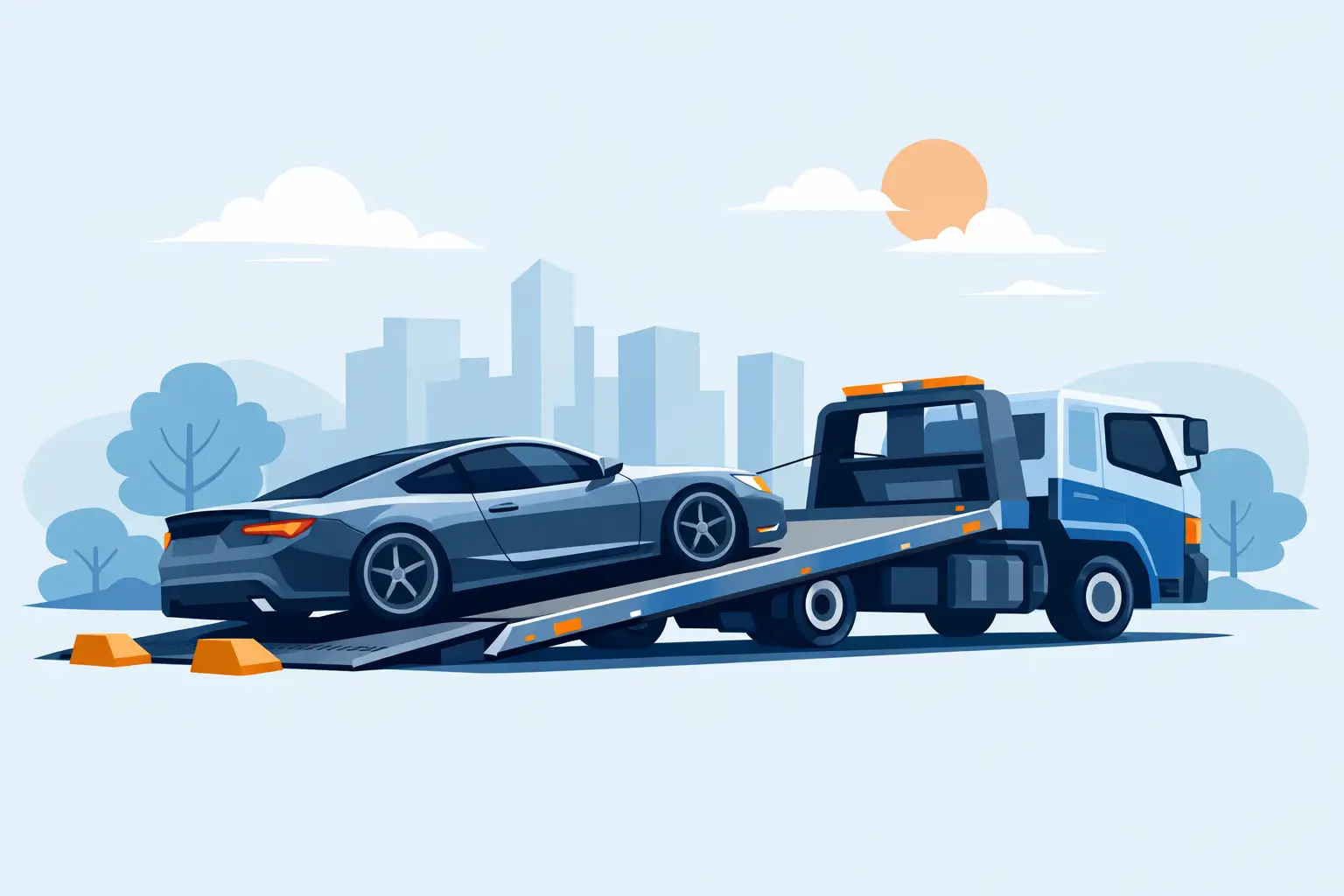
The most critical part of low clearance car towing is controlling the transition from pavement to flatbed. The flatter the approach angle, the less likely the vehicle is to contact the ground or truck deck.
An experienced operator may use extended loading ramps, low-angle ramp extensions, wood or composite ramp blocks, or a combination of these tools. These create a gradual path instead of a sharp breakover point. The vehicle is then guided up slowly, usually with a winch rather than by driving it under power.
Winching gives the operator more control over speed and alignment. It is particularly useful when a vehicle is disabled, when the driver cannot safely see the loading path, or when traction is limited by a flat tire or damaged wheel. Slow, steady movement also gives the operator time to stop if clearance becomes tight.
Proper positioning matters just as much as ramp choice. The truck needs stable, level ground whenever possible. Loading a low car from a crowned street, uneven shoulder, steep driveway, or soft dirt changes the angle and can create a contact point that was not obvious at first. On busy routes such as I-10, US-60, Loop 303, or I-17, the safest available loading position may be several feet away from where the vehicle initially stopped.
Flatbed transport is usually the safest choice
For a low-profile, luxury, collector, or exotic vehicle, a flatbed is generally the preferred transport method. All four wheels are supported on the deck, reducing road exposure and avoiding the added stress of towing with two wheels on the ground.
That said, flatbed capability alone is not a guarantee of safe handling. The bed must be loaded at the right angle, the vehicle must be secured at appropriate points, and the operator must account for very low bumpers, wide tires, and delicate bodywork. A flatbed operated without the right ramps or securement method can still damage a vehicle.
Securement should protect the vehicle, not just hold it down
Once the vehicle is on the bed, securement becomes the next priority. Chains placed carelessly around suspension parts, axle components, or body-adjacent areas can scratch, bend, or stress parts that were never meant to carry towing loads.
Soft straps and wheel-lift securement systems are the damage-conscious choice for many specialty vehicles. These systems hold the vehicle by its tires rather than attaching directly to sensitive suspension or body components. The straps should be positioned correctly, tensioned evenly, and checked before transport begins.
For vehicles with custom wheels, very wide tires, carbon-fiber components, or unusual wheelbase dimensions, the operator may need to adjust the strap placement and deck position. The goal is not simply to make the car stay put. It is to keep it stable over turns, braking, freeway speeds, and road vibration without creating rub points or contact damage.
Pride Transport & Towing uses flatbed-capable equipment and a soft-strap towing approach for vehicles where appearance, clearance, and proper securement cannot be treated as an afterthought.
What to tell the dispatcher before the truck arrives
A few details at dispatch can prevent delays and ensure the right truck and equipment arrive first. Tell the dispatcher the make and model, whether the vehicle is lowered, and whether it has a front splitter, side skirts, air suspension, custom wheels, or other modifications that affect loading.
Also explain why the vehicle needs towing. A car that starts but has a flat tire is different from one that has been in a collision, has locked wheels, or will not shift into neutral. If the vehicle is in a parking garage, at a home with a steep driveway, or on a narrow shoulder, mention that too. Access conditions can determine the safest loading plan.
If possible, take a quick look around the vehicle before the tow truck arrives. Photograph existing damage, remove loose items near the ground, and make sure the operator has keys and any relevant instructions for starting, shifting, or raising air suspension. Do not try to force the vehicle up makeshift ramps or drive it onto a truck unless the operator directs you to do so.
Common situations that require extra care
A dead battery may seem simple, but some low-clearance vehicles cannot be put in neutral without power. An operator may need to use a jump pack, the manufacturer’s emergency release procedure, or wheel dollies depending on the vehicle. Dragging a car with locked wheels can damage tires, brakes, and drivetrain components.
Collision recovery requires similar caution. A damaged bumper, broken suspension, leaking fluid, or bent wheel can change how the vehicle must be loaded. The safest option may involve dollies, additional ramping, or a different winch line angle. Speed should never replace a proper assessment.
Long-distance transport deserves the same attention. A vehicle that loads cleanly can still shift if it is not secured correctly for freeway travel. Before leaving, the operator should verify strap tension, wheel placement, deck clearance, and any potential contact points. At the destination, unloading requires the same controlled ramp angle used during loading.
Choosing a towing company for a low vehicle
The lowest price is not always the lowest-cost decision when a damaged splitter or bumper cover can cost far more than the tow itself. Ask whether the company has a flatbed available, how it handles lowered vehicles, and whether it uses soft straps or tire-based securement. A clear answer is a good sign. Vague promises without a plan are not.
You should also expect calm communication. A professional operator will explain where the vehicle can be loaded safely, ask about special concerns, and avoid rushing a process that needs precision. In an emergency, fast response matters. For a low-clearance car, careful handling matters just as much.
If your vehicle is sitting low, do not let a stressful roadside problem turn into body damage. Tell the dispatcher exactly what you drive, point out the clearance concerns, and give the recovery crew the information needed to bring it aboard slowly and safely.