A flat tire can turn a normal drive through Surprise into a roadside safety problem in minutes. Whether you are on Loop 303, headed home through Sun City West, parked near a jobsite in Waddell, or traveling I-10 after dark, a flat tire change service in Surprise gives you a safer option than trying to work beside fast-moving traffic or in Arizona heat.
The goal is not simply to get a spare tire on the vehicle. It is to protect you, avoid damage to the wheel or vehicle, and make sure the temporary repair is safe enough to get you to a tire shop. That calls for the right tools, a stable lifting point, traffic awareness, and an honest assessment of whether a tire change is the right solution.
When to Call for a Flat Tire Change Service in Surprise
If you are on a quiet, level street with a fully inflated spare, working jack, lug wrench, and enough daylight, changing a tire yourself may be reasonable. But many flat-tire situations are not that simple. The shoulder may be narrow, soft, sloped, or close to freeway traffic. You may have a low-profile vehicle with limited jack clearance, locking lug nuts without the key, a damaged wheel, or no usable spare at all.
Calling for roadside assistance is often the safer move when traffic is close, visibility is poor, or you do not feel confident lifting the vehicle. It is also the practical choice when temperatures are high. A tire change on hot pavement can become physically draining quickly, especially for families, older drivers, and anyone stranded with children or pets.
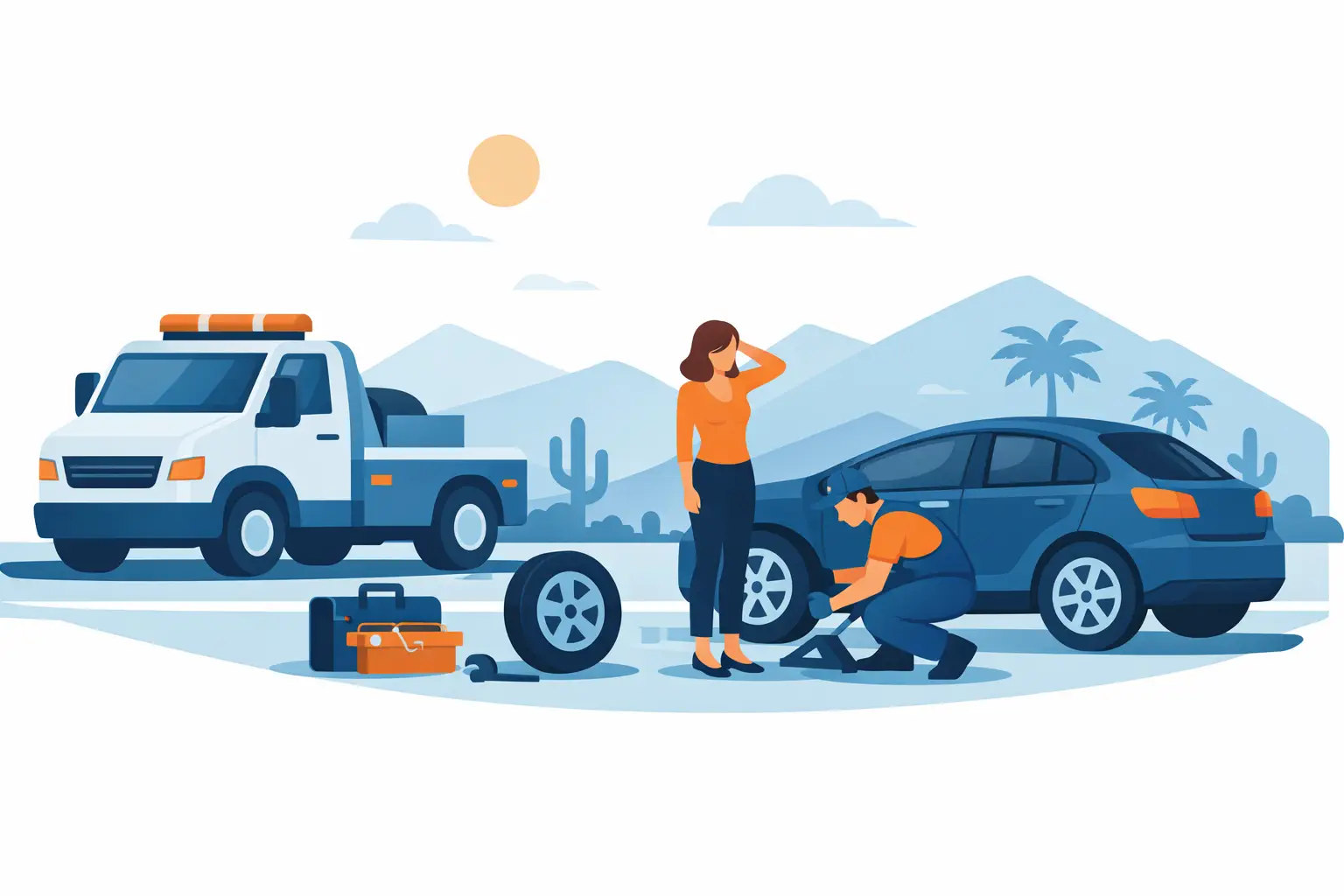
A trained roadside operator can inspect the situation, position the service vehicle for visibility, lift the vehicle at the correct points, and install the spare or serviceable tire. If the spare is flat, the tire sidewall is badly damaged, or the wheel cannot safely be driven on, towing may be the better answer.
First Steps After You Realize You Have a Flat
Do not keep driving on a flat tire unless moving a very short distance is necessary to get out of immediate danger. Driving on a deflated tire can destroy the sidewall, damage the wheel, and turn a repairable puncture into a replacement. If the vehicle begins pulling, vibrating heavily, or making a thumping sound, ease off the accelerator, keep a firm grip on the wheel, and brake gradually.
Turn on your hazard lights and look for a safe place to stop. A parking lot, wide shoulder, side street, or paved turnout is much safer than stopping in a live traffic lane. Avoid soft dirt shoulders when possible. A jack can sink into loose ground, and desert shoulders may hide uneven surfaces, rocks, or drop-offs.
Once stopped, place the vehicle in Park, set the parking brake, and keep passengers away from traffic. If you are near a freeway or major arterial road, it is generally safer to remain inside the vehicle with seat belts on unless staying there creates a greater immediate risk. Do not stand between your vehicle and passing traffic.
When you call, be ready to provide your location, vehicle make and model, tire size if known, and whether you have a spare. Mention anything that affects access or safety, such as a low-profile car, oversized truck tires, locking lug nuts, a trailer, or an unsafe roadside position. Clear information helps dispatch send the right equipment.
Why a Tire Change Is Not Always a Simple Swap
A spare tire only helps if it is usable. Many drivers discover too late that their compact spare has lost air, their vehicle has no spare, or the tire-changing tools are missing. Some newer vehicles come with an inflator kit instead of a spare. Those kits may work for a small tread puncture, but they are not a solution for a torn sidewall, bent wheel, or tire that has come apart.
The condition of the wheel matters, too. A tire that was driven while flat can leave the wheel unsafe to use. A cracked, bent, or heavily gouged wheel should not be covered up with a spare and driven as if nothing happened. The correct response may be a flatbed tow to a tire or repair facility.
For luxury, collector, exotic, and low-clearance vehicles, the risk of damage deserves extra attention. Incorrect jack placement can damage rocker panels, underbody components, battery trays, or suspension parts. Oversized brake systems, custom wheels, and special lug hardware also require care. In those cases, an operator who understands damage-conscious vehicle handling is worth calling before someone starts forcing equipment into place.
What a Professional Roadside Tire Change Should Include
A proper roadside tire change begins with a quick safety check, not with rushing a jack under the vehicle. The operator should assess traffic, road surface, tire condition, and access to the spare. The vehicle needs to be secured before it is lifted, and the jack must contact the manufacturer-designated lift point or another appropriate support point.
Lug nuts should be removed and tightened correctly, with care taken not to damage the studs, wheel finish, or locking hardware. The spare should be checked for obvious low pressure or damage before the vehicle is lowered. A temporary spare has speed and distance limits, so it is not a substitute for a proper tire repair or replacement.
At Pride Transport & Towing, roadside service is approached as a vehicle-safety job, not a quick fix at any cost. If the tire change is safe and practical, the objective is to get you moving. If it is not, the better decision is to arrange towing rather than leave you with a vehicle that cannot be safely driven.
Arizona Heat Changes the Situation
Surprise drivers deal with conditions that can accelerate tire trouble. Extreme heat raises tire pressure, stresses aging rubber, and can expose weak spots in tires that already have cracks, uneven wear, or previous damage. A slow leak may become a full flat after a long freeway run, especially when the road surface is hot.
Heat also changes the roadside experience. Metal lug wrenches, pavement, and vehicle body panels can be painfully hot. Hydration matters, but so does limiting the time you spend outside the vehicle near traffic. If a tire problem happens during a summer afternoon, do not feel pressured to handle it alone just because you know the basic steps.
After any flat, have the remaining tires inspected as well. A puncture from road debris may be isolated, but repeated low-pressure warnings can point to worn tires, valve-stem leaks, bead leaks, or an issue with the wheel. Catching those problems early can prevent the next roadside stop.
Keep These Details Ready Before You Need Help
A few minutes of preparation can make a flat tire change faster when the unexpected happens. Check your spare tire pressure during routine maintenance instead of assuming it is ready. Confirm that the jack, lug wrench, wheel-lock key, and any special adapter are in the vehicle. If you drive a truck, off-road vehicle, or customized car, make sure the spare is compatible with your current wheel and brake setup.
It also helps to know where your vehicle’s approved lift points are. You do not need to perform the tire change yourself, but this information can be useful if the vehicle has aftermarket bodywork, side steps, air suspension, or low ground clearance. Keep your phone charged when traveling outside town, particularly on longer stretches around the West Valley and Metro Phoenix corridor.
Get Back on the Road Without Taking Unnecessary Risks
A flat tire is inconvenient, but it does not have to become a dangerous roadside event or an expensive wheel repair. Pull over safely, protect yourself from traffic, and choose a tire change only when the spare, wheel, and location make it a safe option. If conditions are questionable, calling for professional roadside help is a practical decision, not an overreaction.
The best next step after the spare is installed is simple: drive carefully to a qualified tire shop and have the original tire and wheel inspected. A temporary spare is meant to get you out of a bad spot, not carry you through the week.