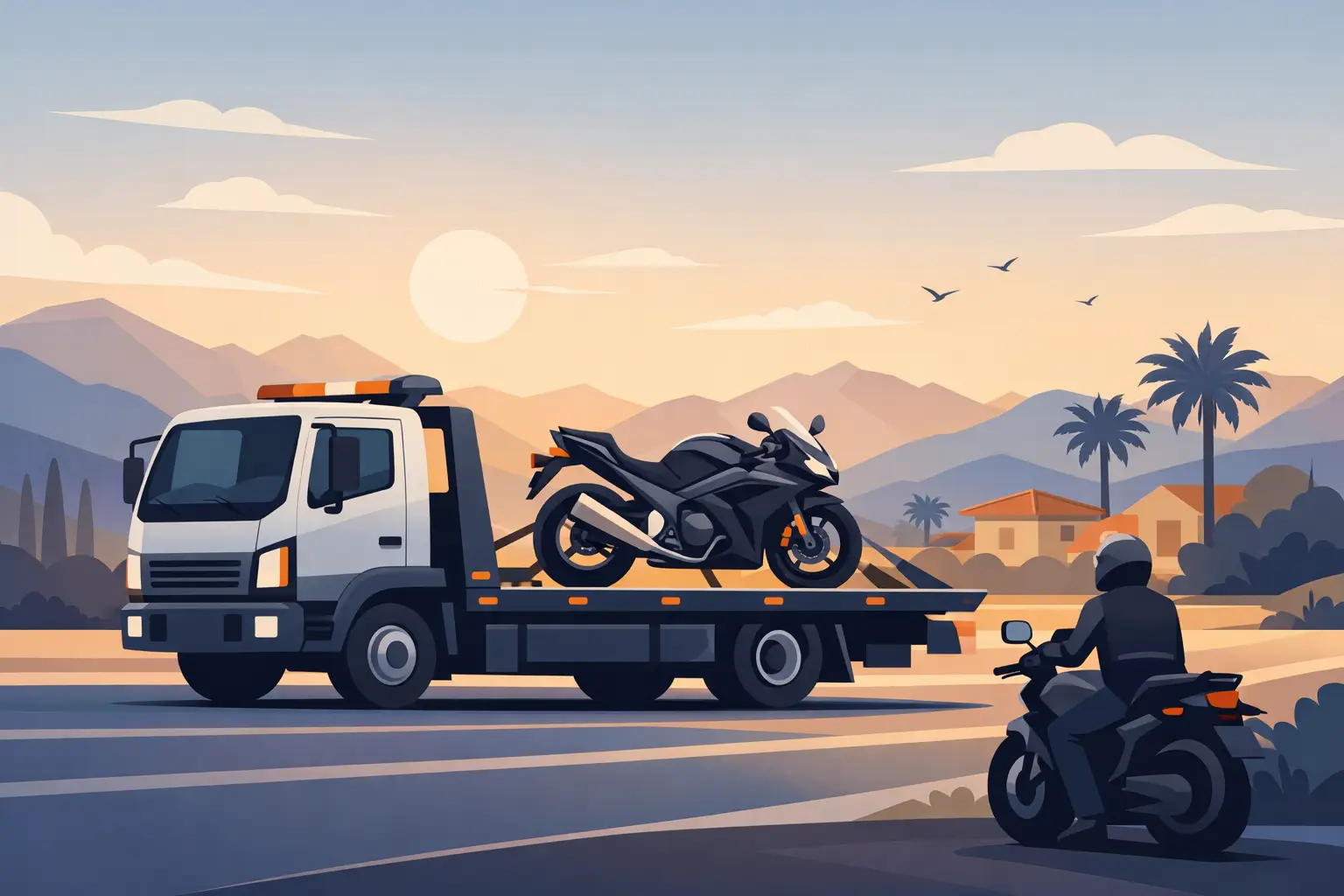
A motorcycle breakdown on Loop 303, I-10, or a quiet road outside Surprise creates a different kind of roadside problem. Your bike cannot simply be hooked up and pulled like a passenger car. Motorcycle towing west valley riders can count on requires the right loading angle, proper tie-down points, and an operator who understands that a small mistake can mean expensive damage.
Whether the issue is a flat tire, mechanical failure, collision, dead battery, or a bike that will not start after a long stop in the Arizona heat, the priority is the same: get you and your motorcycle out of harm’s way without creating another problem. A qualified towing service should treat your bike as a vehicle that needs controlled transport, not as an afterthought.
Why Motorcycle Towing Requires a Different Approach
Motorcycles have exposed components, limited ground clearance, and two wheels that must stay stable during loading and transport. Fairings, exhaust systems, controls, saddlebags, brake rotors, and suspension parts are all vulnerable when a bike is handled carelessly. Even a bike that looks straightforward to move can be damaged by improper straps or an aggressive loading angle.
The safest choice is generally a flatbed-capable tow truck equipped for motorcycle transport. A controlled ramp and a level transport surface reduce the risk of scraping the underside, losing balance during loading, or putting unnecessary strain on the bike. This matters especially for cruisers, baggers, sport bikes, touring motorcycles, and lowered models.
It also depends on the condition of the motorcycle and where it is located. A bike parked safely in a wide driveway is simpler to load than one disabled on a freeway shoulder, in a parking garage, or on a narrow desert access road. In every case, the operator should assess traffic, surface conditions, clearance, and the bike’s condition before moving it.
Safe Motorcycle Towing in West Valley Traffic and Heat
West Valley roads cover a lot of ground. A rider may break down near Glendale or Peoria during heavy traffic, outside Sun City West on a longer ride, or near Waddell where shoulder space and road conditions can change quickly. On fast-moving routes such as I-10, US-60, I-17, and Loop 303, getting the bike off the roadway quickly is essential, but speed should never replace secure handling.
Arizona heat adds another layer to the situation. High temperatures can contribute to overheating, battery trouble, tire failures, and rider fatigue. If your motorcycle stops running, do not continue trying to start it repeatedly in an unsafe location. Move yourself away from traffic if you can do so safely, turn on hazard lights if your bike has them, and call for help.
When you contact a towing dispatcher, provide the motorcycle make and model, your precise location, the direction you are traveling, and any details that affect loading. Mention if the bike is lowered, has a locked steering system, has been in a crash, will not roll, or is carrying luggage. Those details help the dispatcher send the appropriate equipment and prepare the operator before arrival.
What Proper Securement Looks Like
A professionally transported motorcycle should remain upright and stable throughout the trip. The operator should use appropriate soft straps and secure tie-down methods that avoid damaging painted surfaces, chrome, handlebars, or sensitive components. The front wheel should be stabilized, and the bike should be secured at multiple points so it cannot shift as the truck turns, brakes, or travels over uneven pavement.
Straps should not be attached carelessly to fragile parts, brake lines, cables, or bodywork. The suspension may be compressed enough to control movement, but not forced into an unsafe position. Before leaving, the operator should inspect the setup, confirm that the bike is stable, and recheck securement as needed during transport.
This is not just about high-end motorcycles. A daily rider deserves the same care as a collector bike. Still, owners of custom, classic, luxury, exotic, or low-profile motorcycles should be especially clear about special features and concerns. Custom paint, extended forks, modified exhaust, unique handlebars, or aftermarket bodywork can all affect the best loading and tie-down plan.
When You Should Call for a Tow Instead of Riding On
Some motorcycle problems may have a simple fix, but it is not worth gambling with your safety or causing more damage. A tow is usually the right move if you have a tire that will not hold air, a chain or belt failure, visible fluid leakage, electrical problems that leave the bike unreliable, overheating, brake concerns, or damage after a collision.
Riding with a questionable front tire, loose controls, bent wheel, or leaking fuel system can turn a manageable roadside issue into a serious crash. The same applies when a bike stalls repeatedly on a high-speed route. There is no prize for forcing it to the next exit when a trained tow operator can transport it to your home, trusted mechanic, dealership, or repair shop.
If you are stranded after dark, your visibility and personal safety also matter. Stand well away from moving traffic whenever possible. Avoid working on the bike from the traffic side, and do not place yourself between the motorcycle and approaching vehicles. A reliable 24/7 towing provider can coordinate an efficient pickup while you focus on staying safe.
Choosing a Motorcycle Towing Provider
Not every tow service handles motorcycles with the same level of preparation. Before agreeing to service, ask whether the company uses flatbed-capable equipment and motorcycle-appropriate soft straps. It is also reasonable to ask if the operator can handle lowered bikes, damaged motorcycles, and non-running bikes that cannot be rolled normally.
Response time matters, but clear communication matters too. You need a dispatcher who will confirm where you are, understand the type of bike involved, and provide a realistic expectation for arrival. On busy corridors or during severe weather, timing can vary. A professional company will be direct about conditions instead of making promises it cannot keep.
Pride Transport & Towing provides 24/7 dispatch and damage-conscious transport for riders throughout Surprise and the West Valley. With properly equipped trucks, trained operators, and soft-strap handling practices, the goal is to get your motorcycle loaded safely and delivered where it needs to go without adding stress to an already frustrating stop.
Prepare for a Faster, Safer Pickup
Once help is on the way, have your destination ready. Confirm whether the repair shop is open and willing to receive the motorcycle, particularly if the tow happens overnight. If you are having the bike delivered to a home, make sure the driveway or drop-off location is accessible and clear of obstacles.
Keep your keys, registration, insurance information, and any repair-shop contact details available. If the bike has a steering lock or alarm, tell the operator before loading. Remove loose personal items if practical, and point out existing damage so everyone has a clear understanding of the motorcycle’s condition before transport.
Motorcycle towing is not simply a ride from one location to another. It is a controlled recovery process that protects the bike you depend on and gets you out of a difficult roadside situation. When your ride stops in the West Valley, choose help that arrives prepared to handle it the right way.