A motorcycle can look securely loaded until the first hard brake, freeway crosswind, or uneven transition at a fuel stop exposes a loose strap or poor tie-down angle. The best motorcycle transport safety tips start before the truck, trailer, or tow rig moves: use the right equipment, secure the bike at strong points, and inspect the load more than once.
For riders across Surprise, the West Valley, and Metro Phoenix, transport conditions can change quickly. Heat, high-speed traffic on Loop 303 and I-10, road construction, and long distances all put extra stress on a loaded motorcycle. A careful loading process protects more than paint and chrome. It helps prevent a shift that can damage the motorcycle, trailer, tow vehicle, or other drivers nearby.
Best Motorcycle Transport Safety Tips Before Loading
Start by choosing a transport setup rated for the motorcycle’s weight. That includes the trailer or flatbed, loading ramp, wheel chock, straps, and attachment hardware. A lightweight utility trailer may be adequate for a small bike, but it is not automatically the right choice for a large touring motorcycle, trike, custom cruiser, or low-clearance sport bike. Check weight ratings rather than relying on how sturdy the equipment appears.
The loading surface should be level, firm, and free of loose gravel, oil, or standing water. A ramp needs a secure connection to the deck and enough capacity for the motorcycle and the person guiding it. If the ramp is steep, narrow, flexing, or wet, stop and reassess. A dropped motorcycle often happens during loading, not on the road.
Whenever possible, walk or power the motorcycle slowly up the ramp with a second person spotting from the side. Do not stand directly behind the bike where you could be pinned if it rolls back. Keep the front wheel straight, maintain steady momentum, and avoid sudden throttle input. For heavy bikes, a professional flatbed with a low loading angle is often the safer option.
Before securement, remove or stow loose items. Saddlebags, luggage, helmets, phone mounts, covers, and detachable accessories can blow away or rub against the bike during transport. If you are moving a classic, collector, luxury, or freshly restored motorcycle, take photos of its condition before loading. This creates a clear record and helps you identify any new issue after delivery.
Secure the Motorcycle at the Right Points
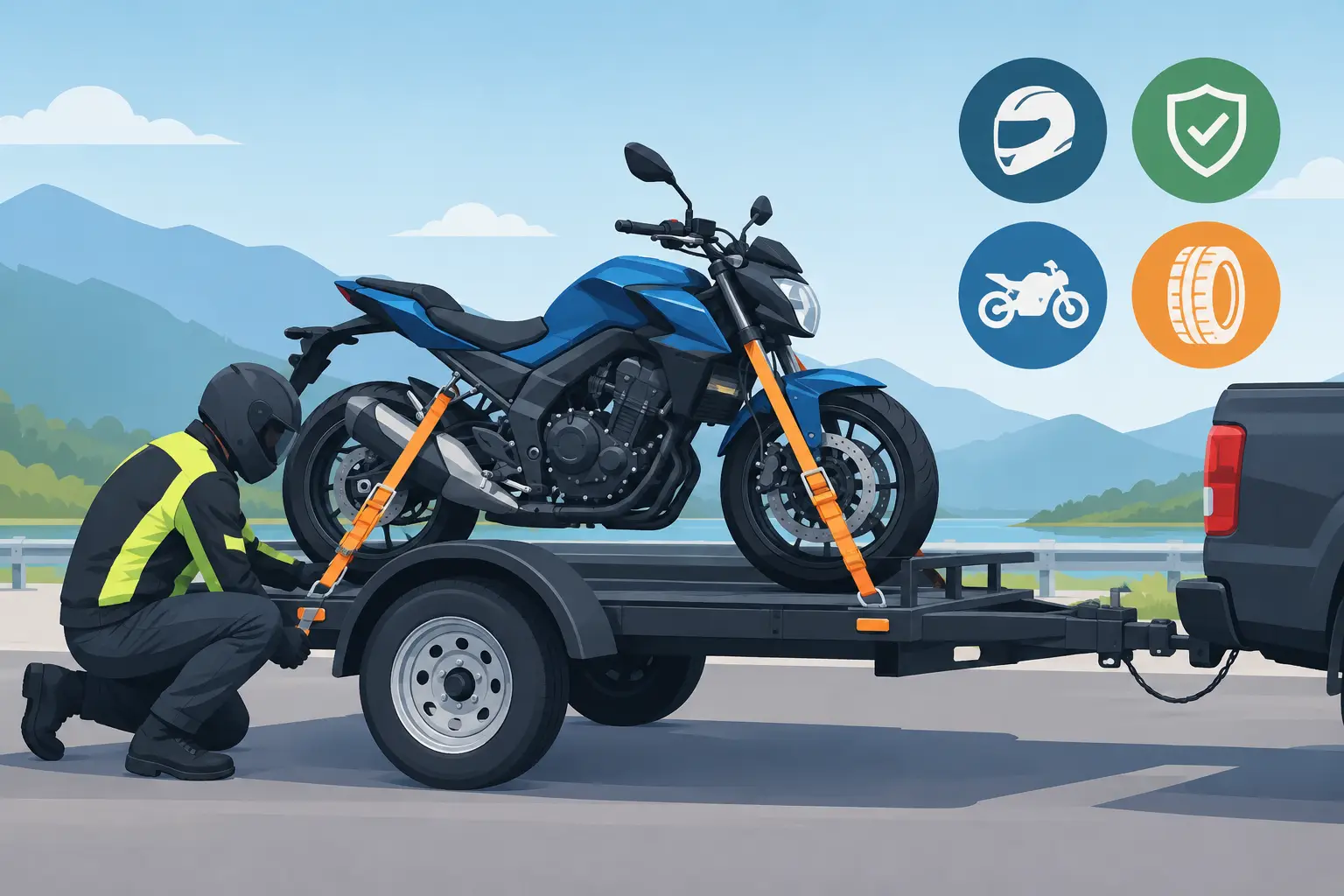
The goal is to hold the motorcycle upright and prevent forward, rearward, and side-to-side movement without crushing components or over-compressing the suspension. A wheel chock is a strong starting point, especially on a trailer, because it keeps the front tire centered while tie-downs do their job.
Use quality ratchet straps or purpose-built motorcycle tie-downs with working load limits appropriate for the bike. Frayed webbing, bent hooks, rusty ratchets, and bargain hardware have no place on a transport job. Soft loops or soft straps are especially useful around handlebars, lower triple clamps, or other approved structural points because they prevent metal hooks from scratching paint, powder coating, or chrome.
In most cases, the front of the motorcycle needs two straps pulling forward and outward from the bike. This creates a stable triangle rather than allowing the bike to lean in one direction. Compress the front suspension moderately so the straps stay tensioned over bumps, but do not cinch it down until the forks are fully bottomed out. Excessive compression can place unnecessary stress on fork seals and suspension components during a long haul.
Rear securement depends on the motorcycle and trailer setup. Use approved strong points such as the frame, rear subframe, or designated tie-down locations. Avoid routing straps around exhaust pipes, fragile bodywork, brake lines, cables, chain guards, or cast components not designed to take a transport load. Never assume a passenger peg bracket or luggage rack can safely serve as an anchor point.
Once straps are tight, secure the loose strap tails so they cannot flap in the wind, contact hot components, or work their way into a wheel. If the bike has a center stand, follow the manufacturer guidance for transport. Some motorcycles are safer secured upright on their tires rather than resting on the stand, which can shift or damage the deck under load.
Check Strap Angles and Suspension Movement
Tie-downs work best when they pull at a useful angle. Straps that are nearly vertical may not resist side-to-side movement well, while straps pulled too far sideways can overload attachment points. The bike should remain straight in the chock with balanced tension on both sides.
With the motorcycle secured, push gently at the handlebars and seat. It should not rock, roll, or lean enough to loosen a strap. This is also the time to confirm the wheels are not resting on a loose ramp, unsecured board, or equipment that could move in transit.
Protect the Bike From Damage During Transport
Securement is not only about keeping the motorcycle on the trailer. It is also about preventing avoidable contact damage. Put protective material between straps and painted panels, fairings, tank edges, or other sensitive surfaces where rubbing could occur. Do not use a loose cover unless it is specifically designed and firmly secured for towing. A cover that flaps at freeway speed can scuff paint and strain mounting points.
Low-profile motorcycles deserve additional attention at loading and unloading. Extended ramps, ramp extensions, or a low-angle flatbed may be necessary to avoid scraping a front spoiler, exhaust, frame rail, or undercarriage. For expensive customs and collector motorcycles, the cheapest transport method is not always the safest. Specialized handling can cost more, but it reduces the chance of costly cosmetic or mechanical damage.
Weather matters as well. Arizona heat can affect tire pressure, strap material, and the operator’s focus. During monsoon conditions, wet pavement and wind can make ramps slick and increase trailer sway. If weather is severe, waiting for safer conditions may be the better decision, especially when hauling a bike on an open trailer.
Inspect the Load Before and During the Trip
A final walk-around should happen immediately before departure. Confirm the trailer coupler is locked, safety chains are crossed and connected, lights work, the breakaway system is ready if equipped, and tires are properly inflated. Verify that the motorcycle straps are tight, the wheel chock is secure, ramps are stowed, and no part of the bike can contact the trailer rail, tow vehicle, or another load.
Then check it again after the first few miles. New straps can settle as the suspension moves and the motorcycle finds its position. Pull over in a safe area, inspect every tie-down, and retighten only as needed. On a longer haul, repeat the inspection at fuel stops, meal breaks, and any time you feel unusual trailer movement.
Drive with the motorcycle in mind. Increase following distance, brake early, take turns smoothly, and avoid sharp lane changes. A trailer-loaded bike adds weight and changes how the tow vehicle accelerates, stops, and responds to crosswinds. Speed may feel manageable, but abrupt inputs are what make a secure load unstable.
When Professional Motorcycle Transport Is the Safer Call
There are times when transporting the motorcycle yourself makes sense, particularly for a short trip with the correct trailer, equipment, and experience. It depends on the bike, the distance, traffic conditions, and the quality of the loading area. But if the motorcycle is disabled, damaged, low-profile, unusually valuable, or located on a busy freeway shoulder, professional transport is usually the safer route.
A trained operator can bring the appropriate flatbed-capable equipment, use damage-conscious soft-strap methods, and manage difficult loading angles without asking a rider to take unnecessary risks near traffic. That matters after a breakdown, collision, flat tire, or mechanical failure when the bike may not be safe to ride or roll normally.
Pride Transport & Towing provides motorcycle transport with the same careful approach used for specialty and high-value vehicles across the West Valley. If the setup does not look right, trust that instinct. Getting the motorcycle moved safely is always better than turning a roadside problem into expensive damage.