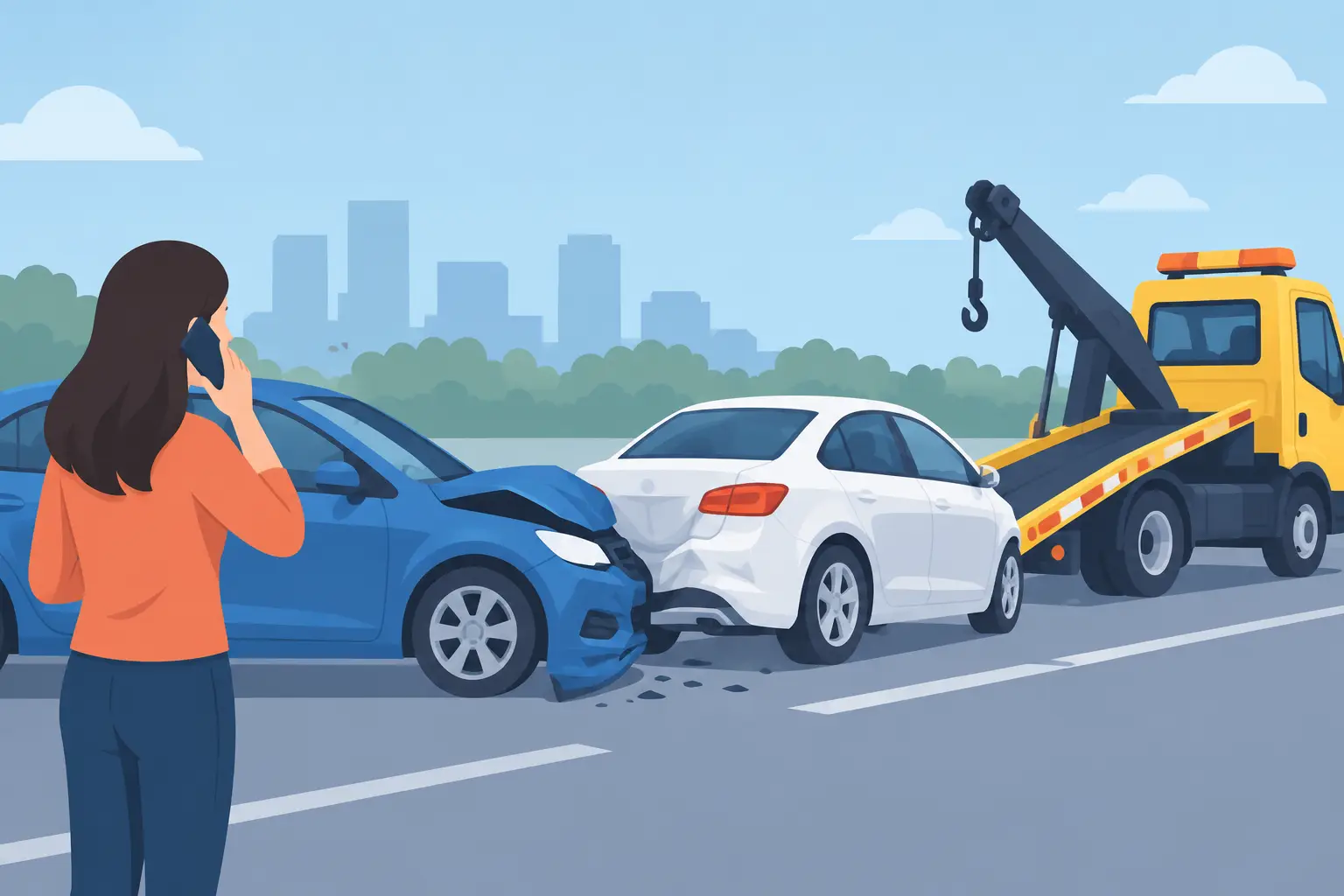
A collision on Loop 303, I-10, US-60, or a busy West Valley surface street can turn a normal drive into a dangerous situation within seconds. When you need to request emergency tow after a collision, the first goal is not moving the vehicle quickly – it is protecting people, securing the scene, and making sure the vehicle is recovered without adding further damage.
The right tow response depends on where the crash happened, whether the vehicle can roll safely, the extent of the damage, and whether police or fire personnel are still working at the scene. A clear call and a properly equipped operator can make an already stressful situation much easier to manage.
Put safety ahead of the tow request
Check yourself and your passengers for injuries before making calls about the vehicle. If anyone is hurt, if vehicles are blocking traffic, if there is a fire risk, or if fuel is leaking, call 911 first. Follow instructions from law enforcement, fire personnel, or highway responders, especially on high-speed routes where stopping on the shoulder can be hazardous.
If it is safe to do so, move yourself and passengers away from traffic. Turn on hazard lights and keep a safe distance from moving vehicles. Do not stand between vehicles, in front of a damaged vehicle, or near a blind curve. On major Phoenix-area freeways, traffic may be moving much faster than it appears.
Avoid trying to drive a vehicle just because it starts. Collision damage can affect steering, brakes, suspension components, tires, wheel alignment, lights, and cooling systems. A vehicle with a bent wheel, dragging bumper, leaking fluid, deployed airbags, or a damaged radiator should be professionally transported rather than driven away.
When to request emergency tow after a collision
Request a tow once emergency personnel have been contacted when needed and the scene is stable enough for vehicle recovery. In many cases, an officer may direct you to move the vehicle, approve the dispatch of a tow truck, or arrange a rotation tow if the roadway must be cleared immediately.
You may need an emergency tow even after a minor-looking crash. The vehicle should generally be towed if it will not start, cannot steer normally, has a flat or damaged tire, has fluid leaks, has body panels rubbing a tire, or is unsafe to operate in traffic. If you are unsure, choose the safer option. The cost and inconvenience of a tow are usually far less than the risk of causing a second crash or worsening mechanical damage.
Be cautious with unsolicited tow operators who arrive before you have called for help. If law enforcement has not assigned the tow, confirm the company name, destination, pricing process, and who authorized the service before allowing anyone to load your vehicle. You should know where the vehicle is going and how to retrieve it.
What to tell the dispatcher
A good emergency towing call saves time because the operator can arrive with the right truck, loading equipment, and recovery plan. Start with your exact location. Give the nearest cross streets, freeway direction, mile marker, exit number, or a recognizable landmark. On a freeway, say whether you are on the shoulder, in a travel lane, at an on-ramp, or in a median.
Then explain the vehicle and the collision damage. The dispatcher needs the year, make, model, color, and whether the vehicle is two-wheel drive, all-wheel drive, electric, lowered, or otherwise specialized. Mention whether the wheels turn, whether the vehicle rolls, and whether it is in a ditch, parking lot, median, or against another object.
Provide these details during the call:
- Whether police, fire, or highway response crews are on scene
- Whether anyone is injured or there are hazards such as leaking fuel
- Whether airbags deployed or a wheel, bumper, or suspension part is damaged
- Your preferred destination, such as home, a repair facility, dealership, or body shop
- Any special handling needs for a motorcycle, luxury car, classic vehicle, EV, or low-profile vehicle
If you have already opened an insurance claim, keep the claim number available. Your insurer may have a preferred process for towing and storage, but you do not need to leave an unsafe vehicle in a dangerous location while waiting for a non-emergency callback. Ask your insurer what documentation they need and whether they require the vehicle to go to a specific repair facility.
Choose the right destination before loading
The closest location is not always the best destination. A vehicle can often go to your home, a trusted body shop, a dealership, a mechanic, or an insurance-approved facility. The best choice depends on the damage, business hours, insurance requirements, and whether the shop can accept the vehicle immediately.
Before authorizing the tow, ask whether the destination is open and has room to receive the vehicle. A closed shop may require the vehicle to be left in a designated after-hours area. If no shop can accept it, temporary storage may be necessary, but storage fees can add up. Getting the destination right from the start can prevent an unnecessary second tow.
For collision damage, flatbed transport is often the safest option. It keeps all four wheels off the ground and reduces stress on potentially damaged driveline, tire, and suspension components. This is especially relevant for all-wheel-drive vehicles, EVs, low-clearance cars, and vehicles with wheel or axle damage.
Protect the vehicle and your claim
Take photos when it is safe to do so. Photograph all sides of the vehicle, the plate, visible damage, the roadway position, and any personal property inside. These photos can help with the insurance claim and establish the vehicle’s condition before transport.
Remove valuables, medications, documents, electronics, garage remotes, and anything you will need before the vehicle is loaded. If the vehicle cannot be opened or must remain secured for police or insurance reasons, tell the operator. Do not remove items that law enforcement has instructed you to leave in place.
Ask for the tow destination, the operator’s company information, and any paperwork or receipt offered at pickup. If you are unable to ride with the truck, confirm how you will access the vehicle later and what identification you may need. Keep your keys with you unless the operator advises that the shop or storage facility needs them for intake.
Specialty vehicles need a different recovery plan
A damaged collector car, exotic vehicle, lowered sedan, motorcycle, or EV should not be treated like an ordinary disabled vehicle. Improper loading can scrape a low front end, damage a wheel, pull on compromised suspension parts, or create additional body damage during securement.
Tell the dispatcher about specialty features before the truck arrives. Low-profile vehicles may require extended ramps and careful approach angles. Classic, luxury, and exotic vehicles benefit from flatbed-capable equipment and soft-strap securement that avoids unnecessary contact with painted wheels, suspension components, or delicate bodywork. Motorcycles need purpose-built tie-down procedures to remain stable without damaging the bike.
If the vehicle is off the roadway, in a ditch, or has left the pavement, recovery may require winching before loading. That work should be planned around the vehicle’s position, ground conditions, damaged areas, and safe anchor points. Trying to pull a collision-damaged vehicle out with another personal vehicle can cause injury, frame damage, or a dangerous shift in the vehicle’s position.
A local tow response can reduce the disruption
After a crash, you need direct answers: where the truck is coming from, what equipment is needed, where your vehicle will go, and what happens next. Pride Transport & Towing provides 24/7 emergency dispatch across Surprise, the West Valley, and the broader Metro Phoenix corridor, with flatbed-capable transport and damage-conscious handling for everyday and specialty vehicles.
If you are waiting in a safe location, keep your phone charged, listen for updates, and remain available to confirm your exact position. A calm, detailed towing call gives the recovery team what it needs to clear the scene safely and get your vehicle to the right place with care.