A wheel can be damaged before a tow truck ever starts moving. One rushed approach angle, a loose metal hook, or a tire pulled sideways onto a bed can leave curb rash, bent lips, scratched finishes, or stressed suspension components. To protect wheels during vehicle loading, the operator must control the loading path from the first ramp setup through final securement.
That matters for every vehicle, but especially for low-profile cars, classics, luxury vehicles, exotics, motorcycles, and cars with oversized aftermarket wheels. A reliable loading process is not about forcing a vehicle onto equipment quickly. It is about selecting the right truck, creating a clean approach, and securing the vehicle without placing unnecessary force on the wheels or body.
Start With the Right Loading Equipment
Wheel protection begins with matching the truck and equipment to the vehicle. A standard tow setup may be appropriate for some disabled vehicles, but it is not automatically the best choice for a car with low ground clearance, delicate wheels, an all-wheel-drive system, or collision damage.
For most damage-conscious transports, a flatbed provides the best foundation. All four tires can be loaded onto a stable deck, keeping the vehicle off the roadway and avoiding the rolling wear associated with a two-wheel tow. Flatbeds also give the operator more control over ramp placement, winch angle, and tie-down locations.
The approach angle is a major consideration. Low splitters, air dams, side skirts, and long wheelbases can contact the ground where ramps meet the pavement or bed. Extended ramps, ramp extensions, and properly positioned loading aids reduce that breakover angle. The goal is simple: let the tires climb gradually without scraping the front bumper or dragging the undercarriage.
A vehicle that cannot roll, steer, or brake normally needs additional planning. Skates, dollies, recovery boards, and a controlled winch pull may be safer than trying to force a disabled wheel to turn. If a wheel is flat, damaged, or locked up after a collision, the operator should stop and assess the condition before loading.
Inspect the Wheels Before Loading
A quick walk-around protects both the vehicle owner and the towing crew. Before the vehicle moves, document existing curb rash, cracks, bent rims, tire damage, loose trim, and low-hanging body panels. Photos are particularly useful when moving collector cars, leased luxury vehicles, or collision-damaged vehicles.
Inspection also identifies problems that change the loading plan. A severely low tire can roll off a ramp edge. A cracked wheel may not tolerate side loading. A vehicle with a wheel turned sharply can climb unevenly, putting the rim closer to the ramp rail. Even something as minor as a loose center cap can become a problem if a strap or recovery line catches it.
In the West Valley, heat adds another variable. Tires that have been driven on hot pavement may be soft or underinflated, while a vehicle parked for an extended period may have developed low pressure or flat spots. Proper tire condition helps the vehicle track straight up the ramp and sit securely on the deck.
Keep the Loading Area Clean and Level
Gravel, broken asphalt, loose debris, and oil can cause a tire to slip or shift during loading. Whenever possible, the truck should be positioned on firm, level ground with enough straight-line space for the vehicle to approach the ramps. Loading at an angle may look convenient, but it increases side force on the tires and wheels.
On busy roads such as I-10, US-60, Loop 303, or I-17, traffic conditions can limit ideal positioning. Safety still comes first. A professional operator may need to create a protected work area, use additional recovery equipment, or relocate the vehicle a short distance before loading. Taking a few more minutes is preferable to damaging a wheel or putting people at risk beside moving traffic.
Use a Controlled Winch Pull, Not Momentum
A vehicle should not be driven aggressively onto a flatbed. Sudden throttle, rapid steering inputs, and hard braking can shift the tire against a ramp edge or deck hardware. For specialty, inoperable, or low-clearance vehicles, a slow winch pull is often the safer method.
The winch line must be connected to an approved recovery point, not wrapped around a wheel, control arm, axle component, or suspension part unless the vehicle design and recovery situation specifically call for it. Improper attachment can bend parts, mar finishes, or pull the vehicle off line as it climbs.
During the pull, the wheels should remain as straight as practical. The operator watches both sides of the vehicle, not just the front. A car can appear centered from the driver’s side while one rear tire is riding too close to a ramp edge. Slow movement makes it possible to stop immediately, correct alignment, and continue without forcing the vehicle.
For motorcycles, the principle is similar but the equipment differs. The front tire must enter the wheel chock straight, and the bike needs stable, balanced support before straps are tensioned. A motorcycle wheel can be damaged by poor chock placement or excessive strap compression just as easily as an automotive wheel can be damaged by a careless tie-down.
Secure Tires With Soft Straps and Proper Angles
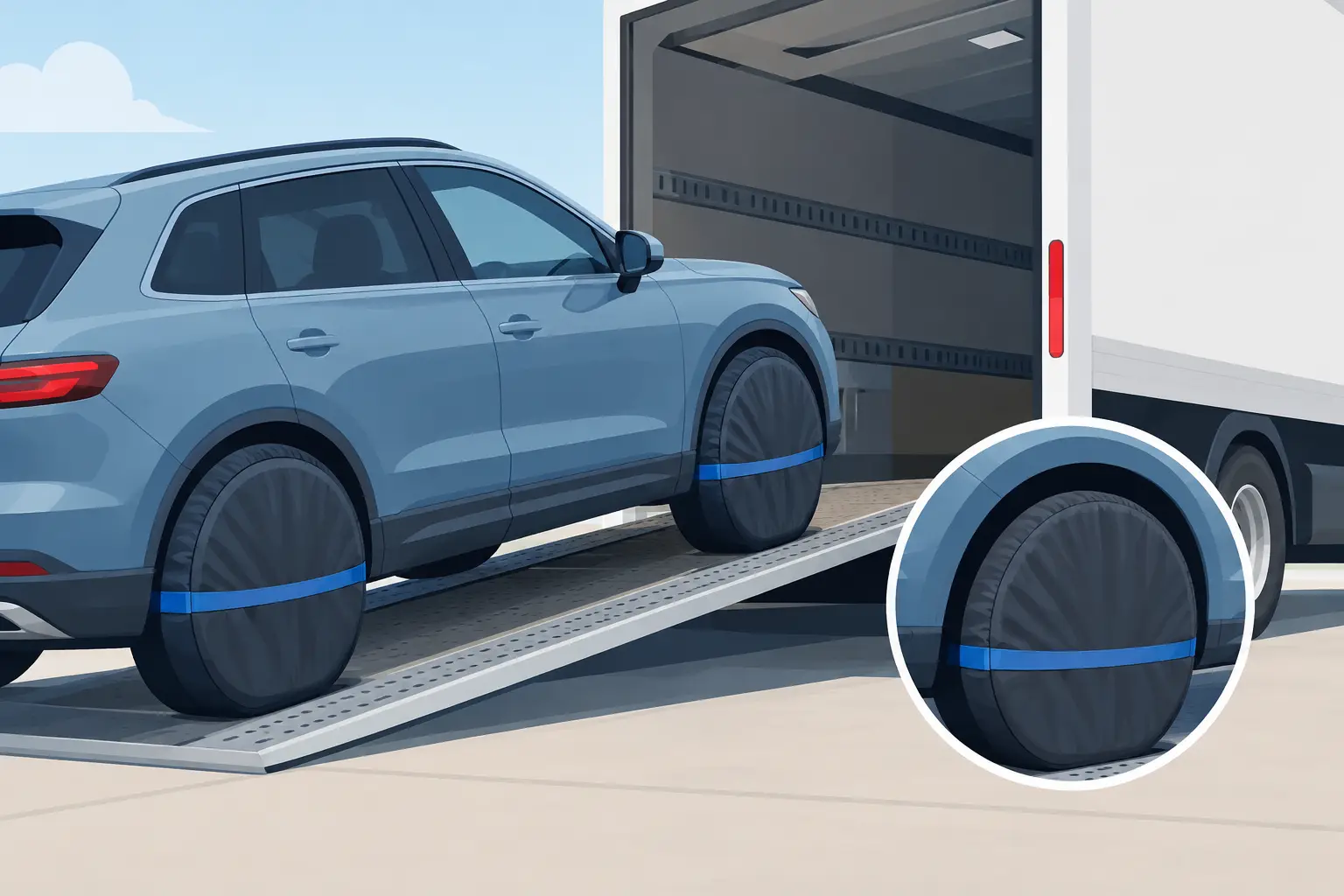
Once the vehicle is on the bed, the securement method is what keeps wheel protection from becoming an afterthought. The preferred approach for many passenger vehicles is tire basket or soft-strap securement around the tire, rather than metal chains contacting a finished wheel.
Soft straps spread the holding force across the tire and help keep hooks, chains, and ratchet hardware away from painted, polished, chrome, or machined wheel surfaces. They are especially valuable for aftermarket wheels with thin spokes, large diameters, or exposed finishes that scratch easily.
Proper placement matters as much as the strap material. A strap should sit on the tire tread or around the tire as designed, without rubbing the wheel face, valve stem, brake line, or suspension components. It must be tensioned firmly enough to prevent movement, but not so aggressively that it distorts the tire or shifts the vehicle’s suspension unnecessarily.
Tie-down angles should hold the vehicle forward, rearward, and laterally. A strap pulling too far to one side can place side load on the tire and encourage the vehicle to walk across the deck. Operators should recheck tension after the vehicle settles, especially on longer trips or after traveling over rough pavement.
Avoid These Common Wheel-Damage Mistakes
Most loading damage comes from shortcuts, not unavoidable circumstances. The following mistakes should raise concern:
- Letting a tire climb a ramp at an angle or against a raised edge.
- Using chains, hooks, or bare metal hardware directly against finished wheels.
- Winching from an unapproved point that pulls the vehicle sideways.
- Loading a low-clearance vehicle without addressing its approach angle.
- Failing to inspect wheel and tire condition before transport.
Not every vehicle requires the same procedure. A work truck with steel wheels may tolerate a different approach than a restored classic with period-correct aluminum rims. The point is not to overcomplicate a routine tow. It is to recognize when the vehicle, wheel design, condition, or loading location calls for more care.
Choose a Tow Provider That Plans Before Pulling
When you call for towing, tell dispatch about any low clearance, aftermarket wheels, wheel damage, all-wheel drive, parking garage location, or vehicle that will not roll or steer. Those details help send equipment suited to the job instead of treating every tow as a standard hookup.
For scheduled transport of collector, luxury, exotic, or low-profile vehicles, ask how the vehicle will be loaded and secured. A clear answer should include appropriate ramps, flatbed capability, controlled winching when needed, and soft-strap handling. You should not have to guess whether the crew understands the difference between moving a vehicle and moving it carefully.
Pride Transport & Towing applies that damage-conscious approach to roadside recoveries and scheduled transport throughout Surprise, the West Valley, and Metro Phoenix. When a vehicle matters to you, the loading process should show it from the moment the ramps touch the ground.
If you are waiting for a tow, keep the vehicle in a safe position, remove loose personal items, and point out any existing wheel concerns to the operator before loading begins. A short conversation at the roadside can help preserve the wheels you chose, paid for, and want to see arrive in the same condition.