A breakdown on I-10, Loop 303, I-17, or US-60 changes fast. Traffic moves at freeway speed, shoulders can disappear near ramps and construction zones, and Arizona heat can turn a minor vehicle problem into a safety issue. When you need freeway towing Phoenix drivers can count on, your first job is not diagnosing the vehicle. It is getting yourself and your passengers as safe as the situation allows.
Get Out of the Travel Lane If You Can
If the vehicle is still moving, ease off the accelerator, turn on your hazard lights, and work toward the right shoulder. Avoid sudden braking or sharp steering corrections. A tire failure, overheating warning, loss of power, or strange noise can feel urgent, but a controlled move out of traffic is safer than trying to stop immediately in an active lane.
Once you reach the shoulder, pull as far right as conditions allow. Leave room between your vehicle and the traffic lane. If there is a wide shoulder, a ramp, or a nearby safe exit, use the space available without forcing the vehicle farther than it can safely travel. Do not continue driving on a flat tire, with severe overheating, or after a collision just to reach a better location. That can turn a repairable issue into major damage.
If the vehicle cannot move out of a traffic lane, call 911. Tell the dispatcher you are on the freeway, identify the direction of travel, and give the nearest mile marker, exit, cross street, or recognizable landmark. Freeway operators and law enforcement may need to manage the traffic hazard before a tow truck can safely load your vehicle.
Stay Visible Without Creating More Risk
Hazard lights should stay on while you wait. At night, in dust, rain, or heavy traffic, visibility matters even more. If it is safe to do so, turn on interior lights after dark so approaching drivers can see the vehicle is occupied. Do not stand between your vehicle and freeway traffic, and do not attempt roadside repairs on a narrow shoulder.
Whether you should exit the vehicle depends on the location. A wide shoulder with a barrier or clear space well away from traffic may offer a safer place to wait. A tight shoulder, bridge, elevated roadway, or area with fast-moving traffic may make exiting more dangerous. Follow instructions from 911, law enforcement, or freeway response personnel. Keep children and pets secured and away from traffic at all times.
Do not set warning triangles or walk a long distance along the shoulder to look for help on a busy freeway. Those steps may be appropriate in some low-speed roadside situations, but high-speed Phoenix corridors demand a different approach. Your location, traffic conditions, and the available shoulder all affect the right decision.
What to Tell a Freeway Towing Phoenix Dispatcher
Accurate details help a towing company send the right truck, equipment, and operator. Saying “I’m on the 303” is a start, but a dispatcher needs enough information to find you without losing time in a large freeway corridor.
Have these details ready:
- The freeway name and direction of travel, such as Loop 303 northbound or I-10 eastbound.
- The closest exit number, mile marker, cross street, or landmark.
- Your vehicle’s year, make, model, color, and current condition.
- Whether the vehicle is safely on the shoulder, disabled in a lane, damaged, or unable to roll.
- Any special handling needs, including a low-profile car, all-wheel drive, motorcycle, classic vehicle, or heavy load.
Also mention if you are towing a trailer, carrying equipment, or dealing with a locked vehicle, dead battery, flat tire, or collision damage. A simple jump start may be possible in a safe location, but freeway conditions sometimes make towing the better choice. The operator needs the full picture before arriving.
Why Equipment Choice Matters on Phoenix Freeways
Not every disabled vehicle should be handled the same way. A standard sedan with a mechanical issue may be straightforward to load. An all-wheel-drive vehicle, a low-clearance sports car, a motorcycle, or a collision-damaged vehicle requires more planning. Improper towing can damage bumpers, suspension components, driveline parts, wheels, or body panels before the vehicle ever reaches a repair shop.
Flatbed-capable equipment is often the preferred option for vehicles that need full support during transport. It is especially useful for luxury, exotic, collector, and low-profile cars, as well as vehicles with drivetrain concerns or accident damage. Soft straps and proper securement points help protect wheels and bodywork instead of placing unnecessary stress on vulnerable components.
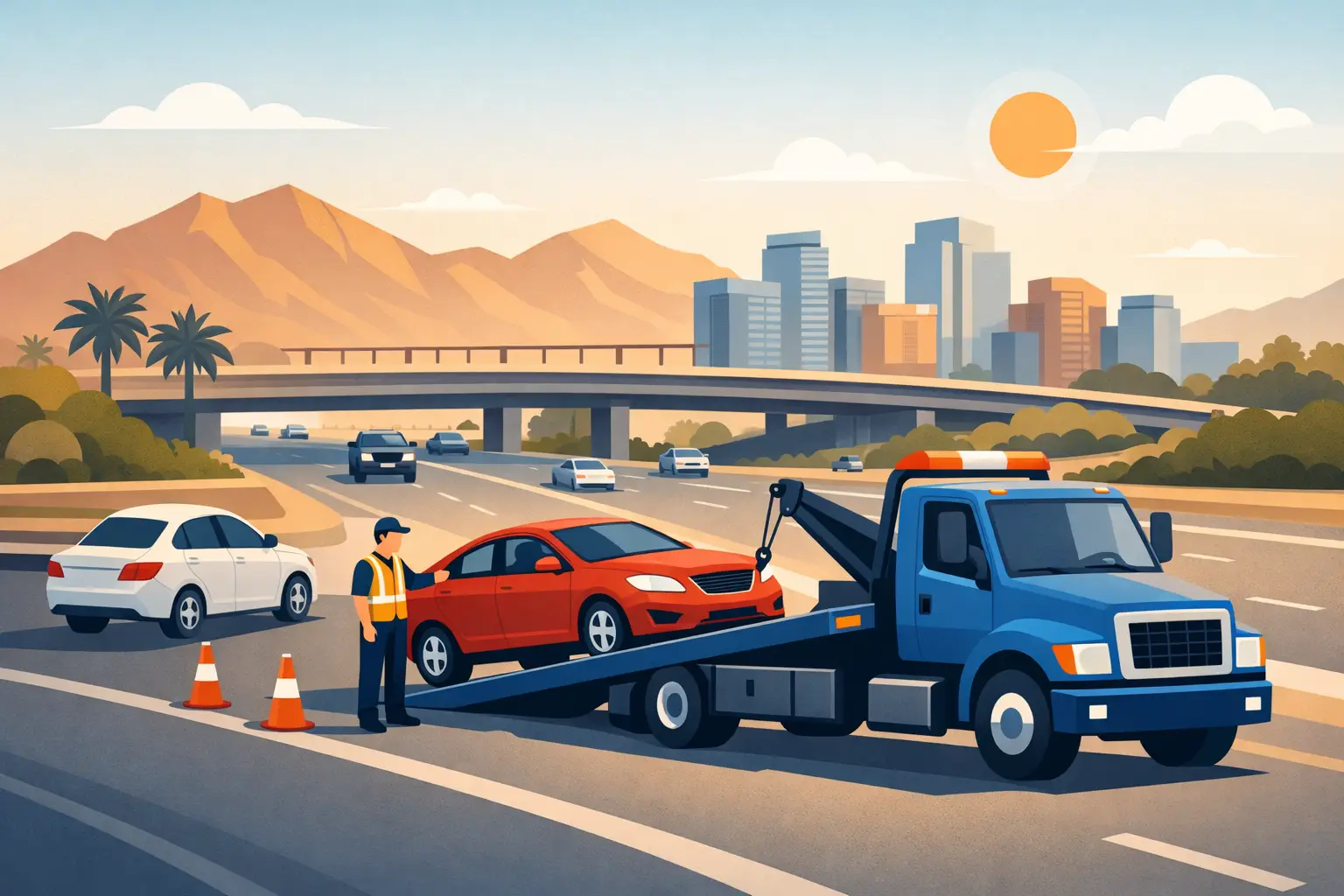
Freeway recoveries can also involve practical constraints. An operator may need to work from a narrow shoulder, around a guardrail, or under the direction of law enforcement. In those conditions, the fastest response is not always the fastest possible hook-up. Proper positioning, traffic awareness, and safe loading come first. A few extra minutes spent setting up correctly are preferable to creating another roadside hazard or risking transport damage.
Do Not Make These Common Freeway Mistakes
The stress of being stranded can lead drivers to make decisions that increase risk. One common mistake is accepting assistance from an unknown person who stops on the shoulder. Another is allowing a vehicle to be towed without confirming where it is going, how it will be handled, or whether the provider has the equipment for that vehicle.
Avoid trying to push a vehicle, change a tire beside active freeway lanes, or crawl underneath a disabled vehicle. Arizona pavement can be dangerously hot for much of the year, and freeway traffic leaves very little margin for error. If you have a roadside assistance plan, you can contact it, but make sure it understands your exact freeway location and vehicle requirements. Delays often happen because the provider has incomplete location information or dispatches equipment that does not fit the job.
If a police officer, ADOT personnel, or another authorized responder directs you to move, follow those instructions. They are managing the broader traffic risk, not just your vehicle. Keep your phone charged if possible, monitor it for dispatcher updates, and let a trusted contact know where you are once you are in a safe position.
Specialty Vehicles Need a Clear Plan
Owners of specialty vehicles should tell the dispatcher what makes the vehicle different before the truck is dispatched. A lowered car may need careful approach angles and loading practices. A classic car may have unique tie-down considerations. A motorcycle needs dedicated securement, while an off-road vehicle recovered from a wash, shoulder, or unpaved area may require winching before transport begins.
The same principle applies to work vehicles and light equipment. A contractor stranded with a trailer, skid steer, forklift, or other jobsite equipment needs an operator who can assess weight, access, and securement needs. Trying to improvise with the wrong truck can cost more time and create avoidable damage.
Pride Transport & Towing provides 24/7 response across the West Valley and Metro Phoenix transportation corridor, with ADOT-registered and inspected operations, flatbed-capable service, and damage-conscious soft-strap handling for vehicles that need extra care. That level of preparation matters when a routine tow becomes a freeway recovery.
Know Where You Want the Vehicle Taken
Before the tow truck arrives, decide on the destination if you can. Your home, a trusted repair shop, dealership, tire shop, or collision center may all make sense depending on the issue. Check whether the shop is open and able to receive the vehicle, especially late at night, on weekends, or during holidays.
If you are unsure what failed, towing the vehicle to a qualified repair facility is usually safer than authorizing repeated roadside attempts. A battery issue can be simple, but a no-start condition can also involve the charging system, starter, fuel delivery, or another electrical problem. An overheating vehicle may have a leak, failed fan, or more serious engine concern. The tow decision depends on the symptoms, your location, and the risk of further damage.
When the operator arrives, confirm the destination, point out any existing damage, and mention anything unusual about the vehicle. Then give the operator room to work. Loading and securement are safety-critical steps, especially beside freeway traffic.
A freeway breakdown is never convenient, but it does not have to become a panic situation. Get clear of traffic if you safely can, share precise location details, and choose a towing provider equipped for the vehicle and the roadway. The right response protects more than your car – it protects everyone waiting beside it.