A disabled EV on Loop 303, I-10, or a West Valley surface street needs more than a quick hook-up. Electric vehicle towing depends on the vehicle’s drive layout, ground clearance, battery condition, and manufacturer instructions. The wrong recovery method can damage an electric motor, drivetrain, underbody battery pack, or charging components before the vehicle ever reaches a repair facility.
For drivers in Surprise and across Metro Phoenix, the first priority is simple: get the vehicle out of traffic safely, then make sure the tow operator has the information and equipment to move it correctly. A proper flatbed tow is often the right answer, especially for low-profile, luxury, performance, and all-wheel-drive EVs.
Why Electric Vehicle Towing Is Different
Traditional gas-powered vehicles can sometimes be towed with two wheels on the ground, depending on whether they are front-, rear-, or four-wheel drive. EVs are different because their electric motors may remain mechanically connected to the wheels. Turning those wheels while the vehicle is powered down can generate electricity and send it where it should not go.
That is why many EV manufacturers specify that the vehicle must be transported with all four tires off the ground. A flatbed keeps the vehicle level, protects the drive system, and avoids unnecessary wheel rotation. This is not a one-size-fits-all rule, however. Every make and model has specific emergency towing procedures, so the owner’s manual remains the final authority.
EVs also carry a large, heavy battery pack along the floor of the vehicle. That low-mounted weight helps handling, but it changes loading and recovery considerations. An operator needs to account for the battery’s placement, use approved tie-down points, and avoid scraping the underside on steep loading angles, curbs, parking blocks, or damaged roadway surfaces.
What to Do When Your EV Stops
If your EV loses power, displays a serious warning message, has a flat tire, or is involved in a collision, move it to a safe location if the vehicle can still be driven. Turn on the hazard lights, keep clear of fast traffic, and call for roadside help. On a freeway shoulder, stay behind a guardrail when it is safe to do so rather than waiting near the travel lane.
When you call for service, explain that the vehicle is electric. Share the make, model, year, location, and whether it can be shifted into neutral or transport mode. Let the dispatcher know about low ground clearance, damage, a locked steering wheel, a dead 12-volt battery, or a vehicle stuck in a garage, driveway, ditch, or soft desert terrain. Those details help send the right truck rather than creating delays at the roadside.
Do not assume a no-start condition means the high-voltage battery is empty. Many EVs will not start or shift because the small 12-volt battery has failed, even when the main traction battery still has plenty of charge. In some cases, a proper jump start or 12-volt battery service can get the vehicle into the correct transport mode. In other cases, towing is still needed, but knowing the cause helps the operator plan the safest approach.
Flatbed Transport Is Usually the Safer Choice
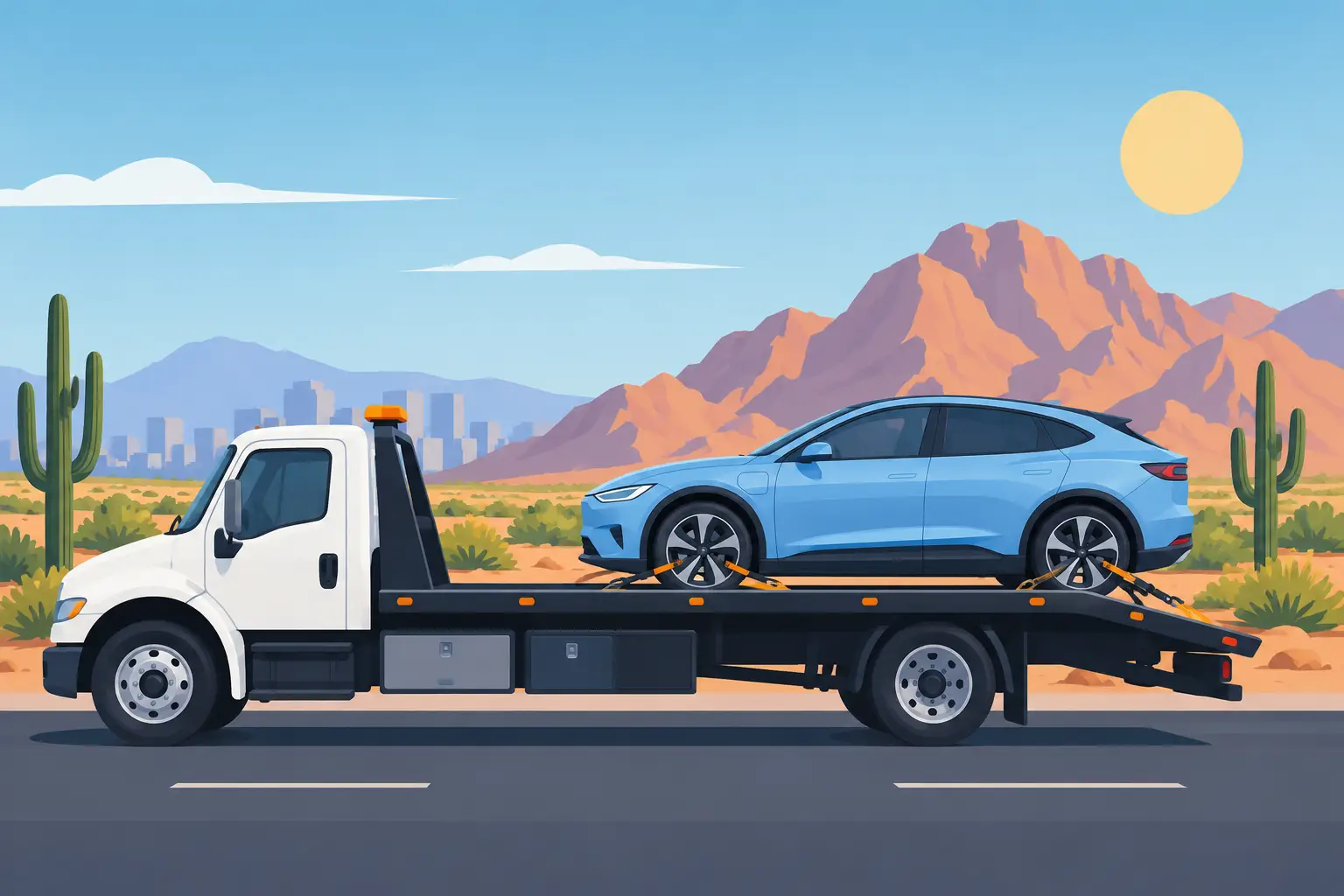
For most electric vehicle towing situations, a flatbed provides the best protection. The entire vehicle rides above the road, which prevents unintended motor rotation and reduces the chance of drivetrain damage. It is also the preferred option for many all-wheel-drive EVs and vehicles with limited clearance.
Loading is where experience matters. A low-profile EV may need extended ramps, careful winch placement, and a gradual approach to keep the front splitter, rocker panels, and battery tray from contacting the bed. Soft straps positioned around the tires are often preferable to chains attached to suspension parts or unapproved locations. Proper securement protects the vehicle without placing unnecessary stress on sensitive components.
Pride Transport & Towing uses damage-conscious loading practices and flatbed-capable equipment for vehicles that require extra care. That matters when the vehicle is a daily-driven EV, but it matters just as much when it is a high-value luxury or performance model with low clearance and expensive bodywork.
When a Wheel-Lift May Be Used
A wheel-lift can be useful for short repositioning, tight-access recovery, or situations where a flatbed cannot immediately reach the vehicle. But it should not be treated as a default solution for an EV. If wheels must remain on the ground, the operator must follow the manufacturer’s approved procedure, which may require dollies or another method to keep driven wheels from turning.
This is especially relevant after a parking garage breakdown, an apartment-complex call, or a vehicle blocked into a narrow driveway. The right recovery method depends on access, vehicle condition, and manufacturer guidance. Fast service is valuable, but avoiding a costly drivetrain or battery repair is more valuable.
Battery Damage Changes the Recovery Plan
A collision, underbody impact, or fire-related event requires added caution. The high-voltage battery pack is heavily protected, but severe damage can create risks that are not present in a routine mechanical breakdown. Warning signs can include smoke, hissing, popping sounds, unusual heat, leaking fluid, a strong chemical odor, or warning messages related to the battery system.
If you suspect battery damage, move away from the vehicle and call emergency services. Do not touch exposed orange high-voltage cables, attempt to inspect the battery pack, or connect a charger. A damaged EV may need isolation from buildings and other vehicles, and the tow operator may need to coordinate with first responders or the receiving repair facility.
Not every crash requires this level of response. A minor bumper impact with no battery warnings is different from a hard underbody strike on debris or a curb. Still, drivers should mention any impact underneath the vehicle when requesting a tow. It gives the recovery team a clearer picture before arrival.
Arizona Heat Can Complicate an EV Breakdown
Extreme heat does not make an EV unsafe to tow, but it can add urgency to the roadside situation. High temperatures put stress on people waiting outside, especially along exposed stretches of US-60, I-17, and Loop 303. They can also worsen a weak 12-volt battery and make it uncomfortable to wait in a disabled vehicle with limited climate control.
If the vehicle is safe and the main battery has enough remaining charge, use air conditioning conservatively while waiting. If you are on a dangerous shoulder, prioritize getting yourself to a safer location rather than trying to preserve range. Keep water in the vehicle during summer, and do not leave children or pets in a disabled car without reliable cooling.
For a vehicle that has simply run out of charge, a tow may be the practical solution. Mobile charging is not always available, and charging slowly from an unsuitable source at the roadside can create a longer delay. Transporting the EV to a compatible charging location, home, dealership, or repair shop can be the safer and faster decision.
Information That Helps Your Tow Arrive Prepared
A few details can prevent the wrong equipment from showing up. Before calling, take a moment to note whether the vehicle is in a garage, on a freeway shoulder, in a parking structure, or off pavement. Tell the dispatcher if the car is lowered, has aftermarket wheels, cannot be placed in neutral, or has visible front, rear, or underbody damage.
It also helps to have your key fob, vehicle access card, and owner’s manual available. Some EVs require a specific menu setting, key position, or manual release procedure before loading. Do not force the vehicle into neutral or try to drag it with another vehicle. A few minutes spent confirming the approved transport mode can prevent extensive damage.
Choose a Tow Team That Understands EV Handling
Electric vehicles are becoming common across the West Valley, but safe transport still comes down to the operator at the scene. The right team will assess access, clearance, drivetrain requirements, and the vehicle’s condition before loading. They will use appropriate equipment, protect the body and wheels during securement, and adjust the plan when the car cannot roll or shift normally.
If your EV is disabled, focus on getting out of harm’s way and giving the dispatcher accurate information. A careful flatbed recovery may take a little more planning than a basic tow, but it is the right kind of planning when your vehicle’s battery, motors, and underbody are worth protecting.