A crash on Loop 303, I-10, US-60, or a busy West Valley surface street can turn a normal drive into a fast-moving safety decision. This collision towing guide explains what to do from the moment your vehicle comes to a stop through the point it reaches a repair shop, your home, or another safe destination. The goal is simple: protect people first, prevent added vehicle damage, and keep control of where your vehicle goes.
Start With Safety, Not the Tow
If anyone is hurt, call 911 right away. Even a low-speed collision can cause injuries that are not immediately obvious, especially when adrenaline is high. Stay calm, check yourself and your passengers, and avoid moving anyone with a serious injury unless there is an immediate danger such as fire or active traffic.
If the vehicle can be driven safely and local authorities instruct you to move it, pull out of traffic and into a secure area. Turn on hazard lights. On high-speed roads around Metro Phoenix, do not stand between vehicles, in a travel lane, or on the shoulder near moving traffic. If it is safe to exit, move well away from traffic and behind a barrier when one is available.
A vehicle that is leaking fluid, has a deployed airbag, has wheel or suspension damage, or will not track straight should not be driven. Trying to limp it home or to a shop can turn collision damage into a much larger repair. It can also create an unsafe situation for you and other drivers.
Document the Scene Before the Vehicle Moves
Once everyone is safe, take clear photos of the vehicles, their positions, visible damage, license plates, roadway conditions, debris, traffic signs, and the surrounding area. Exchange insurance and contact information with the other driver. If there are witnesses, ask for their names and phone numbers.
Keep the conversation factual. You can describe what happened without guessing about fault or making promises about payment. The police report, photographs, insurance companies, and repair professionals will all have a role in sorting out the details later.
If an officer responds, ask how to obtain the incident or report number. Write down the officer’s name and badge number if available. These details can help when your insurer asks for documentation.
Watch for hidden damage
Collision damage is not always obvious from the outside. A bumper may look lightly scraped while the mounting structure, radiator support, steering components, sensors, or underbody panels have been affected. This is especially true with newer vehicles that use cameras, radar, and parking sensors.
For low-profile, luxury, collector, and exotic vehicles, even a minor impact can leave a damaged splitter, loose body panel, or compromised suspension component close to the pavement. That changes how the vehicle should be loaded. Tell the dispatcher what happened and describe the vehicle accurately so the right equipment is sent.
You Can Choose Where Your Vehicle Is Towed
After a collision, drivers are often pressured by the moment. A police-directed tow may be necessary if the vehicle is blocking traffic, creating a hazard, or must be removed quickly. But when you have a choice, be clear about your preferred towing company and destination.
Your vehicle may be towed to a collision repair facility, a dealership, your home, or a storage location, depending on its condition and your insurance process. Before authorizing a tow, confirm the destination address, ask where the vehicle will be stored if it cannot go directly to a shop, and make sure you understand any storage fees.
Avoid signing paperwork you do not understand. A legitimate towing provider should be able to explain the tow destination, release process, and any necessary authorization in plain language. Take a photo of the paperwork or request a copy before the operator leaves.
Call your insurer, but do not wait in danger
Notify your insurance carrier as soon as reasonably possible. They can explain coverage, rental options, preferred repair procedures, and next steps for your claim. However, do not delay a needed tow while you are stranded in an unsafe location just because you are waiting on an insurance callback.
Give your insurer the towing provider’s information, tow destination, and photos from the scene. Keep every receipt, including towing, storage, rideshare, rental, and personal-property replacement costs that may relate to the claim.
How Proper Collision Towing Prevents More Damage
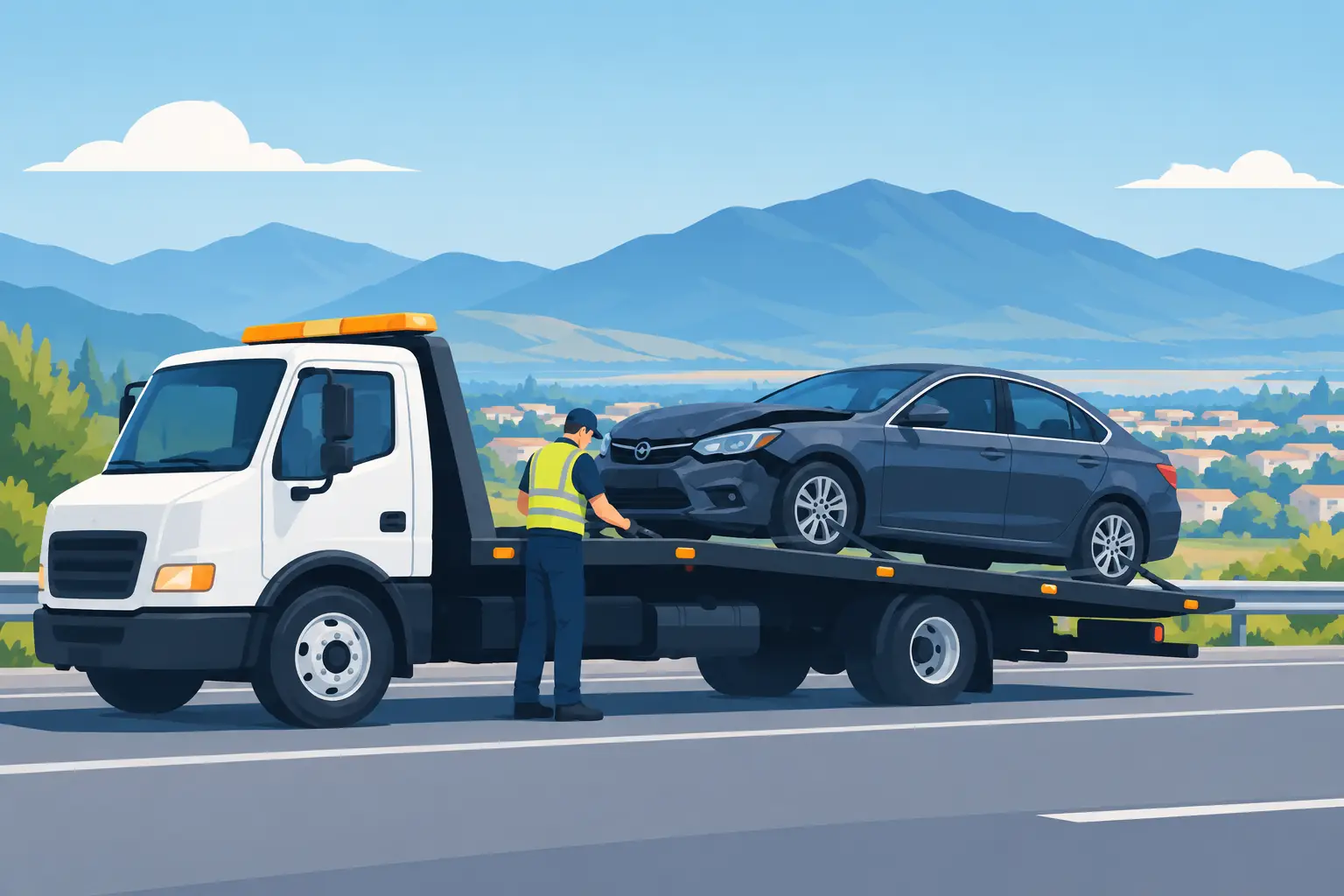
The right towing method depends on the vehicle’s damage, drivetrain, ground clearance, and location. A vehicle with front-end damage, broken steering, wheel damage, or an unknown mechanical condition is often best transported on a flatbed. Keeping all four wheels off the ground can prevent additional drivetrain, tire, suspension, and body damage during transport.
Flatbed transport also matters for all-wheel-drive vehicles, many electric vehicles, classics, motorcycles, and vehicles with low ground clearance. A damaged vehicle should not be dragged, pulled from weak components, or loaded in a way that puts pressure on cracked bodywork or suspension parts.
A trained operator will assess safe attachment points and use appropriate securement methods. For specialty vehicles, soft straps and damage-conscious loading practices help protect wheels, suspension, and paint. The lowest-profile cars may require ramps, careful approach angles, and added loading equipment to avoid scraping the front valance, undercarriage, or exhaust.
At Pride Transport & Towing, this kind of assessment is part of the job. A collision tow is not simply moving a disabled vehicle. It is controlled recovery and transport after an event that may have already compromised the vehicle’s structure or systems.
Remove What You Need Before the Tow
Before the vehicle leaves, take your wallet, identification, registration, insurance card, medication, work items, garage opener, house keys, and any valuables. Check the glove box, center console, trunk, and cargo area if it is safe to do so.
Do not remove items that could be needed as evidence, such as damaged parts lying in the cabin, and do not spend extra time inside an unsafe vehicle or active roadway. If you cannot safely retrieve something, tell the towing operator and address it later through the storage facility or repair shop.
Also photograph the vehicle from several angles before loading. This is not an accusation toward the tow provider. It is a practical record of its condition after the crash and before transport. For high-value vehicles, photos of wheels, rocker panels, bumpers, and the interior are especially useful.
Questions to Ask the Tow Dispatcher
A quick, accurate call helps the dispatcher send equipment that matches the situation. Explain whether the vehicle can roll, whether wheels are damaged or locked, whether airbags deployed, and whether there are fluid leaks. Include the make, model, year, and location, plus nearby cross streets, freeway direction, mile marker, or landmark.
Ask whether a flatbed is appropriate for your vehicle and whether the operator can handle low-clearance, luxury, classic, motorcycle, or all-wheel-drive transport if that applies. You can also confirm the estimated arrival window, destination, and payment process before help arrives.
If the collision happened off pavement, in a ditch, against a curb, or in a parking structure, say so. Recovery work may require winching, specialized positioning, or a different truck than a straightforward roadside tow. Details allow the operator to arrive prepared instead of discovering complications after reaching the scene.
After the Vehicle Arrives
When the vehicle reaches the repair shop or storage site, confirm where it was dropped and obtain the facility’s contact information. If a shop will inspect it, ask for a written estimate and make sure it checks for alignment, suspension, sensor, cooling-system, and underbody damage in addition to visible body repairs.
Do not assume a vehicle is safe to drive just because it starts. Warning lights, uneven tire wear, pulling to one side, vibration, unusual noises, or fluid loss can all point to damage that needs professional inspection. Electric and hybrid vehicles deserve added caution after a crash because battery systems and high-voltage components require trained evaluation.
A collision is stressful enough without worrying about whether your vehicle will be handled correctly. Make the safe call, document what you can, choose a capable tow when possible, and let the repair and insurance process begin with your vehicle secured where it needs to be.