A stalled vehicle on Loop 303 in July is not the time to discover your water bottle is empty, your phone cable is missing, or your spare tire has no air. The best roadside emergency kit essentials are the items that buy you time, improve your visibility, and help you make safe decisions while professional assistance is on the way.
For drivers in Surprise, the West Valley, and across Metro Phoenix, a roadside kit has to do more than handle a rainy-day flat. It needs to account for extreme heat, long freeway stretches, dust, limited shade, and the possibility of being stranded after dark. Build your kit around the situations you are most likely to face, then inspect it often enough that every item works when you need it.
Start With Safety Before Repairs
The first job of an emergency kit is not to turn you into a roadside mechanic. It is to keep you and your passengers out of danger while you assess the problem and arrange help. On a busy freeway, stopping in an unsafe location can be more hazardous than the mechanical issue itself.
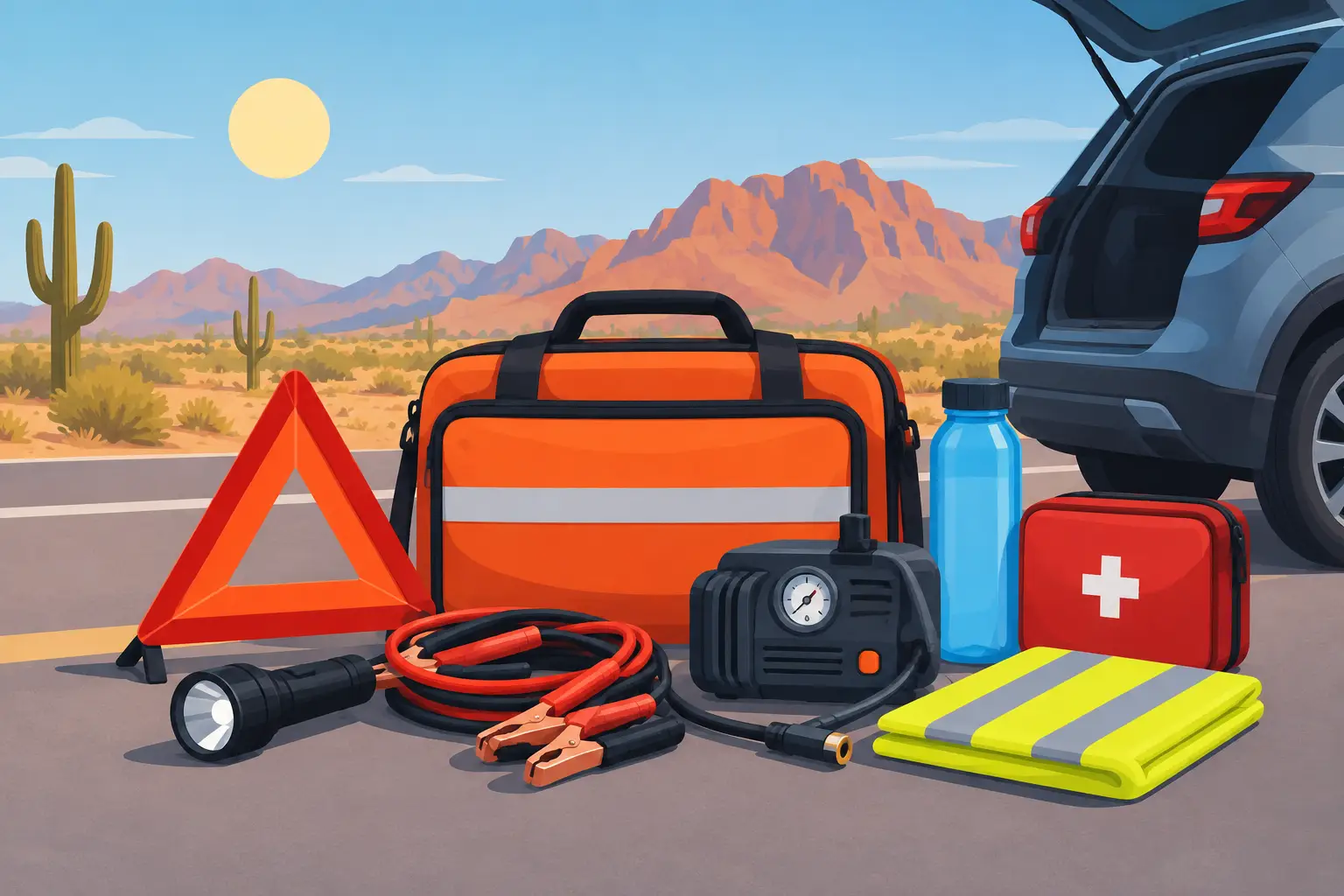
Keep a high-visibility reflective vest where you can reach it from the driver’s seat, not buried under cargo. Add roadside warning triangles or LED road flares, plus a durable flashlight with fresh batteries. Unlike traditional flares, LED units do not create an open flame, which is a practical advantage around leaking fluids, dry desert vegetation, or traffic.
A charged phone is equally critical. Carry a 12-volt charging cable that fits your phone and a fully charged power bank. If your vehicle loses electrical power or you are waiting longer than expected, that backup lets you call for a tow, share your location, and stay in contact with family.
If you can safely move your vehicle, pull as far from moving traffic as possible. Use your hazard lights, exit on the side away from traffic when conditions allow, and avoid standing between your vehicle and the roadway. Warning devices help approaching drivers see you, but they do not make an active traffic lane safe for a repair.
Best Roadside Emergency Kit Essentials for Desert Driving
Arizona heat changes the priorities inside your kit. Water, shade, and sun protection are not comfort items when temperatures climb. They are basic safety equipment.
Keep these core supplies in a sturdy, clearly labeled tote or zippered bag:
- Drinking water for every regular passenger, with extra bottles reserved for emergencies
- Electrolyte packets or shelf-stable drinks for hot-weather delays
- A compact first-aid kit with bandages, gauze, antiseptic wipes, gloves, and pain relievers
- A wide-brim hat, sunscreen, sunglasses, and a light long-sleeve layer
- A reflective emergency blanket or compact shade tarp
- Nonperishable snacks such as protein bars, trail mix, or crackers
- A flashlight or headlamp, spare batteries, and a phone power bank
- Reflective vest, warning triangles, and LED road flares
Store water out of direct sunlight when possible, and rotate it regularly. Plastic bottles and food supplies do not hold up forever in a vehicle that sits in triple-digit heat. Check expiration dates at the beginning of summer and replace anything swollen, leaking, melted, or damaged.
A small battery-powered fan can be useful, but it should not replace water, shade, or a plan to get assistance. Likewise, an emergency blanket can provide shade, yet it is not a reason to remain in a dangerously hot vehicle for an extended period. Use common sense about your surroundings. If there is a safe, air-conditioned location nearby, such as a business or service station, getting there may be the better choice.
Tools That Solve Common Roadside Problems
A few well-chosen tools can help with minor problems, provided you know how to use them safely. A tire pressure gauge and portable inflator are especially useful in the Valley, where heat can expose a slow leak or underinflated tire. Check the inflator at home first. Some plug into the 12-volt outlet, while others use a rechargeable battery, and neither helps much if it is untested.
Jumper cables are still worthwhile, but a quality lithium jump pack is often easier and safer for many drivers. It avoids needing a second vehicle to be positioned close enough for cables. Read the instructions before an emergency, keep the unit charged, and confirm that it is rated for your vehicle. Larger trucks and diesel engines may require more capacity than a compact sedan.
Your tire kit should include a lug wrench that actually fits your lug nuts, a working jack, a tire pressure gauge, and gloves. Many factory lug wrenches are limited, and some vehicles have locking lug nuts that require a special key. Verify that the key is in the vehicle. Also inspect your spare tire. A spare with low pressure, dry rot, or missing tools will not get you very far.
Do not attempt a tire change on the shoulder of I-10, US-60, I-17, or another high-speed route. The right tools do not remove the risk of fast-moving traffic, narrow shoulders, soft ground, or poor visibility. In those conditions, calling roadside assistance for a flat-tire change or tow is the safer move.
Add Items for the Vehicle You Actually Drive
One generic kit does not fit every vehicle. A family SUV, work truck, classic car, motorcycle, and off-road rig face different risks.
For a daily driver, focus on passenger comfort, phone power, visibility, and simple tire or battery support. If you regularly carry children, include age-appropriate snacks, extra water, medication, and a small activity item that can reduce stress during a wait.
For a truck used for work, add a basic tool set, spare fuses, duct tape, heavy-duty gloves, a tow strap rated for its intended use, and wheel chocks where appropriate. However, recovery straps and shackles are not beginner equipment. Improper attachment points or incorrect loading can cause serious vehicle damage or injury. A stuck work truck, trailer, skid steer, or other equipment often calls for a trained recovery operator rather than improvised pulling.
Classic, collector, luxury, exotic, and low-profile vehicle owners should emphasize prevention over roadside repair. Carry a battery maintainer plan, tire sealant only if it is compatible with the tire and wheel setup, and the correct locking wheel key. Keep specialty towing instructions in the glove box, including any low-clearance concerns, transport mode requirements, or manufacturer guidance. When a specialty vehicle cannot be safely driven, it should be loaded with equipment and securement methods designed to protect it from avoidable damage.
Motorcycle riders need a compact version of the same essentials: water, first aid, phone power, a small flashlight, tire repair equipment if they are trained to use it, and weather protection. A motorcycle that will not start or has a damaged tire should be transported correctly, not tied down casually in the back of a pickup.
Keep Documents and Information Within Reach
Your kit should also include the information that speeds up a roadside response. Put copies of your registration, insurance details, emergency contacts, and relevant roadside coverage information in a waterproof pouch. Do not leave unnecessary personal documents in the vehicle.
It helps to keep a simple note with your vehicle’s year, make, model, color, license plate number, and the location of any wheel-lock key or towing eye. When you call for help, the dispatcher will need your precise location, direction of travel, a description of the problem, and whether the vehicle is in a safe position. Mile markers, cross streets, nearby exits, or a phone-map pin all make a difference.
If you need a tow, tell the dispatcher about special factors upfront: all-wheel drive, low ground clearance, a disabled steering wheel, a flat tire, a locked vehicle, a trailer, or off-road conditions. The right truck and equipment prevent delays and reduce the chance of damage during loading.
What Not to Rely On
A roadside kit is support equipment, not a substitute for vehicle maintenance. Keep up with tire inspections, battery testing, coolant checks, oil changes, and spare-tire pressure. Before a long drive, especially during summer, check that your cooling system is operating properly and that your vehicle has enough fuel to avoid becoming stranded in the heat.
Avoid carrying loose gasoline, damaged aerosol cans, or expired fire extinguishers in a hot vehicle. Be cautious with cheap multi-tools, bargain jumper cables, and poorly rated recovery gear. These items may look prepared on a checklist but fail under real load or extreme temperatures.
Pride Transport & Towing is available around the clock when a jump start, lockout service, tire change, recovery, or tow is the safer answer. If you are on a freeway shoulder, feel unwell from heat, smell fuel, see smoke, or cannot make a repair without entering traffic, step back from the problem and call for help.
Pack your kit before the next breakdown, not after one. A few tested supplies, stored where you can reach them, can turn a stressful roadside delay into a safer wait with a clear next step.