A flatbed is often the safest choice when your car will not drive, has collision damage, sits low to the ground, or deserves extra protection. To prepare a vehicle for flatbed towing, focus on three things before the truck arrives: keeping people safe, giving the operator accurate information, and removing anything that could interfere with loading or transport.
For drivers stranded on I-10, Loop 303, US-60, or a busy West Valley surface street, preparation does not mean trying to fix the vehicle at the roadside. It means making the tow quicker and safer while helping the operator choose the right loading approach. A few clear details can prevent delays, avoid unnecessary damage, and get your vehicle moving as soon as possible.
Prepare Your Vehicle for Flatbed Towing Before Arrival
Start with your location. Share the closest cross street, freeway direction, exit number, or visible landmark. On a divided highway, confirm which side of the roadway you are on. “Near the 303” is less useful than “northbound Loop 303, just past the Peoria Avenue exit, on the right shoulder.” If you are in a parking structure, behind a gated community, or in a tight apartment lot, mention that before dispatching a truck.
Next, describe the vehicle accurately. Provide the year, make, model, color, and plate number if available. Tell the dispatcher whether it is all-wheel drive, electric, hybrid, lowered, modified, oversized, or carrying cargo. These details affect equipment selection and loading technique. A low-profile sports car may need extended ramps or a careful angle of approach. An electric vehicle may have specific transport considerations after a collision or battery warning. An all-wheel-drive vehicle is a strong candidate for a flatbed because all four tires can stay off the ground.
Be direct about the problem. Say whether the vehicle starts, shifts into neutral, rolls freely, has a locked steering wheel, a flat tire, damaged suspension, missing wheels, or collision damage. If it is stuck in park, blocked by another vehicle, sitting in a ditch, or facing the wrong direction, say so. A trained operator can handle difficult recoveries, but advance notice allows for the right plan instead of a surprise at the scene.
Put Safety Ahead of Convenience
If you are on a freeway shoulder or near moving traffic, get yourself and passengers to a safer location when it is possible to do so without crossing active lanes. Stand well away from the vehicle, preferably behind a guardrail or at a safe distance from traffic. Turn on hazard lights if they work, especially at night, during dust storms, or in poor visibility.
Do not stand between your vehicle and the approaching tow truck. Do not attempt to direct traffic, crawl underneath the vehicle, or attach a strap or chain yourself. A vehicle that seems stable can shift unexpectedly, particularly after a crash, on loose dirt, or with a failed tire or suspension component.
In a safer setting, such as a driveway or parking lot, leave adequate room around the vehicle if you can. Move a second car, trash bin, trailer, or other obstacle that may block the flatbed’s approach. A tow operator needs room to align the deck, lower ramps, winch the vehicle straight, and secure it properly. Tight spaces can still be managed, but clear access saves time.
Secure the Cabin and Gather What You Need
Before loading begins, remove valuables and personal items you will need right away. Take your wallet, medication, garage opener, house keys, work equipment, documents, and anything fragile or loose in the cabin. Check the trunk, center console, under the seats, and door pockets. If the vehicle is headed to a repair shop after hours, you may not be able to retrieve those items until the shop opens.
If it can be done safely, close all windows, lock the vehicle, and take photos of its condition. Photos are especially sensible after a collision, when transporting a collector vehicle, or when you already see scratches, wheel damage, or body-panel damage. They create a clear record of the vehicle before it moves.
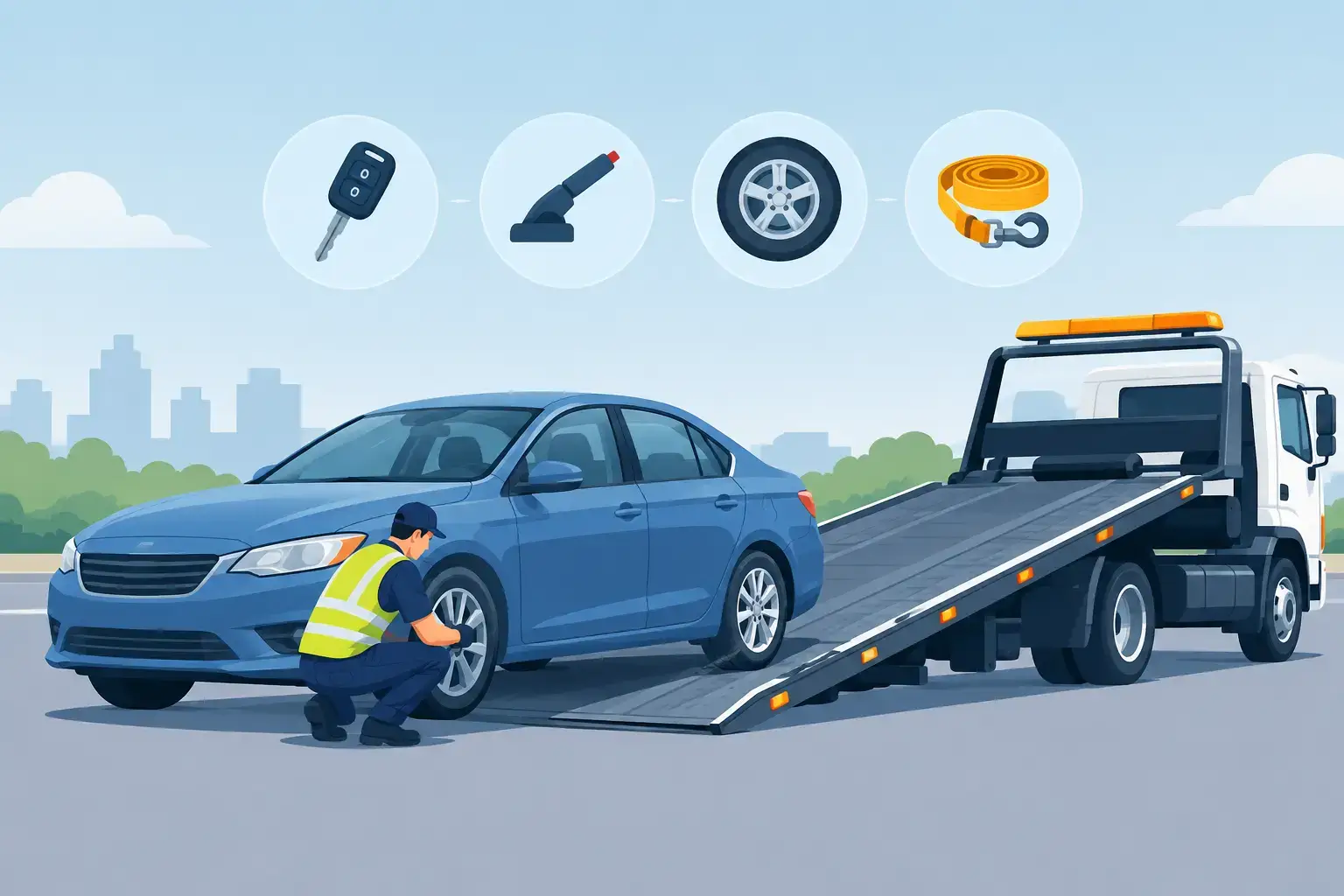
Keep the keys available for the operator. Even a vehicle that will not start may need the key fob to unlock the steering, release an electronic parking brake, place the transmission in neutral, or access a recovery point. If you have wheel-lock keys, specialty instructions, or an air-suspension mode, bring those to the operator’s attention.
Know When Not to Move the Vehicle Yourself
Some drivers try to reposition a disabled car before the flatbed arrives. That can be reasonable in a private lot if the vehicle rolls, the route is clear, and there is no mechanical or collision-related risk. On a roadway, on an incline, or after an impact, it is usually better to leave it where it is and let the towing professional assess the situation.
Do not drive a vehicle with an overheating warning, oil-pressure warning, serious fluid leak, grinding wheel, deployed airbags, damaged steering, or loose bumper. Moving it even a short distance can turn a repairable problem into engine, transmission, suspension, or body damage. If you smell fuel, see smoke, or suspect a battery fire risk, move away from the vehicle and call emergency services first.
A flat tire deserves the same judgment. If the tire is shredded, the wheel is bent, or the vehicle has been driven on the flat, do not force it forward to make loading easier. A winch-assisted flatbed load is designed for vehicles that cannot safely drive onto the deck.
Protect Low-Clearance, Luxury, Classic, and Modified Vehicles
For a classic car, luxury sedan, exotic vehicle, motorcycle, or lowered truck, the condition of the vehicle matters as much as getting it to the destination. Tell the dispatcher about low bumpers, splitters, wide bodywork, air suspension, nonstandard tires, limited ground clearance, or any known issue with the parking brake or transmission.
Flatbed transport can reduce road exposure because the vehicle rides fully off the pavement. Still, loading angle, winch placement, and tie-down method matter. Soft straps around the tires are often preferred for vehicles where contact with painted wheels, suspension components, or delicate bodywork must be avoided. The correct securement method depends on the vehicle’s design and condition, so do not assume that a hook can be placed anywhere under the car.
If your vehicle has adjustable air suspension, ask whether it should be set to a specific transport or jack mode. If it has a very low front end, do not add homemade boards or ramps unless the tow operator asks you to do so. The operator needs a controlled loading path, not an obstacle that can slide or change the ramp angle.
For motorcycles, remove or secure loose luggage, avoid leaving valuables in saddlebags, and tell dispatch about custom fairings, extended forks, or a damaged front wheel. A motorcycle needs purpose-built securement that keeps it upright without unnecessary pressure on vulnerable components.
Make the Drop-Off Go Smoothly
Confirm the destination before loading starts. Give the shop name, address, service entrance, and after-hours instructions if you have them. Some repair facilities have a designated key drop, gated yard, or specific area for disabled vehicles. If the vehicle is going to your home, make sure the driveway is accessible and identify where you want it placed.
Ask the repair shop whether they can receive the vehicle before authorizing a long tow. This is particularly useful on evenings, weekends, and holidays. If the shop is closed, a secured drop may be possible, but you should know where the keys need to go and whether the location accepts overnight arrivals.
At pickup, review any concerns with the operator before the vehicle is loaded. Point out existing damage, low-clearance areas, a wheel that does not roll, or a door that does not latch. Clear communication is not about slowing the job down. It allows the operator to choose the safest recovery and securement method from the start.
Pride Transport & Towing uses flatbed-capable equipment and damage-conscious handling for everyday disabled vehicles as well as classic, collector, luxury, and low-profile vehicles. For an urgent tow, accurate vehicle details and a safe waiting location help the dispatcher send the right response without wasting time.
When the flatbed arrives, let the operator take control of the loading area. Keep children, pets, and bystanders back, answer questions about the vehicle, and watch from a safe distance. The best preparation is simple: protect yourself first, give clear information, and let proper equipment do the careful work your vehicle needs.