A breakdown on Loop 303, I-10, US-60, or a busy West Valley surface street can turn risky in seconds. Knowing how to secure car after roadside breakdown helps protect you, your passengers, your vehicle, and the responders coming to help. The first priority is not diagnosing the problem. It is getting out of danger and making the vehicle visible.
Get Yourself Out of the Traffic Flow First
If the vehicle is still moving, steer as far from active traffic as possible. A paved shoulder, frontage road, parking lot, exit ramp, or wide side street is safer than stopping in a travel lane. Avoid sudden steering or hard braking, particularly if you have a flat tire, overheating engine, or steering issue.
Once stopped, shift into park, set the parking brake, and turn on your hazard lights. If you can safely turn the wheels away from traffic, do so. This can reduce the chance of the vehicle rolling toward the roadway if it is struck or moved.
On high-speed roads, your location matters more than convenience. A vehicle stopped partly in a lane creates a serious exposure for everyone nearby. If you cannot move fully out of traffic, call 911 right away. Tell the dispatcher your direction of travel, the closest exit or cross street, and a description of your vehicle. Then call for roadside assistance or emergency towing when it is safe to do so.
Do not stand between your vehicle and traffic. Do not stand directly in front of or behind it. On a freeway shoulder, the safest place may be inside the vehicle with doors locked and seat belts fastened, provided the car is fully off the travel lane. If the vehicle is in a lane, smoking, leaking fuel, or at risk of being hit, move away from traffic only when you can do so safely.
Make the Disabled Vehicle Easy to See
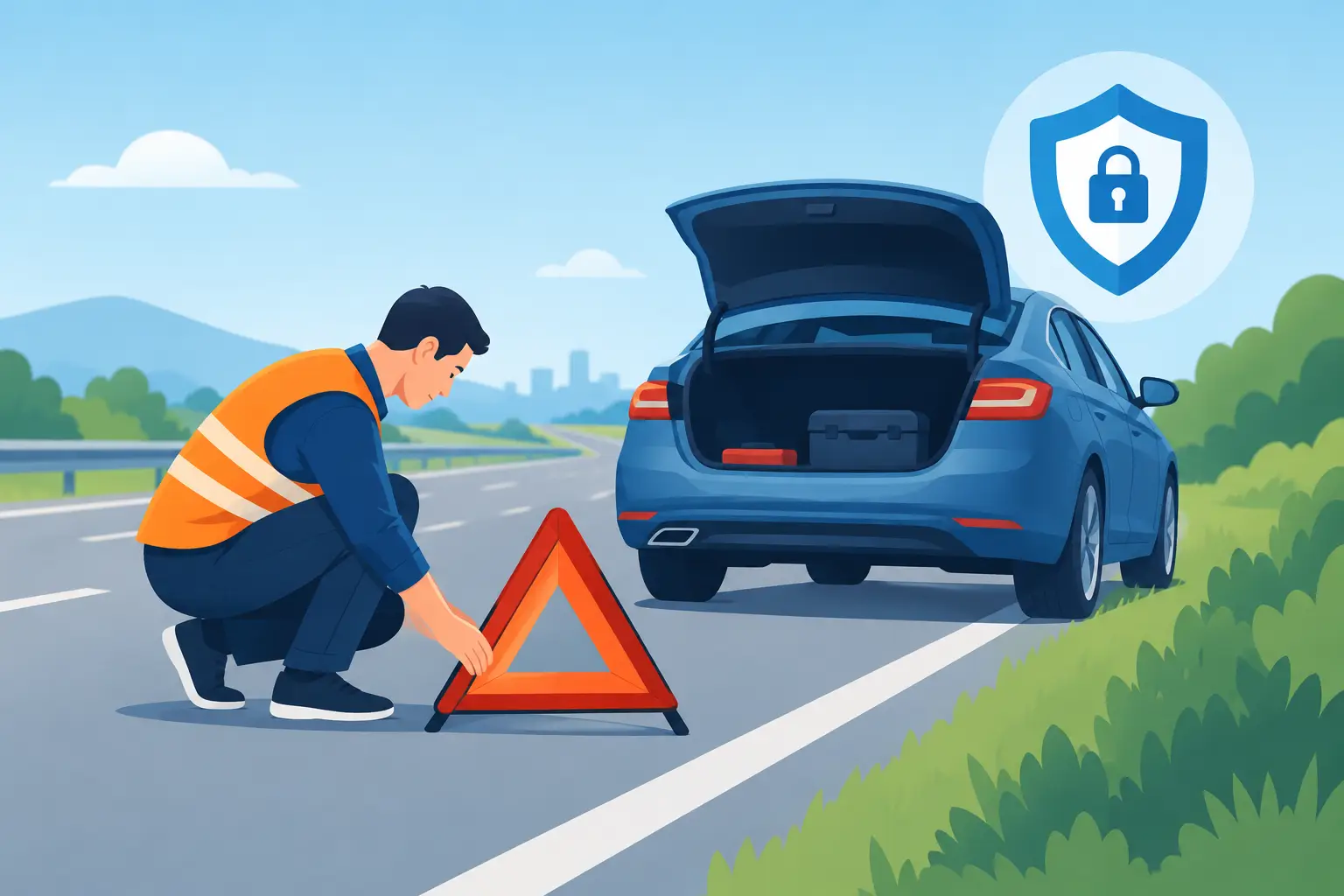
Hazard lights are the first line of warning, but they are not always enough in the Arizona sun, at night, or during dust, rain, and heavy freeway traffic. If you have reflective triangles, flares, or LED road beacons, use them only if you can place them without walking into traffic.
For a vehicle safely off the roadway, place warning devices behind the car in the direction approaching drivers will see first. Give yourself plenty of distance when road speed is high. If leaving the vehicle to set out markers means crossing lanes or walking along a narrow shoulder, skip it. Your safety is worth more than a warning triangle.
At night, keep the interior dome light off if it makes it harder for outside drivers to see your hazards. Keep your headlights on only if needed for visibility and your battery can support them. A dead battery is inconvenient. Being unseen is worse.
Lock Down the Car Without Creating a New Risk
Once everyone is safe, secure the vehicle as you would any unattended car. Close all windows, lock the doors, take the keys, and remove visible valuables. Put purses, laptops, tools, firearms, documents, and shopping bags in the trunk or take them with you if you must leave the vehicle.
That said, use judgment. If you are waiting in an exposed freeway location, do not spend extra time reorganizing belongings or searching through the cabin. Secure what is immediately accessible, get to a safe position, and let the tow operator handle the vehicle when they arrive.
If you need to leave a vehicle overnight, take your registration, insurance information, garage remote, house keys, and any toll tags or access cards. Photograph the vehicle’s condition and its location. Include close photos of wheels, bumpers, doors, and any existing damage. This is especially useful after a collision, a tire failure, or a recovery from a ditch or off-road area.
Never leave a child, pet, or vulnerable passenger inside a disabled vehicle in Arizona heat. Cabin temperatures rise quickly, even when the outside temperature does not feel extreme. Move everyone to a shaded, secure location if one is safely available.
Be Careful With the Hood, Tires, and Engine Bay
Many drivers open the hood automatically after a breakdown. That is not always the right move. An open hood can block visibility for other drivers, invite an unsafe inspection on the shoulder, and create problems if smoke or fire is involved.
If the engine is overheating, turn off the air conditioning and stop the engine as soon as you are safely parked. Do not remove the radiator cap. Pressurized coolant can cause severe burns, even after the vehicle has been shut down. Wait for the engine to cool and let a trained roadside technician assess the situation.
For a flat tire, avoid attempting a tire change where traffic is close or the ground is soft, uneven, or sloped. A factory jack can shift, particularly on desert shoulders with loose gravel. If the wheel is damaged, lug nuts are seized, or your vehicle has no usable spare, a tow is the safer answer.
The same caution applies to battery problems. A jump start may get you moving, but it does not correct a failing alternator, damaged cable, or battery that will not hold a charge. If the vehicle stalls again or warning lights return, do not keep taking chances in traffic. Arrange a tow to a trusted repair facility.
Protect Your Vehicle Before the Tow Arrives
When you call for service, share the details that affect safe loading: your exact location, vehicle make and model, whether it is all-wheel drive, whether it has a flat tire or locked wheel, and whether it is sitting in a garage, ditch, parking structure, or off-road area. Mention low ground clearance, custom bodywork, air suspension, or mechanical damage.
This information determines the right truck, loading method, and recovery equipment. A basic hook-up approach is not appropriate for every vehicle. Low-profile, luxury, classic, exotic, and collector cars often need a flatbed and careful loading angles to prevent bumper, splitter, undercarriage, and wheel damage.
Before a tow operator arrives, remove loose items from the ground around the vehicle if it is safe to do so. Keep your keys available, but do not hand them to someone who cannot identify the dispatched company. Confirm the name of the provider, truck description if available, and destination before loading begins.
A professional operator should explain the plan when the situation allows. For specialty vehicles, ask how the vehicle will be secured. Soft straps around the tires help avoid contact with sensitive suspension components, painted wheels, and body panels. If your vehicle has a specific towing procedure in the owner’s manual, share it with the operator.
Know When to Wait Inside and When to Move Away
There is no single rule for every breakdown. It depends on where you are stopped, traffic speed, weather, and the condition of the vehicle.
If you are fully off the road in a well-lit parking lot or wide shoulder, staying inside with doors locked may be the best choice. Keep your phone charged, watch for the tow truck, and avoid accepting help from unknown people. If someone approaches and makes you uncomfortable, call 911.
If the car is in an active lane, close to fast-moving traffic, leaking fuel, or producing smoke, get yourself and passengers to a safer location as soon as possible. Move well away from traffic and stay upwind if there is smoke or a fluid leak. Do not return to retrieve items unless emergency personnel say it is safe.
Dust storms deserve extra caution across the West Valley. Visibility can disappear quickly, and other drivers may not see a stopped vehicle until it is too late. Keep lights on, get as far off the roadway as possible, and avoid stopping under overpasses where visibility and traffic patterns can become more dangerous.
Give Dispatch the Information That Speeds Up Help
A clear call helps get the correct equipment to you faster. Start with your location: highway, direction of travel, mile marker, nearest exit, cross streets, or a recognizable nearby business. Phone maps are useful, but confirm the pin is accurate before sharing it.
Then explain what happened and whether anyone is injured. Tell dispatch if the vehicle is blocking traffic, has a flat, will not start, is locked, has gone into a ditch, or needs a winch-out. If you are transporting a motorcycle, have a low-clearance vehicle, or need light equipment moved, say so upfront. The right equipment on the first trip reduces delays and prevents unnecessary handling.
For drivers in Surprise, Peoria, Glendale, El Mirage, Sun City, Sun City West, Waddell, and throughout Metro Phoenix, Pride Transport & Towing provides 24/7 dispatch for roadside help, towing, recovery, and damage-conscious specialty transport. The goal is straightforward: get you out of an unsafe situation and handle your vehicle with the care its condition requires.
A roadside breakdown is stressful, but it does not have to become a second emergency. Get clear of traffic, make the vehicle visible, secure your belongings, and give responders accurate details. Those few decisions can protect the people in your car and make the recovery safer from the moment help is on the way.