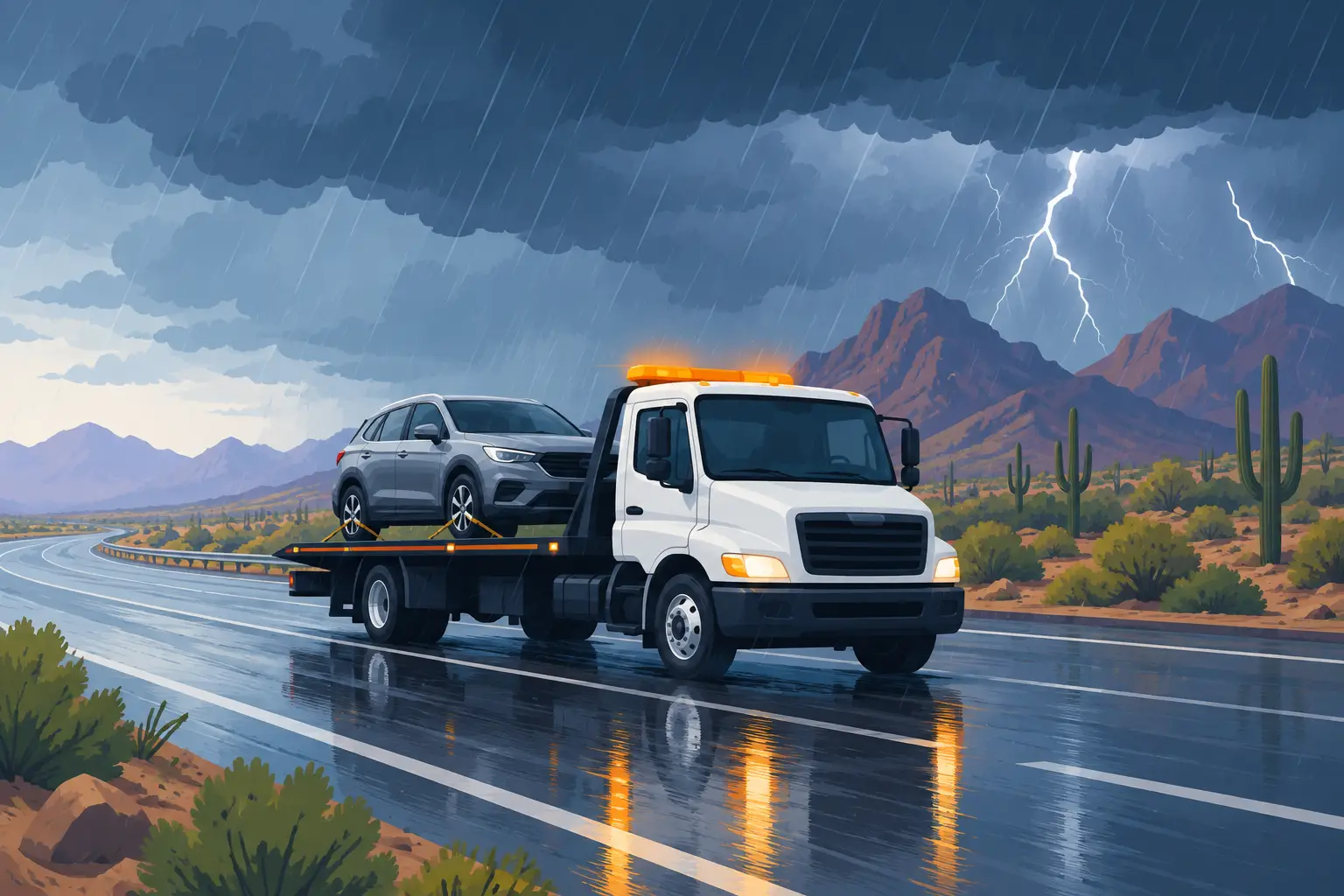
A dry roadway can turn slick in minutes when a monsoon cell moves across Surprise, Peoria, Glendale, or the open stretches around Loop 303. Visibility drops, standing water hides hazards, and drivers often discover too late that their vehicle will not restart, has hydroplaned into a curb, or is stuck off the pavement. Towing during monsoon conditions requires more than getting a vehicle from Point A to Point B. It calls for a calm driver, a properly equipped tow operator, and recovery decisions that protect people before property.
Arizona monsoons bring a particular kind of roadside risk. The first rain after long dry periods mixes with oil and debris on the road surface, creating an unexpectedly slippery film. Gusty winds can push debris into travel lanes, while flash flooding can undermine shoulders, fill washes, and leave vehicles stranded where a normal tow approach is no longer safe. Knowing what to do while waiting for help can reduce the danger and make recovery faster once the truck arrives.
Why Towing During Monsoon Storms Is Different
Rain does not automatically make every tow difficult, but it changes the conditions around the tow. A vehicle that is safely parked in a paved lot may only need a standard flatbed pickup. A vehicle resting partly in a ditch, stuck in soft desert soil, or disabled near moving floodwater may require a more deliberate recovery plan.
The operator has to account for traction, ground firmness, traffic flow, lightning, visibility, vehicle position, and safe access for the tow truck. A heavy wrecker or flatbed cannot simply pull onto a saturated shoulder without evaluating whether it can get back out safely. On a freeway, passing vehicles may not see warning lights until they are already close. On rural or undeveloped roads, a wash that looked shallow an hour ago may be impassable.
That is why the fastest solution is not always the safest one. Sometimes the right call is to wait briefly for water to recede, approach from firmer ground, or use winching equipment to recover the vehicle without putting the tow truck in the same unstable position.
What to Do When Your Vehicle Breaks Down in Heavy Rain
Your first job is to get out of immediate danger if you can do so without driving through water. If the vehicle is still operable, move to a paved shoulder, parking lot, or other firm area away from traffic. Turn on hazard lights and keep your seat belt on if you are stopped near active lanes.
If the vehicle has stalled in standing water, do not keep cranking the engine. Water entering the engine can cause serious internal damage, and repeated starting attempts may make the situation worse. Exit only if you can reach safe, higher ground without entering moving water or stepping into traffic. If water is rising around the vehicle, call emergency services first.
Avoid opening the hood on a busy roadway or trying to inspect the underside of the vehicle in rain. A flat tire, loose splash shield, or mechanical issue can wait until you are in a safer location. Give the dispatcher your best location details: the road name, direction of travel, nearby exit or cross street, vehicle color and type, and whether you are in water, mud, a ditch, or a traffic lane. Those details help send the right truck and recovery equipment the first time.
Do Not Drive Around Barricades or Into Floodwater
Flash flooding is one of the most dangerous monsoon hazards in the West Valley. Water can hide a washed-out road surface, deep channel, or debris that will stop a vehicle abruptly. Even a capable truck or SUV can lose traction or be carried off line by moving water.
If a road is blocked or water covers the route, turn around and find a safe alternative. Do not rely on the vehicle ahead of you as proof that conditions are safe. Water depth and current can change across only a few feet of roadway. A tow truck can recover a stuck vehicle after conditions permit, but no vehicle recovery is worth risking occupants in floodwater.
The Right Equipment Matters in Wet Recovery
A professional tow response should match the vehicle and the scene. Flatbed towing is often the best choice for disabled vehicles during rain because all four wheels are secured off the roadway. This is especially useful for all-wheel-drive vehicles, low-clearance cars, motorcycles, and vehicles with collision damage or mechanical problems that make wheel-lift towing unsuitable.
For classic, luxury, exotic, and low-profile vehicles, the loading method matters as much as the destination. Rain and mud can make ramps slick, while rushed tie-down procedures can damage wheels, suspension components, or body panels. Proper soft-strap securement, controlled loading angles, and a careful inspection before transport help protect high-value vehicles when weather conditions are working against the operation.
A winch-out is different from a tow. If your vehicle has slid into a drainage ditch, soft shoulder, sandy wash, or muddy construction area, it may need to be pulled back to stable ground before it can be loaded or driven. The recovery point, cable angle, soil condition, and vehicle weight all affect how that work should be done. Improper pulling can damage a bumper, suspension, steering component, or frame attachment point.
Pride Transport & Towing uses recovery-focused equipment and damage-conscious securement practices because a monsoon call is often more complicated than a routine roadside pickup. The goal is to stabilize the situation, recover the vehicle safely, and transport it without creating additional damage.
When to Request a Tow Instead of Trying to Drive
Some drivers hesitate to request a tow because the rain may stop soon or the vehicle may appear to be running again. That choice depends on the problem. A simple low-tire warning could be manageable after you reach a dry, safe area. A vehicle that stalled in water, overheated, has a damaged wheel, has deployed airbags, or is making grinding noises should not be pushed through the next few miles just to avoid a tow.
Pay attention to warning signs after driving through heavy rain. Brake performance may feel reduced briefly after water exposure, but continuing softness, pulling, shaking, or warning lights need attention. If the engine temperature rises, stop as soon as it is safe. If the car begins to hydroplane repeatedly, has poor tire traction, or cannot maintain safe visibility, getting off the road and arranging transport may be the better decision.
For motorcycles, the margin for error is smaller. Rain, oil-slick pavement, painted lane markings, and pooled water can quickly compromise traction. If a motorcycle has been dropped, has a damaged control, or cannot be safely ridden after a storm, specialized motorcycle towing protects both the bike and the rider.
Help Your Tow Operator Reach You Safely
Once you have called for assistance, stay visible without putting yourself at risk. Keep hazard lights on, and if you have reflective triangles or flares and can place them safely, use them. At night or in heavy rain, avoid standing between your vehicle and traffic. If you must wait outside, move behind a guardrail or well away from the roadside when possible.
Do not stand near a vehicle that is stuck in mud, a ditch, or moving water while it is being recovered. Recovery straps, winch cables, and vehicles under tension demand space and attention. Follow the operator’s instructions about where to wait. They are managing both the recovery and the hazards around it.
If you are in a parking area, gated community, trailhead, or unmarked desert location, send clear landmarks and stay available by phone. Monsoon conditions can affect routing and response times, particularly when freeway traffic slows or roads close. Accurate details prevent unnecessary delays.
A storm can leave you stranded without much warning, but a careful response keeps a breakdown from becoming a larger emergency. Move to safety when possible, never gamble with floodwater, and let a properly equipped towing professional handle the recovery conditions that rain, wind, and unstable ground can create.