A breakdown outside the West Valley can turn a simple drive into a complicated transport decision fast. Long distance towing is not just about moving a disabled vehicle from point A to point B. It is about choosing the right truck, loading method, securement points, route, and delivery plan so your vehicle arrives in the same condition it was in when it was picked up.
For a short tow across town, some vehicles can be moved with basic towing methods. For a longer trip across Metro Phoenix, to another Arizona city, or out of state, the margin for error gets smaller. Road vibration, highway speeds, heat, traffic, low ground clearance, and the condition of the vehicle all matter. A professional operator plans for those details before the truck starts moving.
When Long Distance Towing Is the Right Call
Long-distance transport is often the safest option when a vehicle cannot be repaired where it stopped. A major mechanical failure, collision damage, overheating problem, transmission issue, or locked-up engine may make driving unsafe or impossible. It can also make a quick repair-shop tow impractical if the shop you trust is several cities away.
The right answer depends on the vehicle and the situation. A daily driver with a flat tire may only need roadside service and a trip to the nearest tire shop. A vehicle with severe suspension damage, a failed transmission, or an unknown engine problem should not be driven farther just to save on towing. That decision can turn a manageable repair into additional damage.
Long-distance towing also makes sense for planned moves. A collector vehicle may be headed to a specialist, a motorcycle may need transport after a purchase, or a contractor may need light equipment moved between job sites. Scheduled hauling gives the operator time to confirm dimensions, access points, weight, loading needs, and delivery arrangements before arrival.
Why Flatbed Long Distance Towing Is Often Safer
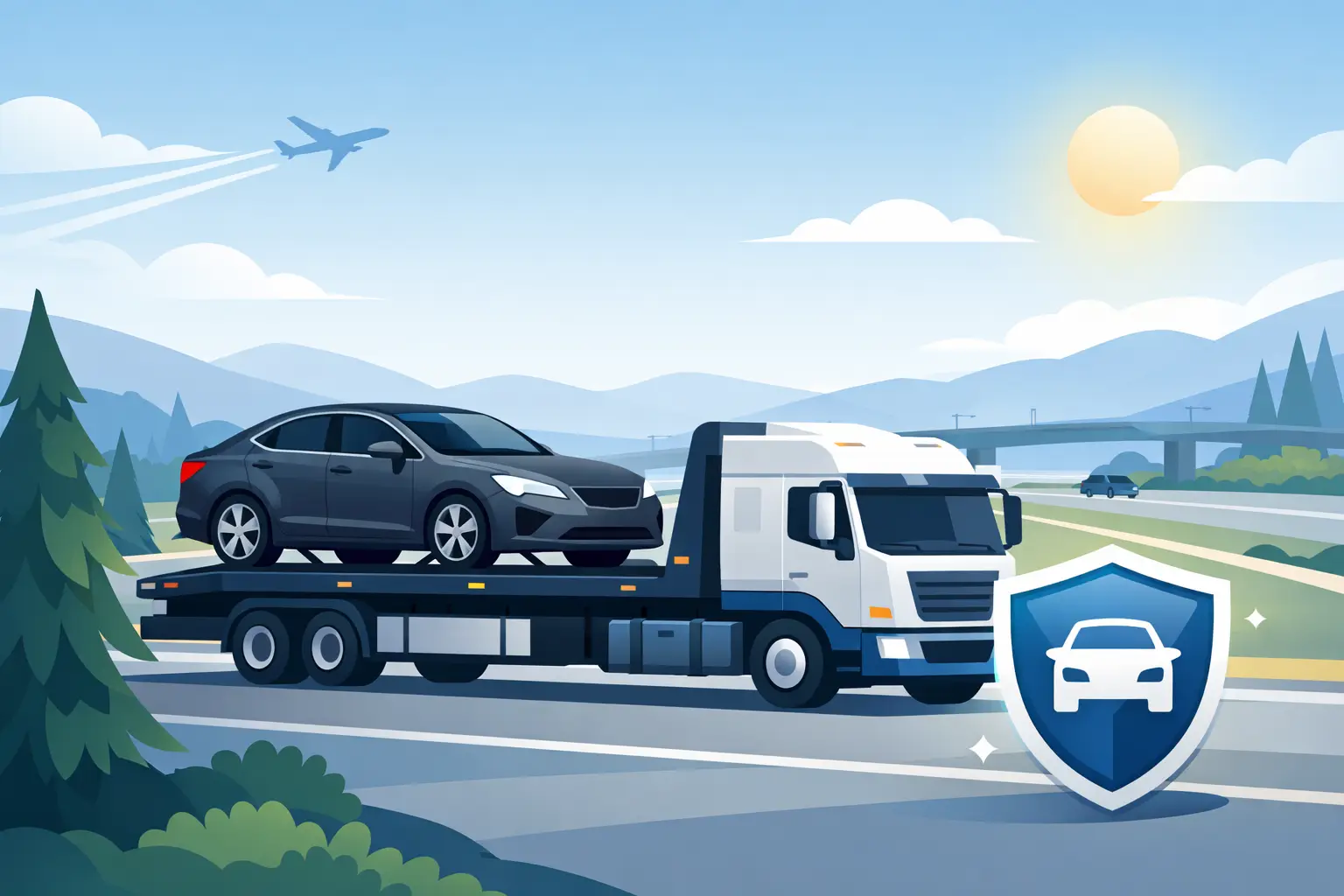
For many long-distance tows, a flatbed is the preferred choice because all four wheels are carried off the ground. This reduces wear on tires and drivetrain components and avoids the complications that can come with towing a vehicle by only two wheels.
Flatbed transport is especially valuable for all-wheel-drive vehicles, many luxury and exotic models, classic cars, motorcycles, and vehicles with low ground clearance. These vehicles may have manufacturer-specific towing requirements, sensitive suspension components, or body panels that sit too close to the pavement for standard loading methods.
The flatbed itself is only part of the job. Proper loading angles, ramps, wheel positioning, and securement determine whether a vehicle is protected. Low-profile vehicles may require additional care to prevent contact with the bumper, splitter, exhaust, or undercarriage. A trained operator will assess clearance before loading instead of forcing a vehicle onto the deck.
At Pride Transport & Towing, soft-strap securement and flatbed-capable equipment are used to support damage-conscious transport for vehicles that need more than a basic hook-up. That matters when the vehicle is a prized classic, a luxury sedan, an exotic car, or simply the car you rely on every day.
Securement Is Not a Minor Detail
A tow that looks secure at pickup can become unsafe after miles of freeway travel if the vehicle is not tied down correctly. Arizona roads can involve high speeds, construction zones, elevation changes, crosswinds, and sudden traffic stops. The vehicle must remain stable without placing unnecessary stress on suspension, steering, bodywork, or drivetrain parts.
Professional securement begins with identifying proper attachment points. The operator must account for whether the vehicle rolls, whether the wheels turn freely, the condition of the tires, and any collision damage that affects how it can be loaded. A vehicle with a broken wheel, bent control arm, or damaged axle may require a different approach than a vehicle with a simple no-start issue.
Wheel straps are commonly used for flatbed transport because they secure the vehicle by the tires rather than by pulling directly against delicate components. Soft straps can help reduce the risk of cosmetic damage where appropriate. Securement should also be checked during the trip, particularly after the first portion of a longer route, when straps can settle under load.
What to Tell the Dispatcher Before the Tow
Accurate information helps the right truck arrive the first time. When requesting long distance towing, be ready to share the pickup location, final destination, vehicle year, make, model, and the reason it needs to be moved. If the vehicle is lowered, in a garage, facing the wrong direction, blocked by another car, or unable to roll, say so early.
The details are even more important after a collision or off-road incident. Let the dispatcher know if airbags deployed, wheels are damaged, fluids are leaking, or the vehicle is in a ditch, parking structure, or soft ground. A tow operator may need recovery equipment, a winch, dollies, or a specific truck configuration to move it safely.
For high-value or specialty vehicles, mention modifications such as low suspension, wide tires, aftermarket bodywork, air suspension, or a nonstandard starting procedure. For motorcycles, provide the approximate size and whether the bike has saddlebags, a fairing, or damage from a tip-over. These are not unnecessary details. They help prevent delays and support safer loading.
Route Planning Matters on Arizona Roads
The quickest route is not always the best route for a loaded tow truck. An experienced operator considers traffic patterns, lane restrictions, freeway construction, weather, fuel stops, and the location of the final drop-off. Routes involving I-10, US-60, Loop 303, and I-17 can be efficient, but congestion or active construction may change the plan.
Arizona heat adds another layer of planning. During extreme summer temperatures, both the tow truck and the vehicle being transported need careful attention. A responsible operator monitors equipment, avoids rushed loading, and keeps safety ahead of an unrealistic arrival estimate.
Delivery access also deserves attention. A repair facility may be closed after hours, a residence may have a narrow driveway, or a storage location may require a gate code or a scheduled contact. Confirming those details before departure can prevent a late-night problem at the end of an already stressful day.
Preparing Your Vehicle for Transport
If it is safe to do so, remove personal items, valuables, and loose objects from the vehicle before pickup. Take a few clear photos of the exterior and note any existing damage. This is a sensible step for any transport, especially when the vehicle will travel a significant distance.
Keep the keys available and make sure the operator has any relevant instructions, such as an alarm procedure, neutral-release steps, parking brake issue, or special fuel shutoff. If you are not meeting the driver at delivery, arrange a reliable person to receive the vehicle and authorize the drop-off.
Do not attempt to push a disabled vehicle into traffic, crawl underneath it to attach a strap, or improvise a tow with another personal vehicle. A stalled car on a busy roadway, shoulder, or freeway ramp needs professional handling. Call for help, move to a safe location if possible, and follow the dispatcher’s instructions while you wait.
Choosing a Towing Provider for the Distance
Price matters, but the lowest quoted rate does not always reflect the equipment or care required for a long trip. Ask whether the vehicle will be transported on a flatbed when appropriate, how it will be secured, and whether the company can handle your specific vehicle condition. For classics, exotics, motorcycles, or low-clearance vehicles, those questions are essential.
You should also look for a provider that can communicate clearly about pickup timing, route considerations, and delivery expectations. Around-the-clock dispatch is valuable when a breakdown happens at night, on a weekend, or far from home. ADOT registration and inspected equipment add another level of confidence when your vehicle is traveling through busy Arizona corridors.
A long tow should leave you with a clear plan, not more uncertainty. Give the dispatcher the full picture, choose equipment that fits the vehicle, and let an experienced operator handle the loading and transport. When the road ahead is longer than expected, careful towing is what gets both you and your vehicle where you need to be safely.