
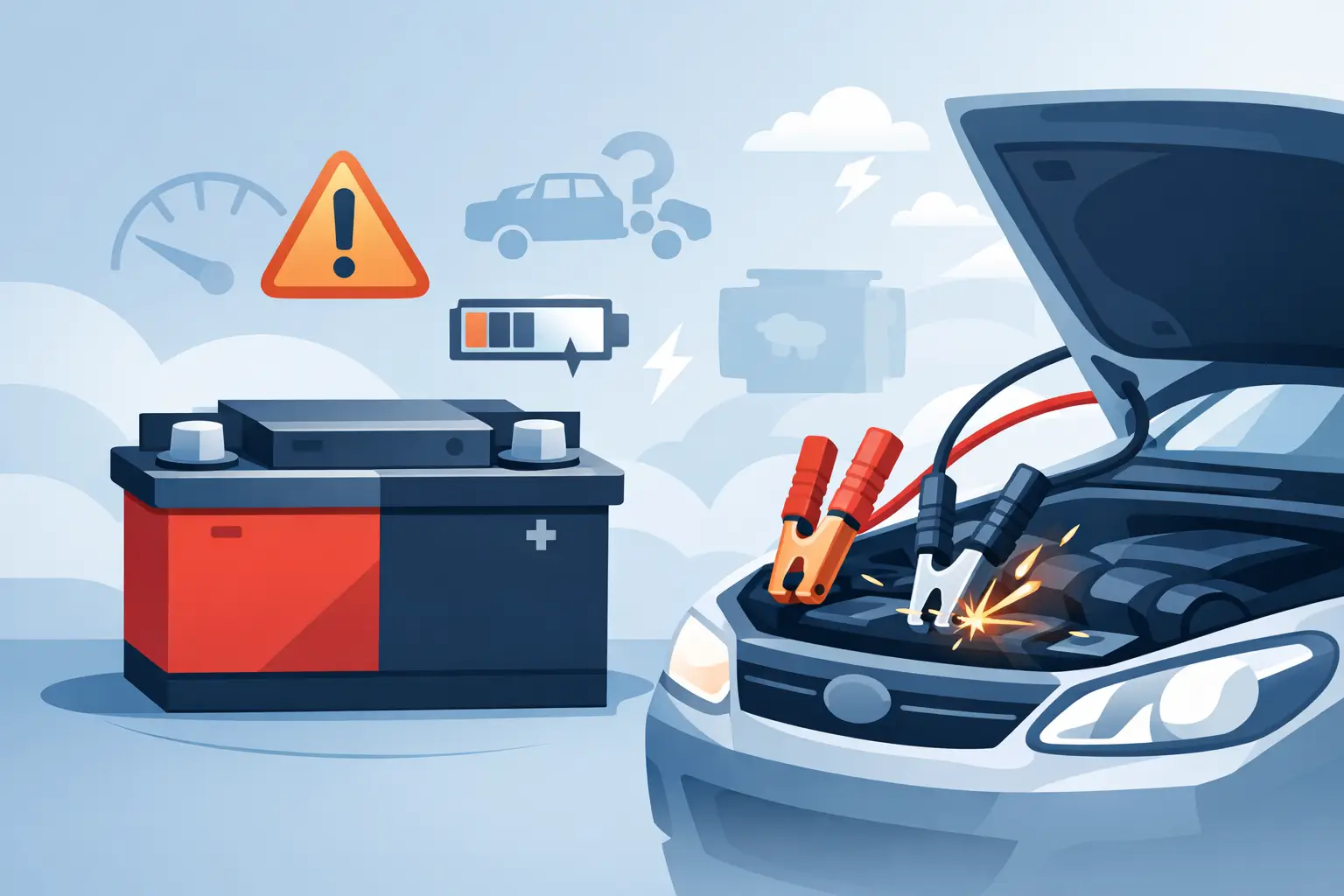
A car that will not start at home is frustrating. A car that will not start in a Loop 303 parking lot, on I-10, or after a long day in Surprise can quickly become a safety concern. Knowing the top signs your battery needs a jumpstart helps you make the right call early, protect your vehicle, and avoid being stranded somewhere unsafe.
A jumpstart can get a vehicle running again, but it is not always the complete fix. Arizona heat is hard on batteries, and a no-start condition may also involve loose connections, a failing alternator, a starter problem, or an electrical draw. The details matter.
Top Signs a Battery Needs a Jumpstart
The engine cranks slowly or struggles to turn over
A slow crank is one of the most common warnings. When you turn the key or press the start button, the engine may sound labored, as if it is trying to turn over but does not have enough power. You may hear several sluggish attempts before the vehicle finally starts, or it may not start at all.
This often means the battery charge is low. It can happen after leaving an interior light on, sitting with accessories running, taking repeated short trips, or parking for several days. In the West Valley, extreme summer temperatures can also shorten battery life and reduce its ability to deliver starting power.
If the vehicle starts after a jump, do not assume the problem is solved. Letting it run for a few minutes is not always enough to recharge a depleted battery. A battery that was already weak may fail again after you turn the engine off.
You hear clicking, but the engine does not start
A rapid clicking sound when you attempt to start the vehicle is a classic low-battery symptom. The battery may have enough remaining power to operate some electronics but not enough to engage the starter motor.
One solid click is different. That can point to a starter, relay, or connection problem rather than a discharged battery. Still, if your dashboard lights are dim, accessories are weak, or the vehicle has been slow to crank recently, a jumpstart is a reasonable first step.
Avoid repeated start attempts. Each attempt draws more power from an already weak battery and can leave you with less chance of getting the vehicle running.
The dashboard and interior lights are dim or flickering
Your vehicle often gives clues before it becomes a complete no-start. Dim headlights, a weak dome light, a flickering dashboard, or a radio that resets can signal low battery voltage. Power windows may move unusually slowly, and the power locks may hesitate or fail to respond.
These symptoms are especially useful when they happen while the engine is off. If lights are normal with the engine running but become weak after shutdown, the battery may not be holding a charge. If lights dim while driving or the battery warning light comes on, the charging system may be the larger concern.
In that situation, a jumpstart may get you moving temporarily, but continuing to drive could leave you stranded again if the alternator is not charging the battery.
The vehicle has been sitting unused
Cars, trucks, motorcycles, and specialty vehicles can lose battery charge when they sit. Modern vehicles continue to use small amounts of power for security systems, clocks, onboard computers, keyless-entry functions, and other electronics. Over time, that normal draw can drain an older battery.
A vehicle that has been parked for two weeks may start without trouble. Another may not start after a few days. It depends on the battery’s age, its charge level before parking, the vehicle’s electrical draw, and the weather.
Collector cars, low-mileage luxury vehicles, and motorcycles are especially vulnerable when they are not connected to an appropriate battery maintainer. If a valuable vehicle needs a jump, use caution. Improper cable placement or voltage spikes can create expensive electrical problems. A professional roadside operator can provide a controlled jumpstart and help prevent unnecessary risk.
The battery warning light appeared before the no-start
The battery-shaped warning light does not always mean the battery itself has failed. It usually indicates that the charging system is not operating as it should. That may be caused by an alternator issue, a slipping belt, damaged wiring, or a poor connection at the battery.
If that light comes on while you are driving, reduce electrical load where safely possible. Turn off unnecessary accessories such as seat heaters, phone chargers, and high-demand audio equipment. Head toward a safe location rather than shutting the vehicle off at a fuel stop or parking space where it may not restart.
A jumpstart is useful only if the battery is discharged. If the alternator has stopped charging, the vehicle can die again shortly after being started. At that point, towing is usually the safer choice than trying to drive farther.
Corrosion or loose battery terminals are visible
Open the hood only if you can do so safely and the vehicle is parked out of traffic. White, green, or blue buildup around battery terminals can interfere with the electrical connection. A loose cable can create the same symptoms as a weak battery: intermittent starting, clicking, dim lights, or total loss of power.
Do not touch damaged cables, leaking battery fluid, or swollen battery cases. A swollen battery is not a jumpstart situation. It needs replacement, and it should be handled carefully. Arizona heat can contribute to battery case damage, particularly when a battery is already near the end of its service life.
When a Jumpstart Is Not the Right Move
A jumpstart is not a universal answer to every no-start. If you smell burning, see smoke, notice leaking fluid around the battery, or find exposed or damaged wiring, step away from the vehicle and arrange professional help. Trying to connect jumper cables in those conditions can create a serious hazard.
The same applies after a collision. Even if the battery appears dead, damaged wiring or hidden mechanical issues may be present. A properly equipped tow is safer than attempting to start and drive a vehicle that has been involved in an impact.
For hybrid and electric vehicles, do not assume the procedure is the same as a conventional gas-powered car. Many have a 12-volt battery that can be jumped, but the high-voltage system requires different precautions. Check the owner’s manual or call for trained roadside assistance rather than guessing.
What to Do While You Wait for Help
First, get the vehicle as far from traffic as possible. On a freeway shoulder, use hazard lights and remain aware of passing vehicles. If it is safer to wait behind a barrier or farther from the roadway, do that. Do not stand between vehicles or lean over the engine bay near moving traffic.
If you have jumper cables and another vehicle, only attempt a jump if you know the correct procedure and both batteries appear undamaged. Keep metal tools and jewelry away from the battery terminals. Never connect cables to a cracked, leaking, or swollen battery.
When you call for roadside help, provide your exact location, vehicle make and model, and any symptoms you noticed. Mention whether the vehicle is in a garage, parking structure, tight driveway, freeway shoulder, or off-road area. That information helps the dispatcher send the appropriate truck and equipment without delay.
Pride Transport & Towing provides 24/7 jumpstarts and roadside assistance throughout Surprise, the West Valley, and surrounding Metro Phoenix routes. If the battery will not hold a charge or the vehicle cannot safely continue, a tow can prevent a second breakdown and get the vehicle to a trusted repair location.
After the Vehicle Starts, Do Not Ignore the Cause
Once the engine is running, watch for warning lights and pay attention to how the vehicle behaves. If it starts normally after the jump and remains stable, drive directly to have the battery and charging system tested. Avoid turning the engine off until you are somewhere you can address the issue.
If the battery is more than a few years old, replacement may be more practical than repeated jumpstarts. Heat, short trips, and heavy electrical demand all reduce battery life. A test can show whether the battery has a low charge, poor capacity, or an internal failure.
The best time to deal with a weak battery is before it leaves you in a busy parking lot after dark or on the side of a high-speed road. A quick response and the right diagnosis can turn a stressful no-start into a manageable repair.