A tow can be over in 20 minutes, but a bad attachment point can leave damage that lasts far longer. The question of soft strap versus chain towing matters most when your vehicle has alloy wheels, a low front end, sensitive suspension components, custom bodywork, or collector value. The right choice is not about what looks strongest. It is about using the correct recovery or securement method for the vehicle, the situation, and the equipment on scene.
For a stalled daily driver on Loop 303, a disabled luxury vehicle in Surprise, or a classic car headed to a shop across the West Valley, proper handling starts before the truck moves. A trained operator identifies safe attachment points, assesses the vehicle’s condition, and chooses equipment that controls the load without creating new problems.
Soft Strap Versus Chain Towing: The Real Difference
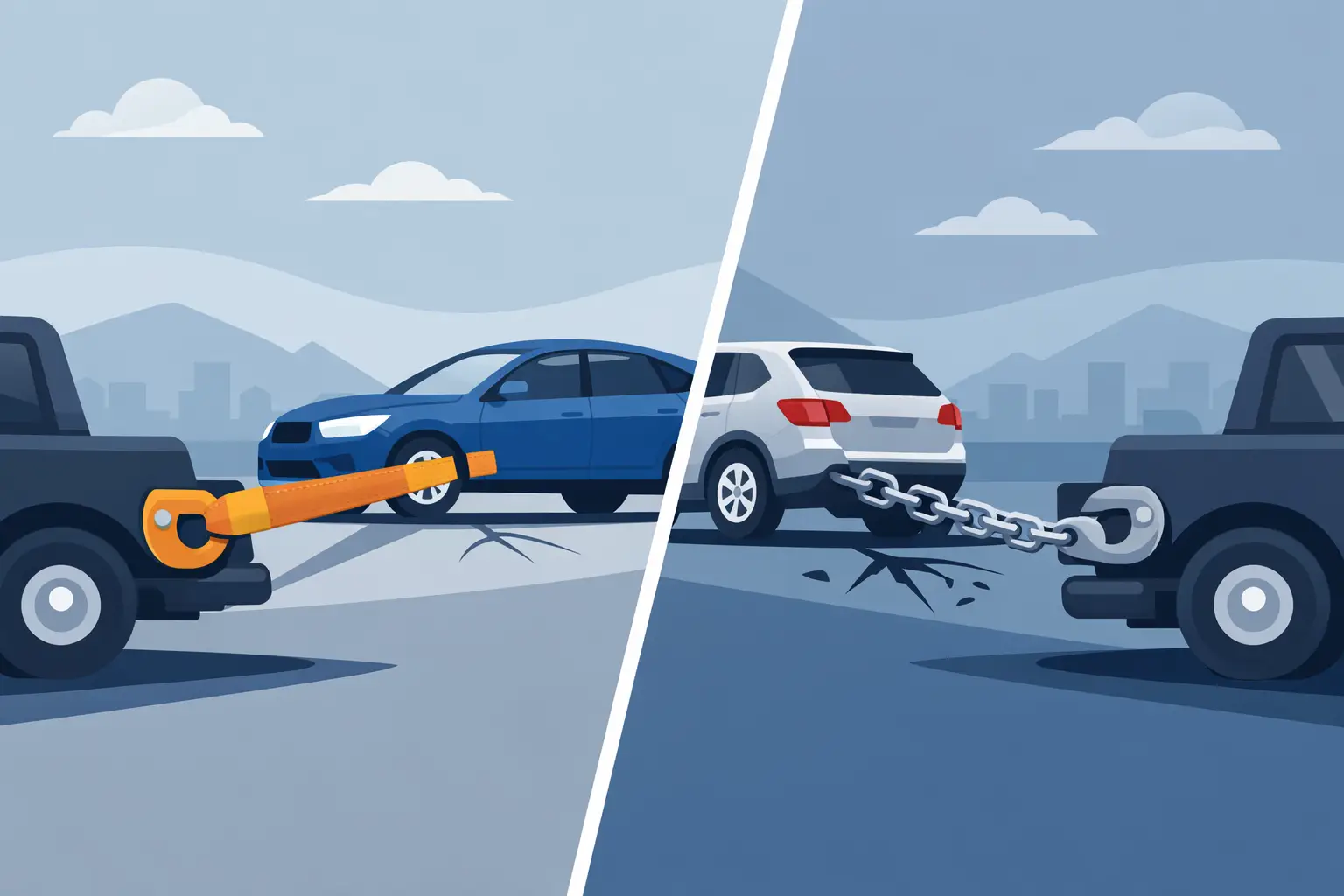
Soft straps are heavy-duty textile straps designed to distribute force across a broader area. In towing and transport, wheel straps are commonly placed around the tire to secure a vehicle to a flatbed. Recovery straps and bridles may also be used at manufacturer-approved recovery points when a vehicle needs to be pulled from a ditch, sand, or another difficult position.
Chains are steel and exceptionally durable. They have a place in professional towing, particularly for certain recoveries, commercial work, equipment hauling, and vehicles with suitable frame or recovery points. But steel chain can concentrate force at a small contact point. If it is hooked to the wrong location, it can scratch, bend, crack, or pull on a component that was never designed to carry the load.
That distinction is why a quality tow is not simply a matter of choosing straps over chains every time. It is a matter of choosing the correct connection, angle, load rating, and truck setup. Soft straps are often the preferred option for transporting high-value or damage-sensitive vehicles, while chains may be the right tool for a controlled recovery or properly equipped vehicle.
Why Wheel Straps Are Often Better for Vehicle Transport
When a vehicle can roll and be loaded onto a flatbed, wheel straps are usually the damage-conscious choice. Rather than attaching to the frame, axle, suspension, or steering components, tire straps secure the vehicle by its wheels. The vehicle remains planted on the deck while the straps hold the tires in position.
This method offers several practical advantages. It avoids metal-on-metal contact with the undercarriage, helps protect painted and powder-coated components, and reduces the chance of an operator selecting an unsuitable hook point. It is especially valuable for vehicles with low ground clearance, air suspension, modified exhausts, carbon-fiber splitters, or limited access beneath the chassis.
Wheel straps do need to be sized, positioned, and tensioned correctly. A strap placed over a sharp edge, routed incorrectly, or used on a damaged tire is not a safe securement plan. Operators also need to inspect straps for wear and verify that the vehicle is stable after loading. The material alone does not make the tow safe. Professional setup does.
For classic, exotic, luxury, and lowered vehicles, flatbed transport with soft-strap securement generally provides the best protection. Low-angle loading techniques, extended ramps, and careful winching can be just as important as the straps once the vehicle is on deck.
When Chains Still Make Sense
Chains are not automatically harsh or careless equipment. Properly rated chains provide dependable strength and are often necessary where soft straps are not appropriate. Light equipment hauling is a common example. A skid steer, forklift, tractor, or other piece of equipment may have designated tie-down points built to accept chain binders and transport chains.
Chains can also be useful during a recovery involving a vehicle with a solid, accessible frame or manufacturer-approved recovery points. If a truck is in a ditch, a work vehicle is stuck off-road, or an overturned trailer must be stabilized, the recovery plan may call for chains, recovery straps, winch cable, snatch blocks, or a combination of equipment. The right method depends on traction, slope, vehicle weight, damage, and how safely the load can be controlled.
The key is never to hook a chain wherever it happens to fit. Bumpers, sway bars, control arms, steering links, and many suspension components are not safe towing points. A chain on the wrong component can cause expensive damage or create a dangerous failure under tension.
The Risks of the Wrong Attachment Point
Many towing damage claims begin with a rushed assumption: if it is metal, it must be strong enough to pull. That is not how modern vehicles are built. Aluminum suspension parts, plastic aero panels, electronic parking brakes, active suspension systems, and composite body components all require a more deliberate approach.
On a front-wheel-drive car, for example, pulling from a lower control arm or steering component can affect alignment or damage the suspension. On an all-wheel-drive vehicle, towing the wrong way can create drivetrain issues. On an electric vehicle, improper lifting or contact with the battery enclosure can become a serious safety concern. Some vehicles require specific transport modes, jack modes, or procedures before loading.
The same caution applies to motorcycles. A motorcycle should be stabilized through appropriate soft loops, wheel chocks, and tiedown angles that protect the bike’s controls, finish, and suspension. Throwing a chain around a motorcycle frame is not a damage-conscious transport method.
A professional operator checks the vehicle type and condition first. If the vehicle has collision damage, locked wheels, a missing tire, or a compromised suspension, the loading plan changes. Sometimes that means dollies, skates, a winch line with a soft bridle, or additional recovery equipment. Safe towing is situational.
What Vehicle Owners Should Ask for
You do not need to know every tie-down specification when you call for a tow. You should, however, tell the dispatcher anything that changes how the vehicle needs to be handled. Mention if it is lowered, all-wheel drive, electric, hybrid, classic, exotic, modified, or unable to roll. Let the operator know about flat tires, accident damage, locked steering, parking-garage clearance, or a vehicle stuck in sand or a ditch.
For a vehicle you care deeply about, it is reasonable to ask whether a flatbed is available and how it will be secured. You can also ask about low-clearance loading and whether soft straps will be used around the tires. A capable towing company should answer clearly rather than dismissing the question.
Four details help dispatch send the right equipment from the start:
- Your exact location, including freeway direction, cross streets, or a safe landmark
- The year, make, model, and condition of the vehicle
- Whether the vehicle rolls, steers, and has inflated tires
- Any special handling concern, such as low clearance, all-wheel drive, or collector status
That information prevents delays and reduces the likelihood of sending a truck that is not suited to the job.
Securement Is Only One Part of a Safe Tow
Soft straps protect a vehicle only when the entire tow process is handled correctly. The operator must load at a safe angle, use adequate clearance, position the vehicle correctly on the deck, secure it to rated points, and recheck the load before entering traffic. On Arizona freeways, road vibration, heat, wind, and abrupt traffic changes all make proper securement essential.
A flatbed is often the safest transport solution for disabled vehicles, especially when drivetrain condition is uncertain. It keeps all four wheels off the road and gives the operator greater control over how the vehicle is loaded and tied down. Still, there are cases where a wheel-lift tow, dollies, or recovery equipment is appropriate. The safest method is the one that matches the vehicle and roadside conditions, not a one-size-fits-all promise.
Pride Transport & Towing uses damage-conscious soft-strap handling and flatbed-capable equipment for vehicles that need extra care, while also bringing the recovery tools needed for real roadside situations. Whether the call involves a low-profile car near Peoria, an off-road extraction outside Waddell, or equipment that needs to move across Metro Phoenix, the goal stays the same: get the load secure, protect the asset, and get the job finished safely.
If you are waiting for a tow, move to a safe location when possible, turn on hazard lights, and avoid trying to attach straps or chains yourself near traffic. Give the dispatcher the full picture, then let the operator choose the securement method that protects your vehicle rather than simply getting it moving.