A low car can be perfectly drivable one minute and one bad loading angle away from expensive damage the next. Knowing how to tow low cars means understanding that the usual approach is not always enough. A lowered sedan, sports car, classic coupe, or exotic vehicle may have inches of clearance at the front bumper, rocker panels, exhaust, and suspension. The tow operator has to plan the load before the vehicle moves.
For drivers around Surprise, Peoria, Glendale, and the West Valley, that matters after a breakdown, flat tire, accident, or mechanical issue on I-10, Loop 303, US-60, or I-17. Fast service matters, but so does getting the car onto the truck without scraping a splitter or dragging an undercarriage component across the deck.
Why low cars need a different towing approach
Low-profile vehicles are difficult to load because a tow truck bed has an approach angle. If that angle is too steep, the front end of the vehicle reaches the bed before the wheels do. The bumper, air dam, lip, splitter, exhaust, or lower suspension can make contact.
Lowered cars are not the only concern. Factory performance vehicles, luxury sedans with long front overhangs, vintage cars with delicate bodywork, and cars equipped with aftermarket ground effects can all have limited clearance. A vehicle that clears a driveway may still scrape on a standard flatbed angle.
The right method depends on the car’s clearance, wheelbase, front overhang, condition, and where it is sitting. A car with a broken wheel, locked transmission, collision damage, or a flat tire requires a different recovery plan than a running vehicle parked safely in a driveway.
The best way to tow low cars: a flatbed and gradual loading
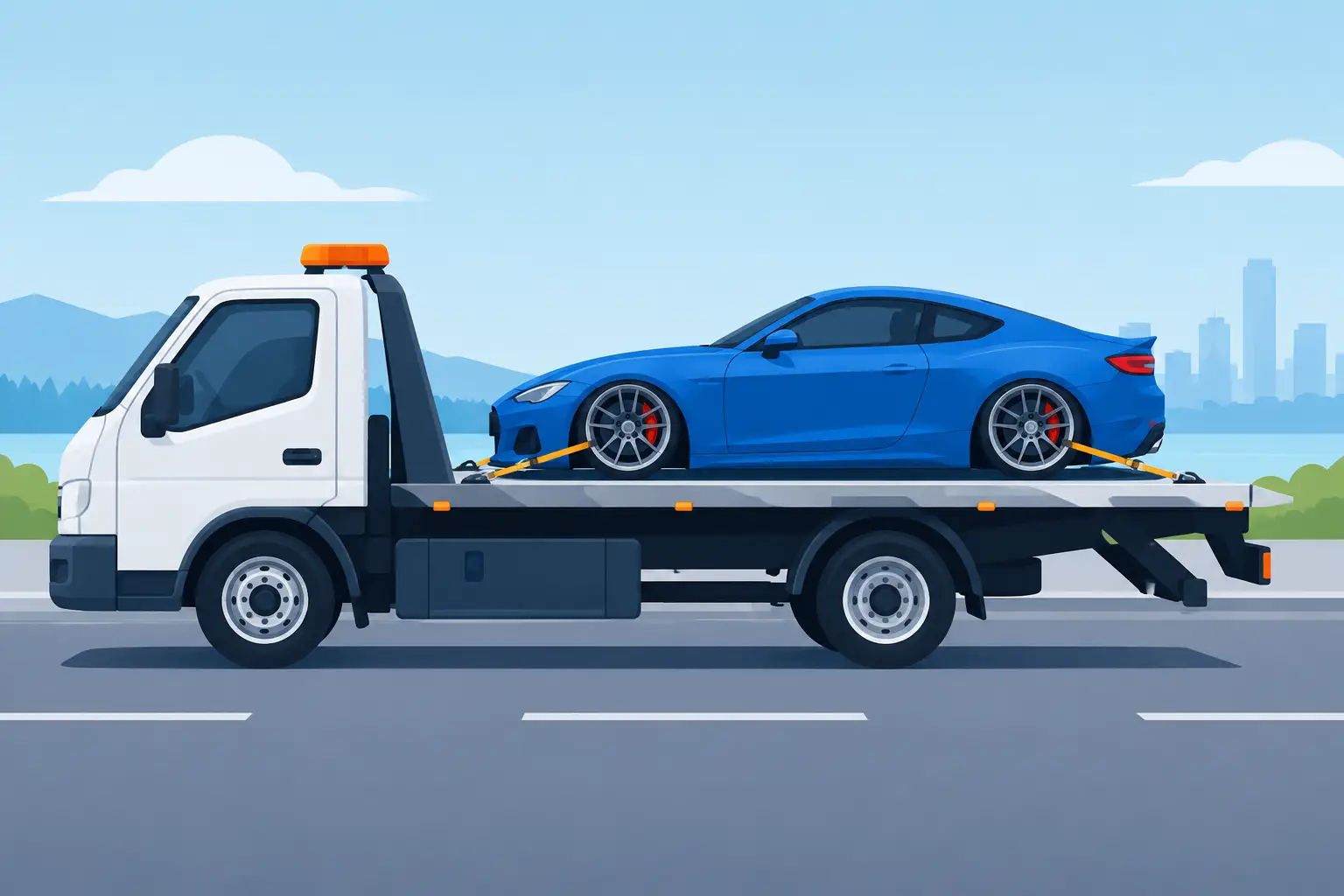
For most low cars, a flatbed is the safest transport choice. It keeps all four wheels off the road and avoids placing drivetrain stress on the vehicle during transport. More importantly, it gives the operator control over the loading angle.
A capable operator can reduce that angle by positioning the truck carefully, using extended ramps, ramp extensions, loading blocks, or other approved methods that create a longer, more gradual path to the bed. The goal is to let the tires begin climbing before the front bodywork gets close to the deck.
The truck must also be positioned on firm, level ground whenever possible. Loading a low vehicle from the downhill side of a steep curb, driveway, or shoulder can change the angle enough to create a strike risk. Sometimes the safest choice is to move the truck, change direction, or recover the vehicle from a more favorable position rather than force the load.
Winching is usually safer than driving onto the bed
Once the ramps and truck position are set, controlled winching is often the preferred method. The driver keeps the vehicle in neutral when possible while the operator guides it slowly up the ramps. This limits sudden throttle input, wheel spin, and unwanted movement.
A slow winch load also gives the operator time to watch the bumper, side skirts, wheels, and underside at every point of the transition. If clearance becomes too tight, the process can stop before damage occurs.
For a vehicle that will not roll, has collision damage, or cannot be placed in neutral, the operator may need skates, dollies, or specialized recovery equipment. This is not a situation for dragging the car onto the deck. Pulling a disabled low car incorrectly can damage tires, suspension components, body panels, or the transmission.
Use the correct attachment points and soft straps
How a car is connected to the winch matters as much as the loading angle. A hook placed on the wrong suspension piece, steering component, or body structure can bend or break parts that were not designed to carry a recovery load.
The proper connection point varies by vehicle. It may be a manufacturer-approved tow eye, a designated frame or recovery point, or another suitable structural location identified by an experienced operator. If the car has a removable tow hook cover, the owner should point it out before loading starts.
After the vehicle is on the flatbed, wheel straps are generally the damage-conscious choice. Soft straps secure the tires rather than cinching chains over painted wheels, suspension arms, or low body panels. The straps should be routed and tensioned to prevent shifting without rubbing against brake lines, fenders, or delicate components.
A careful operator also accounts for the vehicle’s parking brake, transmission setting, and any air suspension or active suspension features. Some vehicles need transport mode activated. Others have manufacturer instructions for towing, including restrictions on winch points or wheel securement. When the vehicle is rare, modified, or especially valuable, those details are worth discussing before the truck arrives.
What vehicle owners should do before the tow truck arrives
You do not need to direct the recovery, but a few details can help the tow operator arrive prepared. When requesting service, explain that the vehicle is lowered or low-profile and mention any front splitter, air suspension, body kit, unusual wheel size, or clearance concern.
If the vehicle is safe to approach, take a quick look for obstacles around it. Curbs, parking stops, steep driveways, loose gravel, and narrow parking spaces can affect how the truck needs to position. Avoid trying to build makeshift ramps from boards, rocks, or loose materials. They can shift under the tires and create a more dangerous loading situation.
Before the operator begins, make sure they know whether the car starts, rolls freely, shifts into neutral, has a flat tire, or has suspension or collision damage. If you have the key, wheel-lock key, factory tow eye, and relevant towing instructions available, keep them close by.
For your safety, stay out of the loading path. A winch cable, ramps, and a rolling vehicle all carry risk. Stand where the operator directs you, especially on a busy roadway or freeway shoulder.
Mistakes that cause damage to low-profile vehicles
The most common mistake is assuming any tow truck can load any car the same way. A short steel ramp and a steep approach may work for a standard-height SUV, but it can be wrong for a lowered car.
Another problem is rushing. A roadside call can be stressful, particularly at night or in Phoenix-area traffic, but speed without setup creates avoidable damage. The operator needs enough room to align the truck, lower the bed, place the ramps, and check clearances.
Avoid these four shortcuts:
- Pulling the vehicle with a chain attached to a suspension component or body panel.
- Driving the car quickly up the ramps to overcome a steep angle.
- Using a wheel-lift on a vehicle whose clearance, drivetrain, or condition calls for flatbed transport.
- Securing the car with methods that contact painted wheels, splitters, side skirts, or exposed brake and suspension parts.
There are exceptions. A wheel-lift may be appropriate for certain vehicles, short moves, or specific recovery conditions when used correctly. But for a low-clearance, collector, luxury, or exotic vehicle, flatbed transport with a controlled load is generally the safer call.
How to choose a towing company for a lowered or exotic car
Ask direct questions. Does the company have a flatbed available? Do they use extended ramps or low-angle loading techniques? Will the vehicle be winched carefully? How will it be secured once loaded?
The answers should be clear and practical, not vague. You want an operator who asks about clearance, damage, drivability, and location before arriving. A company that handles specialty vehicles should recognize that a front lip, carbon-fiber splitter, low exhaust, or air suspension changes the job.
Pride Transport & Towing provides 24/7 dispatch and damage-conscious flatbed service for low-profile, classic, luxury, and collector vehicles throughout the West Valley and Metro Phoenix corridor. Soft-strap securement and careful recovery planning help protect the vehicle from the first pull to final unloading.
Safe unloading matters just as much
A car can be loaded perfectly and still scrape during unloading if the destination has a steep driveway or uneven surface. Tell the operator about tight entrances, sharp grade changes, and low curbs before arrival. If the unloading spot is not suitable, choose a flatter nearby location and move the car only when it can be done safely.
The best tow for a low car is rarely the fastest-looking one. It is the one where the operator slows down, manages the angle, uses the right equipment, and treats every inch of clearance as worth protecting.