A breakdown on Loop 303, a collision near Grand Avenue, or a dead battery in a Surprise parking lot can all lead to the same question: flatbed versus wheel lift towing, which one should move your vehicle? The right answer depends on the vehicle, its condition, where it is parked, and whether any wheels, tires, steering, or drivetrain components are damaged. A qualified operator chooses the method that gets the vehicle out safely, not simply the truck that arrives first.
Flatbed Versus Wheel Lift Towing: The Core Difference
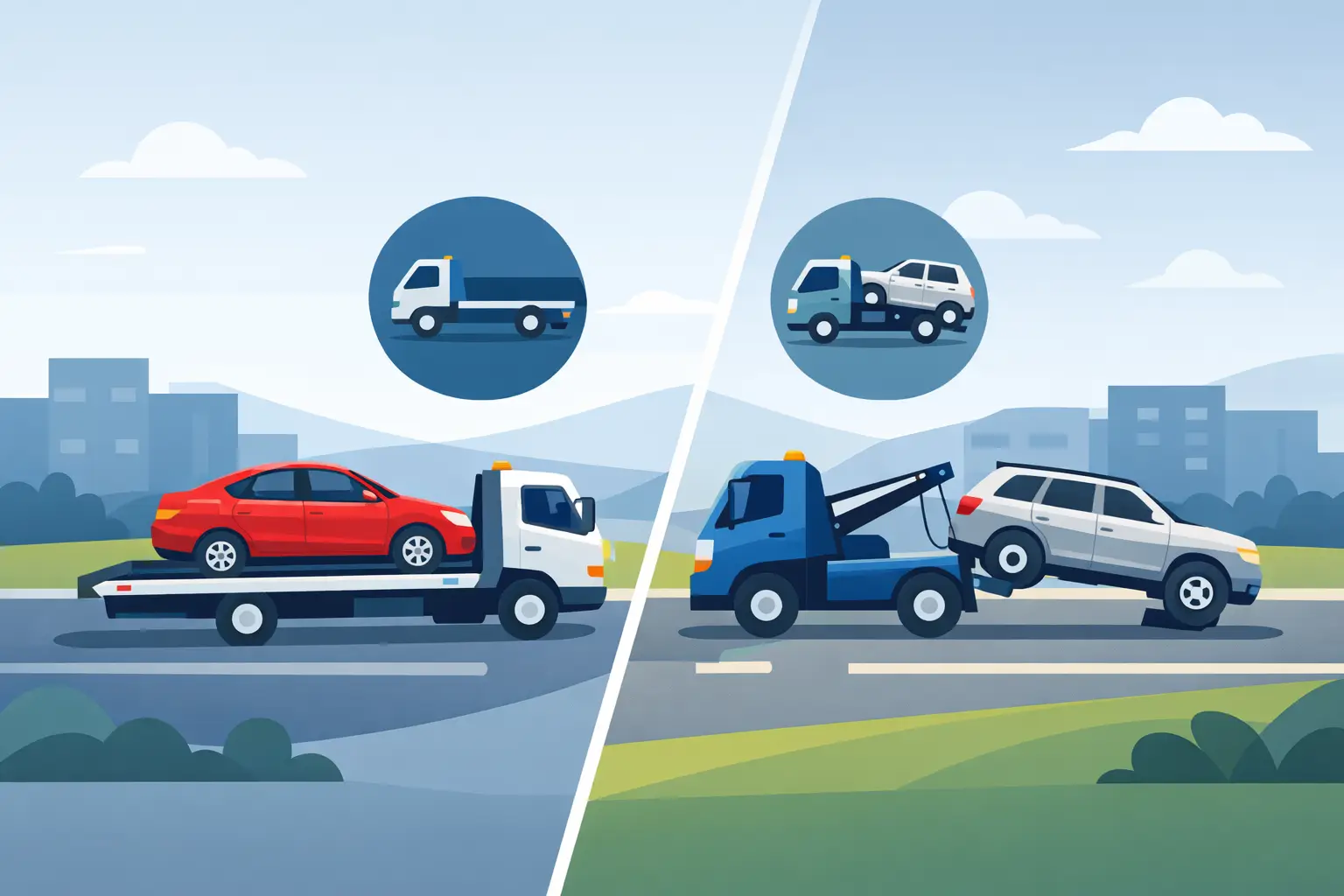
A flatbed tow truck carries the entire vehicle on a level deck. The operator lowers or tilts the bed, then loads the vehicle by driving it up, winching it, or using specialized ramps and recovery equipment. Once loaded, all four tires are off the pavement for the trip.
A wheel lift tow truck uses a hydraulic yoke to lift either the front or rear wheels while the opposite wheels remain on the road. Modern wheel lifts are far more controlled than older hook-and-chain methods. When used properly, the lifting attachment supports the tires rather than attaching directly to vulnerable body or suspension components.
Neither method is automatically better in every situation. Flatbed towing generally offers the most protection during transport. Wheel lift towing is often the faster, more practical option for a standard vehicle that needs a short tow from a tight location. The vehicle’s drivetrain and damage condition are the deciding factors.
When a Flatbed Is the Best Choice
Flatbed towing is the preferred method when protection matters most or when rolling a vehicle on its own tires could create additional damage. It is especially appropriate for all-wheel-drive vehicles, vehicles with severe collision damage, low-clearance cars, and specialty vehicles.
All-wheel drive and four-wheel drive vehicles
Many AWD systems are designed to have all four wheels moving together. Towing an AWD vehicle with two wheels on the ground can strain or damage the transfer case, transmission, or drivetrain, depending on the manufacturer’s specifications. A flatbed removes that concern because the vehicle does not roll during transport.
Some four-wheel-drive vehicles can be towed with a wheel lift if the transfer case is correctly placed in neutral and the manufacturer allows it. That is not a guesswork situation. The operator needs to confirm the vehicle configuration and follow the proper procedure before loading.
Luxury, classic, exotic, and low-profile vehicles
A flatbed gives high-value vehicles the controlled handling they deserve. Classic cars may have older mechanical components or body panels that need extra care. Luxury and exotic vehicles often sit low, have expensive wheels, and may include aerodynamic parts that can be damaged by improper loading angles.
For these vehicles, loading technique matters as much as the truck type. Soft straps, careful wheel securement, extended ramps where needed, and a patient approach help protect paint, suspension, bumpers, and undercarriage components. A flatbed-capable truck paired with the right equipment is the safer choice when a vehicle is low, rare, or especially valuable.
Collision damage, flat tires, and locked wheels
A vehicle with a damaged wheel, broken suspension, deployed airbags, or steering damage should usually ride on a flatbed. The same applies when a tire is shredded, a wheel will not turn, or the transmission cannot be placed in neutral. Trying to pull or roll a disabled vehicle when it cannot move freely can make a bad situation worse.
Flatbed loading can still require additional recovery work. Dollies, skates, winching, or careful repositioning may be necessary when wheels are locked or the vehicle is sitting at an awkward angle. This is where trained operators and properly maintained recovery equipment make a real difference.
Long-distance transport and equipment hauling
For a longer tow across the West Valley or farther along I-10, US-60, or I-17, a flatbed keeps road debris, tire wear, and drivetrain movement out of the equation. It is also the standard choice for motorcycles and many light equipment loads, including small tractors, forklifts, skid steers, and other machinery that needs secure transport.
A flatbed does take more room to load and unload. In an open parking lot, driveway, or shoulder with adequate space, that is usually not a problem. In a congested garage or narrow alley, access may change the plan.
When Wheel Lift Towing Makes Sense
Wheel lift towing remains a valuable, efficient tool for many roadside calls. For a conventional front-wheel-drive or rear-wheel-drive car with no major damage, it can provide a secure tow without requiring a full deck load.
If a front-wheel-drive vehicle is lifted from the front, its drive wheels are off the road. If a rear-wheel-drive vehicle is lifted from the rear, its drive wheels are off the road. That arrangement generally prevents the drivetrain from turning during the tow. The operator will also consider the vehicle’s ground clearance, steering condition, parking position, and the distance it needs to travel.
Wheel lifts are particularly useful in tight quarters. A vehicle parked nose-in between other cars, stuck in a narrow apartment lot, or positioned where a flatbed cannot line up may be easier to remove with a wheel lift. The truck can often make a controlled pickup with less space behind the disabled vehicle.
For a short local tow, wheel lift service can also be an efficient option when conditions are right. It may reduce loading time and help clear a traffic lane quickly. That matters on busy stretches of Bell Road, US-60, or freeway shoulders where the priority is getting the driver and vehicle out of danger.
Efficiency does not mean cutting corners. The lifted wheels need proper positioning, the steering must be secured when applicable, and the operator must verify that the remaining wheels can safely roll. If any part of that assessment raises a concern, a flatbed is the better call.
What Determines the Right Tow Method?
The tow truck should be selected after a quick but thorough assessment. A dispatcher may ask about the vehicle’s make, model, drive type, condition, location, and what happened before it stopped moving. Clear answers help send the right equipment on the first trip.
Vehicle ownership information can help, but the operator also needs to inspect the scene. A sedan with a dead battery in a level lot is different from the same sedan after a curb strike that bent a wheel. A pickup that normally can be wheel-lift towed may need a flatbed after a transmission failure or rear-end collision.
There are several details worth mentioning when you call for a tow:
- Whether the vehicle is front-wheel drive, rear-wheel drive, AWD, or four-wheel drive
- Whether it is lowered, unusually low to the ground, or has aftermarket bodywork
- Any flat tires, broken wheels, collision damage, or suspension damage
- Whether the vehicle starts, rolls, steers, and shifts into neutral
- Its exact position, including garages, tight driveways, freeway shoulders, dirt roads, or parking structures
Photos can also help when safe to take them. A picture of collision damage, a low front bumper, or a vehicle stuck off pavement gives the dispatcher and operator useful information before arrival.
Recovery Is Different From a Standard Tow
A vehicle in a ditch, sand wash, desert shoulder, or off-road trail may need recovery before it can be towed. Winching a vehicle out is not the same as hooking up for transport. The operator must identify solid recovery points, control the vehicle’s path, and avoid pulling in a way that damages the frame, suspension, or body.
After recovery, the tow method may change based on the vehicle’s condition. A truck that came out of soft sand and still drives normally may be suitable for a wheel lift or may not need a tow at all. A car that slid into a ditch and damaged a wheel, bumper, or steering component should typically be loaded onto a flatbed.
Arizona heat adds another concern. Overheating, tire failure, and mechanical breakdowns can leave drivers stranded in exposed locations. Move to a safe area if possible, stay clear of traffic, and do not stand between your vehicle and an active travel lane while waiting for help.
Protecting Your Vehicle Starts Before Loading
The best towing experience begins with accurate information and ends with proper securement. A professional operator should explain the plan when the situation allows, inspect for obvious damage, use equipment suited to the vehicle, and avoid rushing a specialty load just to save a few minutes.
For routine breakdowns, wheel lift towing may be the practical answer. For AWD vehicles, collision damage, low-clearance cars, classics, motorcycles, and long-distance transport, flatbed towing usually provides the added protection worth choosing. Pride Transport & Towing can assess the vehicle and scene 24/7, then send the equipment that fits the job instead of forcing your vehicle into the wrong towing method.
When you need a tow, tell the dispatcher what the vehicle is, what is damaged, and where it is sitting. That small amount of detail helps put the right truck, the right operator, and the right recovery plan on the road to you.