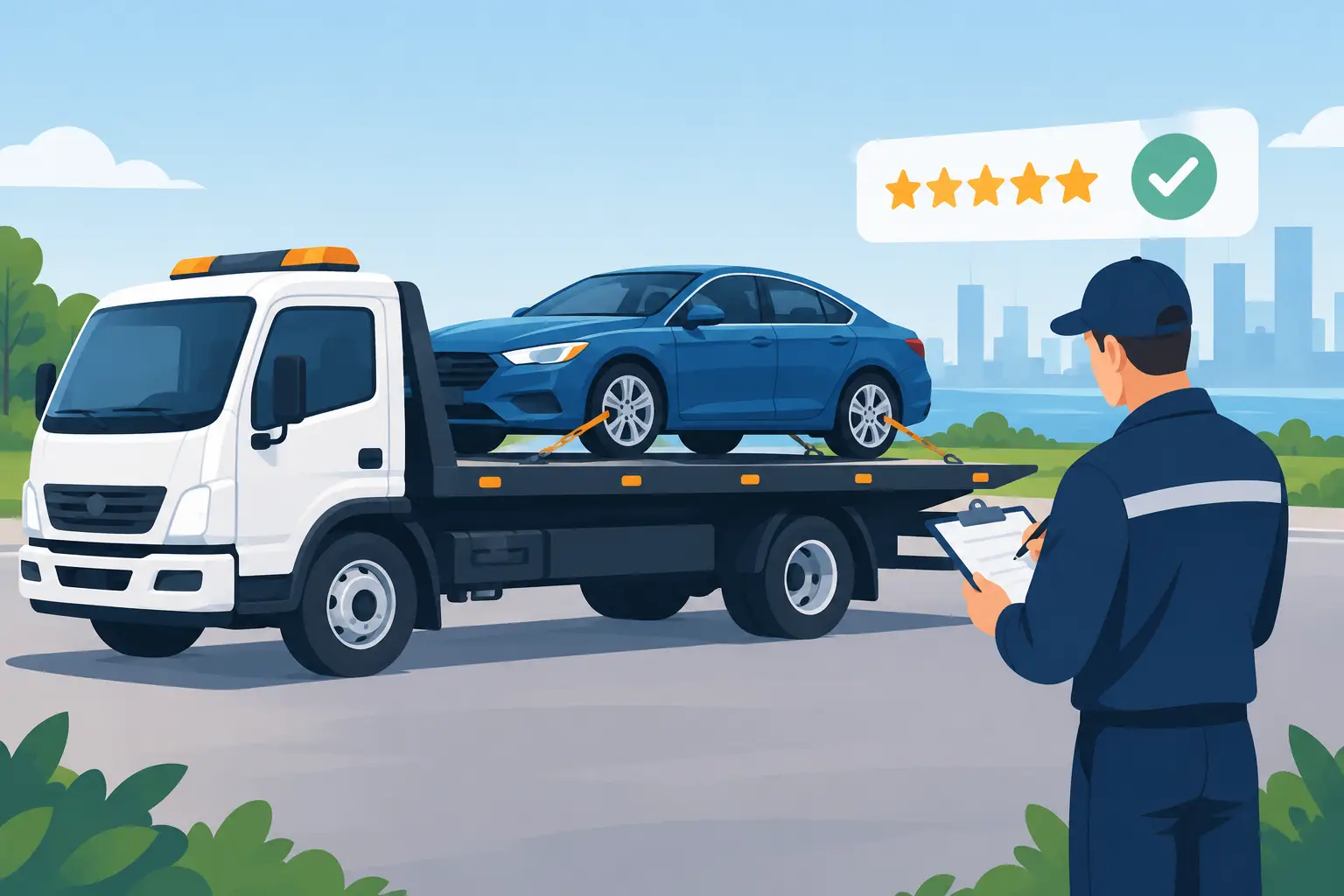
A broken-down vehicle on Loop 303 or I-10 is not the time to guess whether a tow company will handle your car correctly. Flatbed towing reviews can show you far more than a star rating when you know what to read for: response time, communication, equipment, loading care, and whether the driver treated a stressful situation with respect.
For a daily driver, the goal may be getting safely to a repair shop without a long wait. For a classic car, motorcycle, low-clearance vehicle, or luxury vehicle, the details are higher stakes. A review that simply says “great service” is encouraging, but a review describing how the truck arrived, how the vehicle was loaded, and how the customer was kept informed tells you much more.
Why Flatbed Towing Reviews Matter
Flatbed towing is often the safest transport method for vehicles that should not be pulled with drive wheels on the pavement. That can include all-wheel-drive vehicles, cars with suspension or collision damage, low-profile sports cars, collector vehicles, motorcycles, and vehicles with mechanical failures that make wheel-lift towing a poor fit.
A flatbed alone, however, does not guarantee careful service. The operator still needs to assess the vehicle, choose a safe loading approach, use appropriate tie-down points, and secure it correctly for the trip. In Arizona, extreme heat, fast-moving freeway traffic, construction zones, and long distances between some destinations make competent handling especially valuable.
Reviews help fill in the gap between a towing company’s service list and the real experience customers had. Look for repeated patterns, not one unusually glowing or unusually angry comment. If several customers mention prompt arrival, clean equipment, careful loading, and professional communication, that is a useful signal. If reviews repeatedly mention missed arrival windows, surprise charges, rushed loading, or damage concerns, take those patterns seriously.
What Strong Flatbed Towing Reviews Usually Mention
The most useful reviews include specific facts. A customer may describe being stranded in Surprise, Peoria, Glendale, or along US-60 and receiving an accurate estimated arrival time. Another may mention that the driver called before arrival, confirmed the destination, and explained the loading plan. Those details point to an operation that has dispatch and field communication under control.
Arrival Time and Honest Updates
Fast service matters during an emergency, but an honest time estimate matters just as much. Traffic, a major crash, weather, and a previous recovery can change a truck’s arrival time. Reliable companies do not promise an unrealistic 15-minute arrival just to win the call. They provide the best available estimate and update the customer if conditions change.
In reviews, look for wording such as “arrived when they said they would,” “called with an update,” or “did not leave me wondering.” These comments are especially meaningful for families stranded in summer heat, commuters trying to get home, and customers waiting in an unsafe roadside location.
Careful Loading and Securement
For flatbed work, this is the most important category. A quality review may mention slow, controlled loading; ramps or proper loading angles; soft straps; wheel straps; and care around bumpers, spoilers, rocker panels, and low bodywork. The customer may not use towing terminology, but descriptions like “they took their time,” “nothing scraped,” or “they treated my car like it was their own” can indicate good handling practices.
Vehicle type changes what careful loading looks like. A low-clearance car may need additional ramp angle management. A disabled vehicle with locked wheels may need dollies, skates, or a controlled winch-in. An all-wheel-drive vehicle may require full-deck transport rather than being pulled with two wheels down. A motorcycle needs a stable position and purpose-built securement, not improvised straps that can shift during transport.
No operator can guarantee that every damaged vehicle will load without complications. A car with a collapsed suspension, missing wheel, or severe collision damage may require extra equipment and time. Good reviews often recognize this difference: the job was difficult, but the driver explained the situation and handled it safely.
Respect for Specialty and High-Value Vehicles
If you own a classic, exotic, luxury, or collector vehicle, scan reviews for customers with similar vehicles. A positive review from a sedan owner is useful, but it does not necessarily prove experience with low-profile loading or damage-conscious transport.
Pay attention to whether customers describe soft-strap handling, careful winching, protection from bumper contact, or a driver who understood the vehicle’s limitations. The right operator will ask practical questions before loading: Is the car lowered? Does it roll freely? Is the steering locked? Is there a preferred tow point? Are there existing damage concerns to document?
This is not overcautious. A few extra minutes spent planning can prevent expensive cosmetic or mechanical damage. The same principle applies to light equipment, including skid steers, small tractors, forklifts, toolboxes, and other loads that need correct weight placement and securement.
Professionalism Under Pressure
The tow itself may take less than an hour, but customers remember how they were treated during a bad day. Reviews that describe a calm, respectful operator are worth noticing. A stranded driver may be dealing with a collision, a dead battery after work, a lockout with children in the car, or an unfamiliar mechanical issue. Clear answers and a professional attitude make a real difference.
Look for comments about drivers explaining charges, confirming the drop-off location, helping customers understand what happens next, and working safely around traffic. Courtesy is not a substitute for technical skill, but the best towing service provides both.
How to Read Negative Reviews Fairly
Every local service company can receive an occasional negative review. The useful question is whether the complaint reflects a pattern and whether the facts make sense for the situation.
For example, a customer may be unhappy about a longer-than-expected wait during a major storm, a freeway closure, or a period of heavy call volume. That does not automatically mean the company is unreliable. On the other hand, repeated complaints about no-shows, unexplained fees, poor communication, or vehicle damage deserve close attention.
Read the business response when one is available. A professional response should be factual, respectful, and focused on resolving the concern. Avoid putting too much weight on reviews that are vague, appear copied, or give no details about the service. Specificity is usually more valuable than emotion.
Questions Reviews Cannot Answer for You
Reviews are one part of choosing a flatbed service. Before dispatching a truck, call and explain exactly what you need. Let the dispatcher know the vehicle’s make, model, condition, location, destination, and any special concerns such as low ground clearance, a locked wheel, missing keys, collision damage, or off-road location.
Ask whether a flatbed is available, how long the estimated arrival will be, and whether the quoted price includes the type of loading your vehicle requires. If the vehicle is a specialty car, ask how it will be secured and whether soft straps or wheel straps are used when appropriate. For light equipment, confirm the weight, dimensions, pickup access, and whether the destination has room for safe unloading.
The answers should be direct. A capable dispatcher does not need to overpromise. They should be able to identify when more information is needed, send the correct equipment, and set realistic expectations.
Choose Evidence Over a Perfect Star Rating
A perfect rating is nice, but the best flatbed towing reviews show a repeatable standard of service. Look for evidence that the company arrives when promised, communicates clearly, uses suitable equipment, protects the vehicle during loading, and gets the customer to the right destination without adding confusion to an already difficult situation.
For drivers across the West Valley and Metro Phoenix, that standard matters whether the vehicle is a family SUV, a weekend motorcycle, a collector car, or a piece of equipment that needs to be at the job site. Pride Transport & Towing approaches each call with the same practical priority: send the right truck, secure the load correctly, and move it safely.
When you need a tow, choose the provider whose reviews make you feel prepared to hand over your keys. The right call should leave you with a clear arrival plan and confidence that your vehicle will be handled with care.