A classic car can be mechanically sound one minute and stopped on the shoulder the next. A failed fuel pump, overheating issue, flat tire, or unexpected electrical problem does not make the vehicle less valuable just because it needs a tow. The best practices for classic car towing start with one principle: getting it moving again must never create damage that was not already there.
For collectors and owners across Surprise, the West Valley, and Metro Phoenix, the right tow is about more than reaching a repair shop or garage. It is about protecting original bodywork, low exhaust components, delicate suspension parts, period-correct wheels, and the value built into a vehicle that may be impossible to replace.
Why Classic Cars Need a Different Towing Plan
Modern vehicles are generally designed around standardized recovery points, durable underbody protection, and predictable loading angles. Classic cars vary widely. Some sit low, have long front overhangs, use narrow tires, lack modern tie-down points, or have bumpers that were never meant to take recovery force.
Age also changes the equation. Rubber brake hoses, bushings, tires, wiring, and seals may look acceptable until the vehicle is loaded, steered, or secured under tension. A car that has been stored for years can have seized brakes, weak wheel bearings, or a transmission that should not be turned by the rear wheels. The operator needs that information before choosing a loading method.
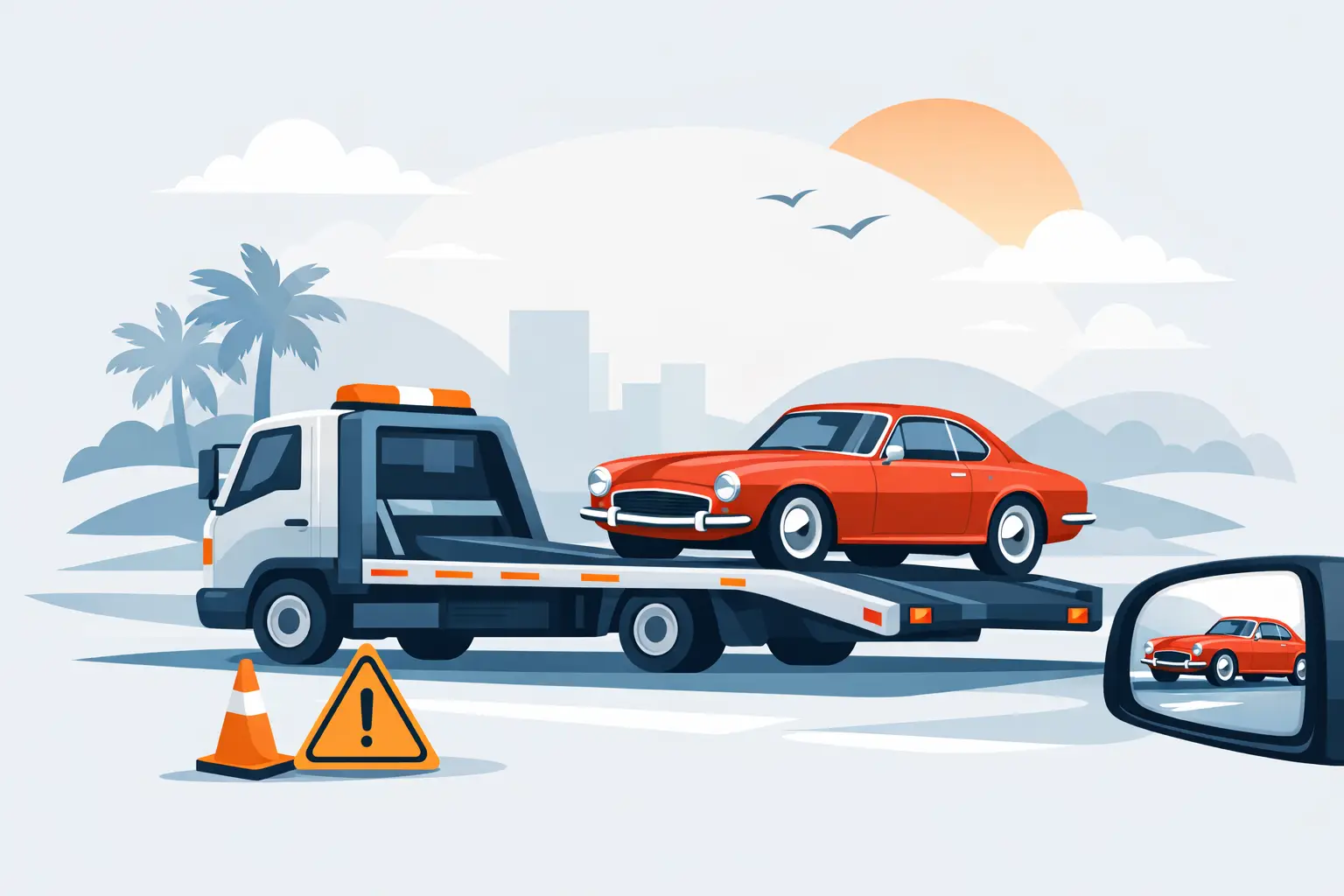
Flatbed-capable towing is usually the safest choice for a classic, collector, luxury, exotic, or low-profile vehicle. Keeping all four wheels off the pavement avoids drivetrain concerns and limits road exposure. Still, a flatbed alone is not a complete solution. The truck, loading angle, straps, securement points, and operator experience all matter.
Best Practices for Classic Car Towing Before Loading
A careful tow begins with a quick assessment, not a rushed hook-up. When calling for service, tell dispatch the year, make, model, whether the car rolls and steers, its approximate ride height, and the reason it needs transport. Mention aftermarket spoilers, air dams, low exhaust, a locked steering wheel, flat tires, or any known mechanical issue.
Photos can help when a car has unusually low clearance or visible damage. They allow the towing team to plan for ramps, wood blocks, skates, a winch, or another appropriate loading approach. This is especially helpful when a vehicle is in a tight garage, parked on gravel, or stopped along I-10, Loop 303, US-60, or I-17.
Before the vehicle moves, the operator should inspect its position and condition. Existing scratches, bumper damage, leaks, and loose trim should be documented. This protects the owner and creates a clear starting point for the transport.
The vehicle should also be checked for loose parts. Remove or secure items such as detachable mirrors, hubcaps, hood pins, toolboxes, and personal belongings that could shift in transit. If the car has an alarm, specialty ignition, battery disconnect, or unusual transmission procedure, explain it before loading begins.
Use the Right Equipment, Not the Fastest Shortcut
The wrong connection point can bend a bumper, crack a valance, damage a control arm, or pull on old sheet metal. Tow hooks and recovery eyes are not universal on vintage vehicles, and chrome bumpers are almost never a proper attachment point.
Soft straps are the preferred securement method for many classics because they distribute load around the tire rather than concentrating force on fragile suspension or body components. A soft-strap towing approach helps protect painted wheels, polished surfaces, and vehicle structure when used correctly. Chains may have a place in certain recoveries, but they should not be the default answer for a valuable collector car.
Loading angle matters just as much. A low-slung car can scrape its front spoiler, exhaust, frame crossmember, or rear valance as it transitions from the ground to the bed. Extended ramps, low-angle loading equipment, and controlled winching reduce this risk. If clearance is extremely limited, the operator may use ramp extensions or carefully placed blocks to soften the angle.
Winching should be slow and deliberate. A classic vehicle may not start, may have failed brakes, or may be unsafe to drive onto the bed under its own power. Controlled winch loading keeps the process predictable and avoids the sudden throttle input that can lead to a scrape or collision.
Never Rely on a Bumper Pull
A bumper pull may look convenient, but it is rarely appropriate for classic-car transport. Older bumpers, bumper brackets, and body mounts can be weakened by corrosion or age, even when they appear solid. Pulling from the bumper can distort panels or cause hidden structural damage.
The proper approach depends on the vehicle. An experienced operator identifies a suitable chassis or recovery point, uses the right straps or equipment, and keeps force away from cosmetic components whenever possible.
Secure the Car for the Entire Route
Once the vehicle is on the flatbed, the job is not finished. The car must be positioned for balanced weight distribution and secured so it cannot shift during turns, braking, freeway traffic, or rough pavement.
Wheel straps should sit correctly over the tires without rubbing against painted rims, brake lines, or delicate trim. The suspension should not be excessively compressed or used as a substitute for proper wheel securement. Strap tension needs a final check after the vehicle settles on the bed.
The operator should confirm that the parking brake, transmission position, steering condition, and key handling are appropriate for the vehicle. There is no single procedure for every classic. A manual-transmission muscle car, a rear-engine air-cooled coupe, and a vintage luxury sedan can each require different handling decisions.
For longer hauls, securement checks matter even more. Temperature changes, tire flex, and normal road vibration can affect strap tension. A professional transport plan includes periodic inspection, not just a quick look before leaving the pickup location.
Protect the Vehicle During Transport
Careful driving is part of damage-conscious towing. Hard braking, abrupt lane changes, sharp turns, and unnecessary speed can put stress on the vehicle and its securement. This is particularly relevant around busy Phoenix-area freeways, where traffic can change quickly and road surfaces can be uneven.
Route planning can reduce exposure to hazards. It may be worth avoiding a rough access road, a steep driveway, or a tight loading area if a safer alternative is available nearby. The shortest route is not always the best route when moving a rare or sentimental vehicle.
Weather matters in Arizona, too. Extreme heat can affect older cooling systems, tires, and fuel systems if the vehicle needs to run during positioning. Monsoon rain and blowing dust can reduce visibility and make shoulders slippery. A trained operator adjusts the recovery plan to actual conditions instead of treating every call like a routine tow.
Choose a Tow Provider That Asks the Right Questions
Price matters, but the lowest quote may not reflect the equipment or care a collector vehicle requires. Ask whether the provider can supply a flatbed, low-angle loading capability, soft straps, and an operator experienced with low-profile or classic vehicles. Confirm whether the company is properly registered and inspected for the work it performs.
It also helps to ask what information the driver needs before arrival. A towing company that asks about ground clearance, wheel condition, rolling ability, and destination access is planning the job rather than guessing at it. For scheduled moves, provide pickup and delivery details early so the right truck can be dispatched.
Pride Transport & Towing uses damage-conscious handling practices, flatbed-capable equipment, and soft-strap securement for specialty vehicles throughout the West Valley and Metro Phoenix. For an urgent roadside situation, clear communication with the dispatcher helps get the proper equipment to the vehicle without delay.
What Owners Can Do to Make a Tow Safer
Keep a small vehicle information card in the glove box or with your records. Include the vehicle’s ride height, battery location, transmission type, known safe lifting or recovery points, and the contact information for a trusted mechanic or restoration shop. This is useful if you are not present when the tow is arranged.
If the car is stored for long periods, check tire condition and inflation before a planned move. Tires that hold air can still be too old or cracked to support loading safely. Let the towing operator know if the brakes drag, the steering is locked, or the car cannot roll freely.
Most of all, do not let urgency force a poor decision. A classic car can wait a few extra minutes for the correct truck, ramps, or securement method. That patience is often what keeps a roadside problem from becoming a restoration project.