A collision on I-10, Loop 303, US-60, or a busy West Valley surface street changes the day fast. Once everyone is safe and the immediate emergency response is underway, accident towing Phoenix drivers can rely on should be about protecting both people and vehicles – not adding confusion to an already stressful situation.
The right next step depends on the condition of the vehicle, where it is sitting, whether law enforcement is directing the scene, and where you want it taken. A car that looks drivable may have hidden suspension, cooling-system, tire, or steering damage. Moving it under its own power can turn a repairable issue into a larger repair.
First, Secure the Scene and Follow Directions
Check for injuries first. If anyone may be hurt, call 911 and avoid moving injured people unless there is an immediate danger such as fire or active traffic. Turn on hazard lights if the vehicle can do so safely, and move out of traffic only when the vehicle is operable and doing so will not create more risk.
On high-speed routes such as I-17, I-10, and Loop 303, staying in or near a disabled vehicle can be dangerous. Keep a safe distance from moving traffic, watch for approaching vehicles, and follow instructions from police, fire personnel, or Arizona Department of Public Safety officers. If a vehicle is blocking lanes, leaking fluid, has deployed airbags, or has wheel and suspension damage, it generally needs professional recovery rather than a quick drive to the shoulder.
If conditions allow, take photos of the vehicle positions, visible damage, license plates, road conditions, and any debris. Exchange information with the other driver, but avoid arguing about fault at the scene. Your insurer and the proper authorities can handle that process later.
When Accident Towing in Phoenix Is the Safer Choice
Not every fender bender requires a tow. A vehicle with no fluid leaks, no tire damage, normal steering, working lights, and no warning signs may be able to leave safely after the scene is cleared. But collision damage is not always obvious, especially on modern vehicles with sensors, cameras, low-mounted radiators, and complex suspension components.
A tow is the safer decision when the vehicle has any sign of mechanical instability or cannot legally and safely travel. That includes damage to a wheel or tire, a bent steering component, a dragging bumper or underbody panel, leaking coolant or oil, a broken windshield that affects visibility, airbag deployment, overheating, or warning lights related to brakes, steering, or drivetrain systems.
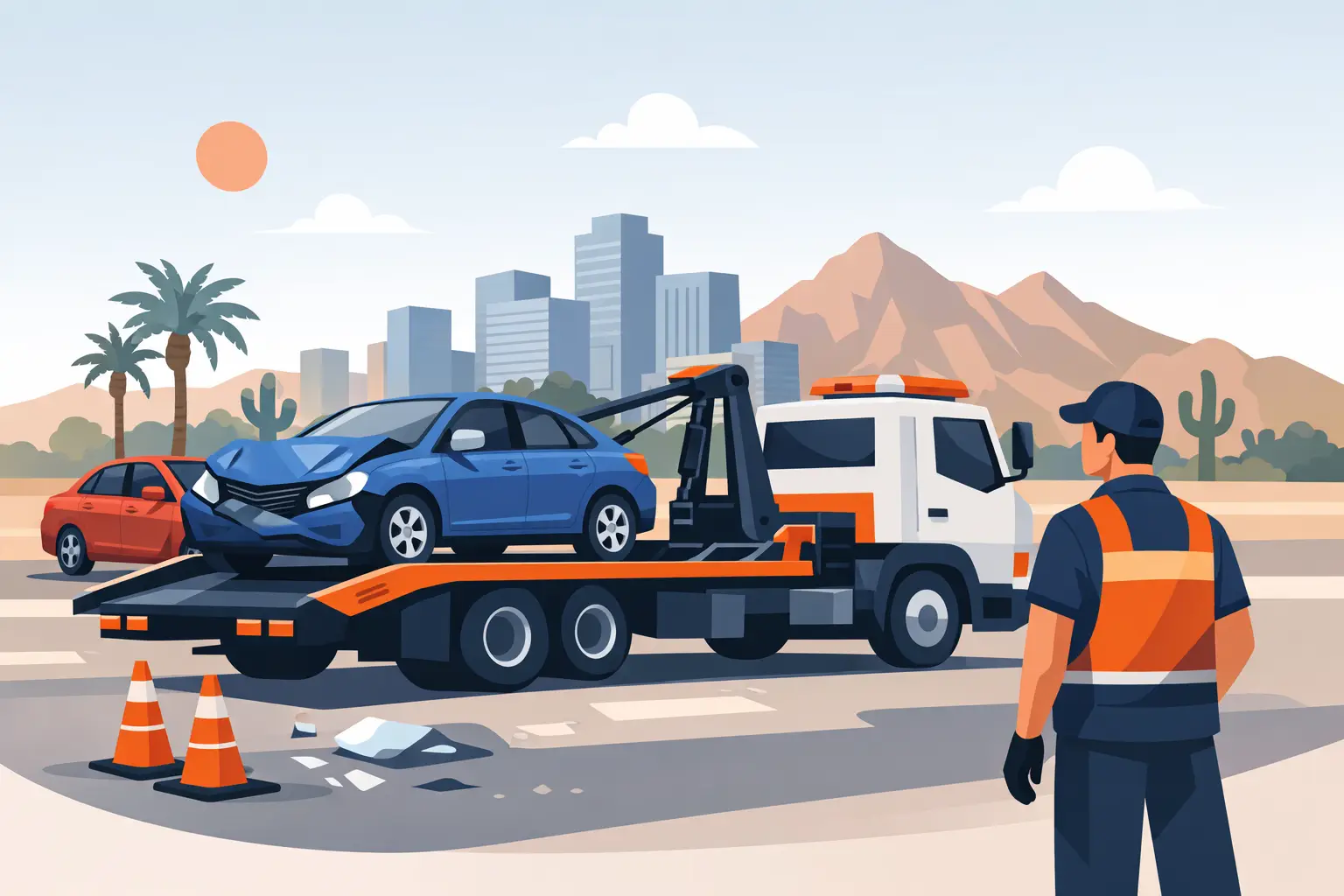
For a low-profile, luxury, classic, collector, exotic, or all-wheel-drive vehicle, flatbed transport is often the right approach after a crash. These vehicles can be vulnerable to bumper damage, undercarriage contact, or drivetrain damage if they are loaded or moved incorrectly. Proper loading angles, soft straps, and careful securement matter as much as the tow itself.
A motorcycle also needs purpose-built handling after a collision. It should be stabilized at multiple points and secured so it does not shift during transport. Hooking, pulling, or tying down a damaged motorcycle without the right equipment can cause additional damage to the forks, fairings, wheels, or frame.
Choose the Destination Before the Truck Arrives
You may have options for where the vehicle goes. Depending on the situation, that could be your home, a body shop, a mechanical repair facility, a dealership, or another location authorized by your insurer. If law enforcement has not directed the tow, ask the towing dispatcher whether the selected destination is accessible and whether the vehicle’s condition calls for a flatbed or recovery equipment.
Before authorizing transport, confirm the destination address, the vehicle year, make, model, and condition, and whether the keys are available. Tell the dispatcher about all relevant damage, including locked wheels, a flat tire, a broken axle, a vehicle in a ditch, or a car that cannot be shifted into neutral. That information helps send equipment that matches the job instead of creating delays at the scene.
If your car is headed to a shop after hours, verify that the facility can accept it or that there is a safe, authorized drop-off procedure. A shop parking lot is not always open or available for overnight deliveries. When an insurer is involved, keep the tow receipt, destination details, and photos of the vehicle for your claim records.
What a Professional Tow Operator Needs From You
Clear information makes emergency towing faster. When you call, provide your exact location or the nearest cross streets, your direction of travel if you are on a freeway, and a description of the vehicle. If you are on a major route, note visible exit signs, mile markers, landmarks, or whether you are on a frontage road.
Let the dispatcher know whether the car is in traffic, in a parking lot, in a median, off-road, or down an embankment. A simple tow from a safe parking space requires different planning than a recovery involving a ditch, loose ground, or an obstructed lane.
Be direct about specialty needs. Mention if the vehicle is lowered, all-wheel drive, electric, hybrid, classic, modified, or carrying expensive aftermarket components. The operator can then plan for the safest loading method and securement points. Damage-conscious transport is not an upgrade for vehicles that need it – it is the proper way to protect the asset during an already difficult event.
Avoid Common Post-Collision Mistakes
The urge to get moving quickly is understandable, but a few decisions can complicate the situation. Do not continue driving simply because the engine starts. A car can run while having damaged suspension, compromised cooling components, or a tire that could fail minutes later.
Do not allow an unfamiliar person to pressure you into a destination without explaining the tow arrangement. If police or highway personnel direct a tow because of scene safety, follow their instructions. If you have a choice, ask who is towing the vehicle, where it will be taken, and how to retrieve it if needed.
Also, do not leave important items behind. Take your wallet, garage remotes, medications, work equipment, registration, and personal belongings if it is safe to do so. Remove valuables from the vehicle, but do not crawl into an unsafe car or enter active traffic to retrieve them. If the vehicle must be left locked or the keys handed over, take a photo of its condition and note its destination.
Recovery Requires More Than a Tow Hook
Some crashes send vehicles beyond the shoulder. A car may end up in a wash, soft desert ground, a median, a ditch, or against a curb with damaged suspension. These situations require recovery planning, not force.
A trained operator evaluates the vehicle’s position, ground stability, attachment points, traffic exposure, and the risk of causing further damage during extraction. Winching may be needed to bring the vehicle to level ground before it can be loaded onto a flatbed. Pulling from the wrong point can damage a frame, bumper reinforcement, suspension arm, or drivetrain.
Pride Transport & Towing provides 24/7 dispatch and uses properly equipped towing and recovery methods for West Valley drivers, including specialty and low-clearance vehicles. For a collision recovery, the goal is simple: get the vehicle out of danger, load it correctly, and deliver it where it needs to go without creating a second damage event.
After the Vehicle Is Delivered
Once the vehicle reaches its destination, notify your insurer and provide the tow details, accident information, photos, and any report number you received. Ask the repair facility to document visible collision damage before work begins. If the vehicle is a specialty, collector, or high-value vehicle, request that the shop note transport-related condition at intake as part of its normal inspection.
Keep copies of the towing receipt and any storage paperwork. If the vehicle was taken to an impound or holding location, ask about release requirements, hours, fees, and what identification or ownership documents you will need. Acting promptly can prevent avoidable storage charges.
After a crash, the best tow is the one that removes uncertainty. Get to a safe location, provide accurate details, and choose a qualified operator who treats the vehicle as carefully as you would.