A vehicle can leave the pavement in a second. A soft shoulder gives way, a rain-cut drainage ditch is deeper than it looks, or a driver swerves to avoid traffic and cannot regain traction. Knowing how ditch recovery works can help you make safer decisions while you wait for professional help – especially on busy West Valley roads, desert shoulders, and uneven rural routes.
The goal is not simply to pull a vehicle back onto the road. A proper recovery brings the vehicle out without creating a rollover risk, damaging suspension or body components, tearing up the drivetrain, or putting the driver and recovery operator in danger. The right method depends on the vehicle’s position, the ground conditions, available anchor points, and how close traffic is to the scene.
The First Step Is Assessing the Scene
Before a winch line is connected, the recovery operator evaluates the situation. This is where many of the most important decisions happen. A vehicle resting level in a shallow, dry ditch requires a very different approach than an SUV leaning heavily on one side, a sedan buried in mud, or a truck sitting near a culvert.
The operator looks at the slope, soil firmness, standing water, ditch depth, wheel placement, and the vehicle’s angle. They also check for hazards such as traffic, loose gravel, deep washouts, utility boxes, fencing, guardrails, or unstable ground under the recovery truck. On freeway shoulders along I-10, US-60, Loop 303, or I-17, traffic control and safe truck positioning may be as important as the pull itself.
Vehicle condition matters too. If the car is still driveable, the operator checks whether the tires are intact, whether steering is functional, and whether there are visible fluid leaks or suspension damage. A vehicle with a damaged wheel, broken steering linkage, or deployed airbags may need to be winched onto a flatbed rather than pulled out and driven away.
Why the Driver Should Not Try to Power Out
Spinning the tires usually makes a ditch recovery harder. In loose Arizona dirt, sand, mud, or gravel, wheelspin digs the vehicle deeper and can bury the tires against the edge of the ditch. Trying to force the vehicle up a steep bank can also damage the front bumper, undercarriage, transmission, or exhaust.
If your vehicle is stuck, shift into park if it is safe to do so, set the parking brake, turn on hazard lights, and move away from traffic when possible. Do not stand downhill from the vehicle or near a taut recovery strap or cable. If the vehicle is unstable, remain in a protected location and let the recovery operator direct the scene.
How Ditch Recovery Works With Winching Equipment
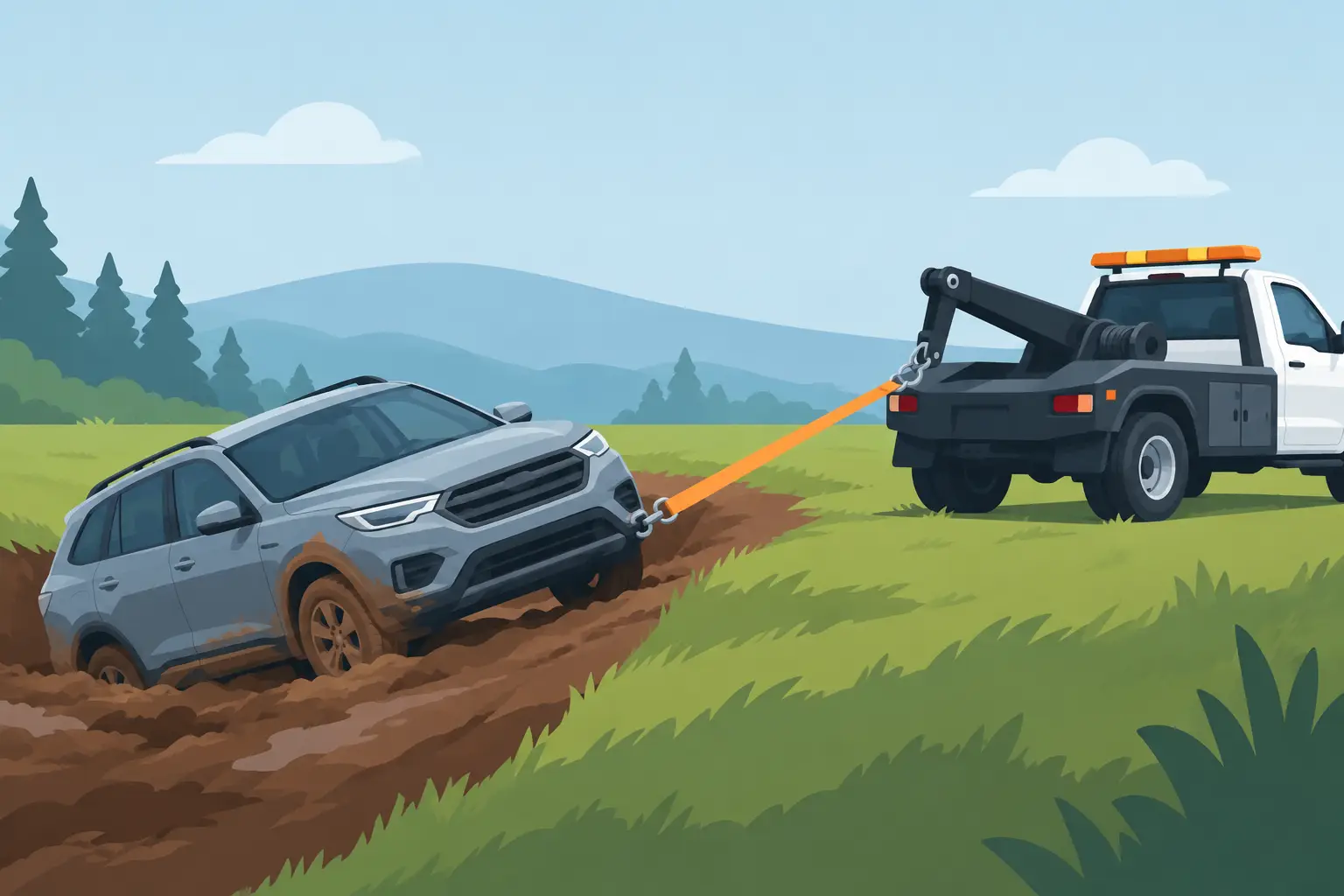
Most ditch recoveries use a winch rather than a hard pull. A winch gives the operator controlled, gradual force and allows the vehicle to move in small increments. That control is critical when a car needs to be pulled uphill, guided around an obstacle, or brought out at an angle.
The recovery truck is positioned on stable ground, usually in line with the intended path of travel. When a direct line is not possible, the operator may adjust the truck’s position or use specialized rigging to change the direction of the pull. The truck itself must be secure before tension is applied. Pulling from unstable ground can turn one stuck vehicle into two.
Next, the operator identifies approved recovery points on the vehicle. These are structural locations designed to handle recovery force. A professional avoids attaching to weak suspension parts, plastic bumper covers, steering components, or other areas that can bend, break, or cause hidden damage. The attachment method varies by vehicle, but soft straps, recovery straps, hooks, bridles, and other rated equipment may be used based on the job.
For classic, luxury, exotic, and low-profile vehicles, attachment choice is especially important. A careless connection can damage paint, trim, cooling components, or body panels. Damage-conscious recovery means using the correct points, protecting contact areas, and moving the vehicle slowly enough to stop if something shifts.
Once the line is attached and the recovery path is clear, the operator takes up slack gradually. The vehicle may be guided while the winch does the work, with the driver steering only when it is safe and specifically requested. The operator watches tire movement, vehicle angle, line tension, and the condition of the bank throughout the pull.
A recovery is not always a single straight pull. Sometimes the vehicle must be moved a few feet, repositioned, and then winched again. That slower process may look cautious, but it is often the safest way to prevent additional damage.
The Ground Changes the Recovery Plan
A dry, shallow ditch with firm soil may allow for a straightforward winch-out. Wet clay, loose sand, deep mud, or a steep erosion channel can require more preparation. The vehicle may sink further as weight shifts, and the recovery truck may need a different approach angle or a more secure setup.
In soft ground, operators may clear packed dirt from around tires, create a safer exit path, or use traction support as part of the recovery plan. The key is to avoid sudden loads. Jerking a vehicle with a chain or making an aggressive tow attempt can cause damage to both vehicles and increase the chance of an attachment failure.
Water adds another layer of concern. Even a ditch that looks shallow can conceal uneven ground, rocks, washed-out areas, or debris. If water has reached the vehicle’s intake, electrical components, cabin, or driveline, the safest next step may be transport to a repair facility rather than attempting to start and drive it.
When a Flatbed Is the Better Choice
Getting a vehicle out of the ditch is only part of the job. Once it is on stable ground, the operator determines whether it should be driven, towed conventionally, or loaded onto a flatbed.
A flatbed is often the better option when the vehicle has collision damage, low ground clearance, an all-wheel-drive system, a flat tire, steering issues, or possible undercarriage damage. It is also the preferred choice for collector cars, motorcycles, luxury vehicles, and vehicles whose owners want the highest level of transport protection.
The loading process should be just as controlled as the extraction. Low-profile vehicles may require careful ramp positioning to prevent scraping. Soft-strap securement helps protect wheels and avoids unnecessary contact with painted or sensitive components. Once loaded, the vehicle can be transported to a home, repair shop, dealership, or other requested destination.
What Affects Ditch Recovery Time and Cost
No two ditch recoveries are identical. A vehicle near the edge of a shallow ditch may be recovered quickly. A vehicle deep in a drainage channel, stuck in mud, facing the wrong direction, or located on a high-speed roadway will take more planning and may require more equipment.
The main factors are the vehicle’s location, the distance from stable pavement, terrain condition, vehicle size, damage level, traffic exposure, and whether a flatbed or additional recovery equipment is needed. Nighttime work can also take longer because visibility and roadside safety procedures become more demanding.
Accurate information helps dispatch send the right truck. When requesting service, describe where the vehicle is, how far it is from the road, whether it is upright, what type of vehicle it is, and whether it has visible damage. A nearby cross street, mile marker, landmark, or GPS location can reduce delays when you are on a less familiar stretch of road.
Stay Safe Until Help Arrives
If you are stuck near active traffic, personal safety comes before protecting the vehicle. Turn on hazard lights. If you can exit safely, move behind a guardrail or well away from the roadway. Do not stand between your vehicle and the recovery truck, and keep passengers out of the recovery area.
Avoid accepting an improvised pull from another driver with an unknown strap, rope, or tow point. A broken strap or failed attachment can cause serious injury, while an incorrectly attached pull can create expensive vehicle damage. Professional recovery equipment is rated for the job and used with a planned pull path.
For drivers in Surprise, the West Valley, and Metro Phoenix, Pride Transport & Towing can provide 24/7 dispatch for controlled ditch extraction, off-road winch-outs, and damage-conscious transport after recovery. If your vehicle is stuck, give yourself room, stay clear of the pull zone, and let a trained operator bring it back to stable ground the right way.