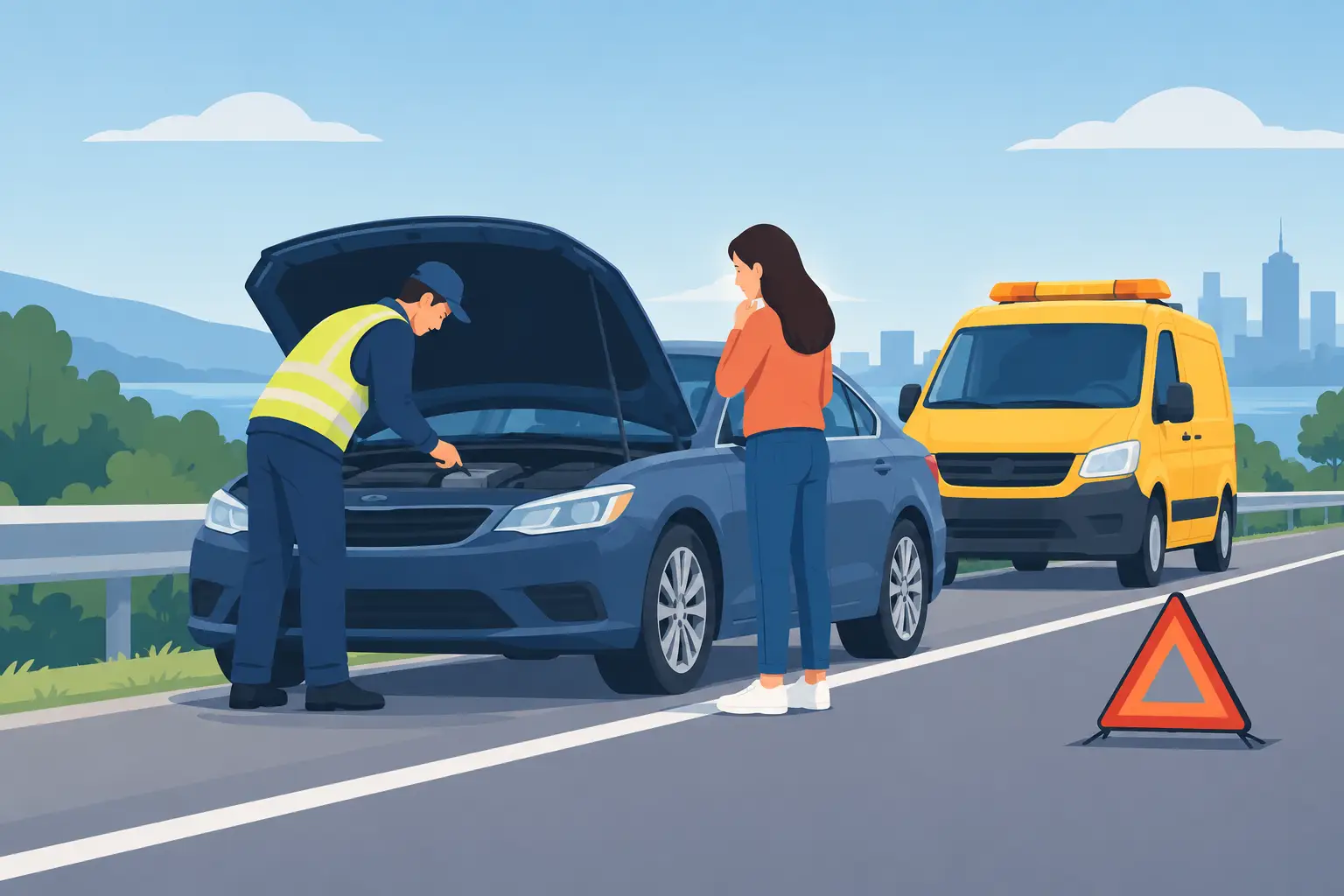
A dead battery at a grocery store, a tire failure on Loop 303, or keys locked inside the car can turn an ordinary drive into a safety concern fast. Reliable roadside assistance is about more than getting a vehicle moving again. It is about putting the driver in a safer position, using the right equipment for the problem, and making a clear decision when a quick fix is no longer the safe option.
For drivers in Surprise, the West Valley, and across Metro Phoenix, roadside situations often happen in demanding conditions. Summer heat weakens batteries. Long freeway stretches leave little room for error. Construction zones, heavy traffic, and desert shoulders can make even a simple flat tire more complicated than it first appears.
What Roadside Assistance Can Solve on the Spot
Many breakdowns do not require a full tow. When the vehicle is safely accessible and the issue is straightforward, an experienced operator can often get you back on the road where you are. The key is identifying the actual problem instead of guessing.
A jump start is appropriate when a weak or discharged battery is the only issue. Heat, age, loose battery terminals, interior lights left on, and short trips can all leave a battery without enough power to crank the engine. If the vehicle starts after a jump but the battery warning light remains on, the charging system may be at fault. In that case, driving farther could leave you stranded again, and towing to a repair facility is usually the better call.
Lockout service helps when keys are inside the vehicle, the fob has failed, or a door has accidentally locked while loading groceries, tools, or children. Proper entry methods matter. Forcing a door or attempting internet tricks can damage weather stripping, window mechanisms, locks, or side-curtain airbag areas. A professional operator uses the correct tools and techniques to regain access with care.
Flat-tire service can include installing your usable spare or helping determine whether the tire damage calls for a tow. A spare is not always a full solution. Many newer vehicles have compact temporary spares with speed and distance limits. Some vehicles have no spare at all, while others have wheel locks, specialty lug nuts, or low-profile tires that require additional care. If the wheel is damaged, the tire is shredded, or the vehicle cannot be safely supported at the roadside, transport is safer than trying to force a repair.
Fuel delivery may also solve a simple miscalculation, but it is worth considering why the vehicle ran out. A faulty fuel gauge, fuel leak, or sudden loss of fuel economy can point to a mechanical issue that needs attention before the next long drive.
First Steps When You Need Roadside Assistance
Your first priority is not diagnosing the vehicle. It is getting yourself and your passengers out of immediate danger. If the car is still moving, signal early, slow down gradually, and aim for a well-lit parking area, exit ramp, or wide shoulder when possible. Avoid stopping around blind curves, narrow bridge shoulders, or active traffic lanes unless the vehicle cannot move.
Once stopped, take four practical steps:
- Turn on hazard lights and set the parking brake.
- Move passengers away from traffic when it is safe to do so.
- Keep clear of the vehicle if you are on a busy freeway shoulder.
- Share your exact location, vehicle description, and the problem when requesting help.
On I-10, US-60, I-17, Loop 303, or other high-speed routes, location details make a real difference. Mention the direction of travel, nearest exit, mile marker, cross street, landmark, and whether the vehicle is on the shoulder, in a parking lot, or off-road. A dispatcher can send the right truck faster when the situation is described accurately.
If you have a tire blowout, collision damage, smoke from the engine bay, a fuel smell, or a vehicle partly in a traffic lane, do not continue driving just to reach the next exit. The cost of a tow is small compared with the risk of a fire, a secondary collision, or major mechanical damage.
When a Tow Is the Safer Choice
Roadside service is useful when a vehicle can be made safe and operable. Towing is the better solution when the vehicle cannot be driven without risking the driver, other motorists, or the vehicle itself.
A tow is generally appropriate after a collision, when the engine overheats, when a transmission will not engage, when steering or braking feels abnormal, or when warning lights point to a serious problem. It is also the right choice for a repeated no-start condition. A jump start may get the engine running, but it cannot repair a failing alternator, damaged battery cable, fuel delivery issue, or electrical fault.
Drivers of all-wheel-drive, electric, hybrid, luxury, classic, exotic, and low-clearance vehicles should be especially careful about how the vehicle is moved. Improper wheel-lift towing can damage driveline components on certain vehicles. Low front bumpers, splitters, air dams, and custom suspension components can be damaged during loading if the operator does not use the right angle, ramps, and securement approach.
Flatbed-capable transport is often the preferred method for vehicles that require extra protection. Soft-strap securement helps avoid unnecessary contact with painted wheels and delicate suspension components. That level of handling is not just for show cars. It is also valuable for motorcycles, collector vehicles, lowered daily drivers, and any vehicle an owner wants moved without adding another problem to the repair list.
Roadside Problems Beyond the Pavement
West Valley driving is not limited to city streets and freeways. Desert roads, construction areas, job sites, soft shoulders, washes, and unpaved access routes can create recovery situations that ordinary roadside service cannot solve.
A vehicle stuck in sand, mud, a ditch, or loose gravel needs a controlled recovery plan. Spinning the tires usually digs the vehicle in deeper. Attaching a chain to the wrong point can bend suspension parts, tear off a bumper, or cause a dangerous failure under tension. A proper winch-out considers the vehicle’s weight, angle, anchor point, ground condition, and whether the wheels or underbody have already been damaged.
The same judgment applies to light equipment hauling. Skid steers, forklifts, compact tractors, toolboxes, sheds, and similar loads need the right trailer capacity, balanced loading, and securement. When equipment has to move from a job site or repair shop, the goal is not simply getting it onto a trailer. It is delivering it in the same condition it was loaded.
What to Tell the Dispatcher
A quick, accurate call helps match the response to your situation. Start with your location and whether anyone is hurt or exposed to traffic. Then provide the year, make, model, and color of the vehicle, followed by the issue: dead battery, lockout, flat tire, no-start, collision, overheating, stuck vehicle, or transport request.
Mention details that affect equipment choice. Tell the dispatcher if your car is lowered, has all-wheel drive, is electric or hybrid, has oversized tires, is a motorcycle, or is carrying valuable equipment. If the vehicle is in a garage, on a narrow driveway, behind a gate, or off a paved road, say so upfront. Those details help avoid delays and make sure the responding operator arrives prepared.
For scheduled transport, have the pickup and delivery addresses, approximate dimensions or weight of the load, access conditions, and preferred timing ready. A clear description supports safer loading and more accurate planning.
Why Local Response and Proper Equipment Matter
The closest available truck is not always the right truck. A basic jump start, a low-clearance tow, a motorcycle pickup, and an off-road recovery all call for different equipment and operator judgment. Fast response matters, but so does arriving ready to handle the job correctly.
Pride Transport & Towing provides 24/7 dispatch for urgent roadside calls and transport needs throughout Surprise, Peoria, Glendale, El Mirage, Sun City, Sun City West, Waddell, and surrounding West Valley routes. ADOT-registered, inspected operations and damage-conscious handling give drivers a practical choice when they need help without added uncertainty.
If you are stranded, stay visible, stay away from moving traffic, and resist the urge to turn a manageable problem into a dangerous repair attempt. The right roadside response can get you moving again, while the right tow can protect your vehicle when moving it yourself is no longer worth the risk.