A locked vehicle can turn a routine stop at a Surprise grocery store, a trailhead near Waddell, or a shoulder on Loop 303 into an immediate problem. Knowing how car lockouts get resolved helps drivers make a safer decision under pressure: protect the vehicle, verify ownership, and use the right entry method instead of forcing a door or breaking glass.
For most drivers, the goal is simple: regain access quickly and get moving. A professional lockout response is built around that goal, but it also accounts for the vehicle’s security system, window and weather-seal protection, key type, location, and whether a child, pet, or medical emergency is involved.
Start by Making the Scene Safe
Before anyone works on the vehicle, move yourself and any passengers out of traffic if possible. On I-10, US-60, I-17, or a busy West Valley arterial, stand well away from passing vehicles and avoid waiting directly beside the driver’s door. Turn on hazard lights if the vehicle has power and it is safe to do so.
Check every available access point before calling for help. A rear hatch, passenger door, or a door that did not fully latch may provide an easy solution. If the keys are visible inside, resist the urge to use a coat hanger, screwdriver, wedge, or other improvised tool. Those methods can bend a door frame, tear weather stripping, scratch paint, damage side-impact components, or interfere with wiring inside the door.
If a child, pet, vulnerable adult, or someone needing medical assistance is locked inside, treat it as an emergency. Call 911 first. In Arizona heat, the interior temperature of a vehicle can rise quickly, even during a short stop. A roadside provider can assist when dispatched, but emergency services should lead when a life may be at risk.
How Car Lockouts Get Resolved at the Vehicle
A proper lockout begins with confirmation that the person requesting entry is authorized to access the vehicle. A driver’s license, registration, insurance card, rental agreement, or other proof of possession may be reviewed. Documents are often inside the car during a lockout, so an experienced operator will work reasonably with the information available while keeping vehicle security in mind.
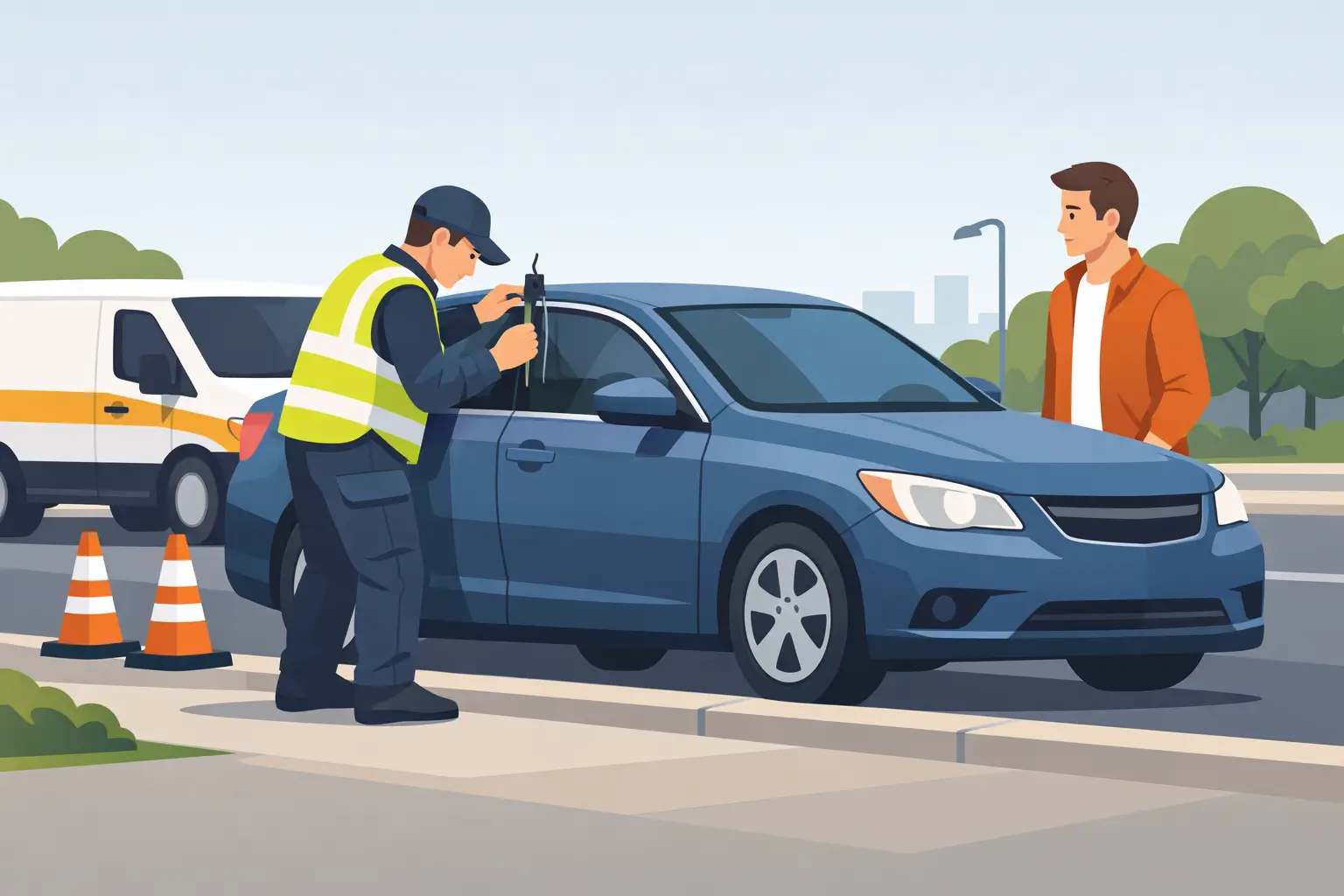
The entry method depends on the vehicle. On many cars and trucks with accessible manual lock hardware, a trained operator may use a protected air wedge to create a very small working gap at the top of a door frame. A long-reach tool can then operate the interior lock control, handle, or key fob. The wedge is not used to force the door open. It is positioned carefully, inflated only as needed, and removed once access is restored.
Other vehicles require a different approach. Some older models can be accessed through the window channel with specialized tools. Certain commercial vehicles, vans, and pickups have layouts that change the safest point of entry. A technician should choose the method based on the actual vehicle rather than relying on a one-size-fits-all technique.
The goal is to restore entry without damaging glass, trim, weather seals, door latches, paint, or electronic components. Fast service matters, but a rushed method that leaves a wind whistle, water leak, or bent door frame is not a successful lockout service.
Modern Keys and Electronic Security Change the Process
Many newer vehicles use proximity fobs, electronic release buttons, alarm systems, and deadlocking features. These systems make vehicles harder to access without the key, which is good for security but can limit traditional lockout methods.
A roadside lockout operator can often gain entry without programming a new key. However, gaining entry is different from replacing a lost key, repairing a broken fob, or correcting an immobilizer issue. If the vehicle will not start after access is restored, the problem may involve a drained key-fob battery, a dead vehicle battery, a damaged key, or an anti-theft system that requires a locksmith or dealership-level programming.
This distinction saves time. A lockout service addresses access. Key cutting and transponder programming are separate services that may require vehicle-specific equipment, proof of ownership, and more time.
Why Do-It-Yourself Entry Can Cost More
Lockout videos can make entry look easy, especially on older vehicles. What they do not show is the risk behind the door panel. Modern doors may contain wiring harnesses, airbag-related sensors, cable-operated handles, electronic latches, and delicate trim clips. One misplaced tool can create a repair that costs far more than a professional roadside call.
Breaking a window creates additional hazards. Tempered glass can scatter inside the cabin, and replacement side glass may not be immediately available. It also leaves the vehicle exposed to weather and theft until repairs are completed. Breaking glass is generally reserved for a true life-safety emergency when emergency responders direct that action or no safer option exists.
Even slim-jim style tools are not universal. Used incorrectly, they can disconnect linkage, damage lock rods, or create a door that will not open normally after the immediate problem is solved. The right tool is only part of the job. Knowing where to place it matters just as much.
The Lockout Call Should Be Clear and Specific
A dispatcher can send the right roadside operator faster when the caller provides accurate details. Give the year, make, model, and color of the vehicle; the exact location; whether the keys are visible inside; and whether the vehicle is running. Mention if it is parked in a garage, on a narrow shoulder, in a gated lot, or in another place with limited working room.
It also helps to explain what happened. A key left on the seat is different from a fob that stopped working, keys lost in a store, or a trunk that closed with all belongings inside. If the vehicle is running, say so immediately. A running vehicle may affect safety planning, especially in enclosed areas or extreme heat.
For high-value, luxury, classic, or low-profile vehicles, tell the dispatcher before service is sent. These vehicles may have sensitive trim, frameless glass, unusual door construction, or security features that call for extra caution. If entry cannot be completed safely at the location, protected transport to a qualified shop or dealership may be the smarter option.
What Happens After Entry Is Restored
Once the door is open, take a minute to confirm the vehicle is secure and operating normally. Test the door handle, lock button, window, and key fob before the operator leaves. If the vehicle has a low-battery warning or the fob only works intermittently, replace the fob battery soon and keep a spare key or backup fob accessible.
A lockout can also reveal another roadside issue. If the car will not start after the keys are recovered, a jump start may be needed. If a damaged fob, lost keys, or an electronic fault prevents starting, towing may be the safest next step. Pride Transport & Towing can coordinate roadside help or transport when a simple entry call turns into a larger vehicle problem.
A Better Plan for the Next Time
The best prevention is practical, not complicated. Keep a spare key with a trusted person or in a secure location away from the vehicle. Replace weak key-fob batteries before they fail completely. If your vehicle has a manufacturer app that supports remote access, make sure the account is active and that you know the login information before an emergency occurs.
Most lockouts are resolved without drama when the driver avoids forced entry, provides clear location details, and calls for trained assistance. If you are stranded in the West Valley or along the Metro Phoenix transportation corridor, focus first on your safety, then let the right equipment and a careful approach get you back inside your vehicle.