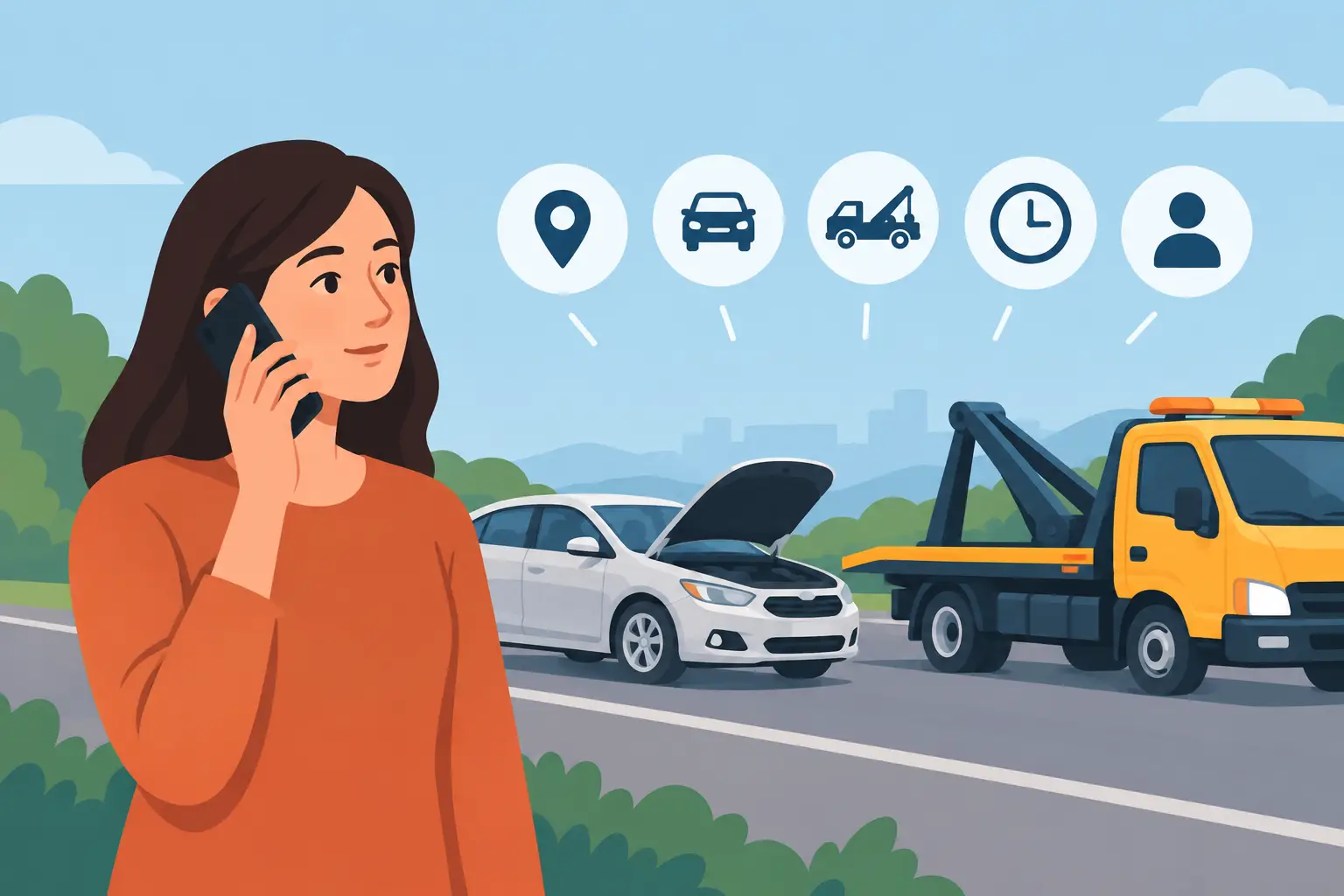
A dead battery in a Surprise parking lot or a breakdown on Loop 303 is stressful enough. The best questions before calling a tow truck can prevent a second problem: sending equipment that is not right for your vehicle, recovery location, or destination. A few clear details help the dispatcher send the proper operator, give you realistic expectations, and get you safely out of traffic.
You do not need to know towing terminology before you call. Describe what happened as clearly as you can, keep yourself safe, and ask the questions that affect timing, cost, and vehicle care.
Start with safety before discussing the tow
If your vehicle is stopped in an active lane, on a freeway shoulder, or near a blind curve, your first concern is your location and immediate safety. Turn on hazard lights if possible, move away from moving traffic when it is safe to do so, and follow instructions from law enforcement or roadside personnel.
When you call, tell the dispatcher whether the vehicle is in a dangerous position, blocking traffic, in a parking structure, stuck off-road, or parked on a normal paved surface. A standard tow and a recovery are not always the same job. A vehicle buried in soft sand, sitting in a ditch, or positioned nose-down off a trail may need winching equipment and a different recovery approach.
What questions should you ask before requesting a tow?
1. Can you handle my specific vehicle and situation?
Start with the basics: your vehicle year, make, model, and condition. Tell the dispatcher whether it starts, rolls, steers, and has inflated tires. A car with a locked steering wheel, damaged suspension, missing wheel, or electronic parking brake may need special loading procedures.
This question matters even more for motorcycles, all-wheel-drive vehicles, EVs, lifted trucks, low-profile cars, classic vehicles, and exotics. These vehicles can require a flatbed, ramps with the right loading angle, soft straps, wheel straps, or additional care around clearance points. Do not assume that every tow setup is appropriate for every vehicle.
If you own a collector car or luxury vehicle, ask directly how it will be secured. A damage-conscious provider should be able to explain whether a flatbed is available and how they protect the vehicle during loading and transport. Soft-strap handling is not a minor detail when paint, bodywork, wheels, or low ground clearance are involved.
2. Do I need a tow, roadside service, or vehicle recovery?
Not every roadside call requires transport. If the issue is a dead battery, lockout, flat tire, or an empty fuel tank, roadside assistance may get you moving without the cost and delay of a tow. Describe the symptoms rather than diagnosing the problem yourself. For example, say the engine clicks but will not start, the tire sidewall is split, or the key is locked inside the vehicle.
There are situations where towing is the safer choice even if the car starts. Overheating, steering problems, flashing warning lights, collision damage, fuel leaks, severe tire damage, or a vehicle that will not shift properly should not be driven just to avoid a tow. Ask the dispatcher whether the condition sounds safe for roadside service or whether transport is the better call.
3. What equipment will you send?
This is one of the most useful questions before calling a tow truck, especially when the vehicle is not on level pavement. Ask whether the job calls for a flatbed, wheel-lift, winch-out equipment, or a specialty setup.
The answer depends on the vehicle and the location. A front-wheel-drive sedan in a parking lot may be straightforward. A disabled all-wheel-drive SUV, a low sports car, a motorcycle, or a vehicle stuck in desert terrain calls for more planning. If your vehicle is in a garage, behind a locked gate, on a narrow residential street, or down an unpaved access road, mention that before dispatching begins.
For equipment hauling, provide dimensions, approximate weight, whether it runs, and how it can be loaded. Skid steers, forklifts, tractors, sheds, toolboxes, and other light equipment require securement planning that is different from passenger vehicle towing.
4. How soon can the driver arrive, and how will I get updates?
A realistic arrival window is better than a vague promise. Ask for an estimated arrival time based on your exact location, traffic, weather, and current call volume. The distance from a tow operator matters, but freeway conditions and the type of equipment needed matter too.
Give a precise location whenever possible. On I-10, US-60, I-17, or Loop 303, include the direction of travel, nearest exit, mile marker, and whether you are on the shoulder, a frontage road, or an on-ramp. In neighborhoods and parking lots, provide the address, cross streets, business name, and a description of where the vehicle is parked.
Ask how the driver will identify themselves and whether dispatch can update you if conditions change. Clear communication is especially valuable at night, during extreme heat, or when you are waiting with children, pets, or a vulnerable passenger.
5. What will the tow cost, and what could change the price?
Ask for a clear estimate that covers the dispatch or hook fee, mileage, and any likely additional charges. The lowest quoted starting price is not always the final price, particularly if the vehicle is inaccessible, needs a winch-out, has locked wheels, or requires specialty handling.
Be direct about the circumstances so the estimate is meaningful. Tell the dispatcher if the car is in a ditch, underground garage, soft shoulder, construction area, or private property with limited access. Ask whether after-hours service, tolls, storage, recovery time, or additional labor may apply.
The right provider should explain the likely cost structure in plain language. Exact pricing can depend on what the operator finds on arrival, but you should understand the expected charges before authorizing the service.
6. Where will the vehicle be taken?
Have a destination in mind before the truck arrives. It may be your home, a trusted repair shop, a dealership, a tire shop, or a collision center. Confirm the destination address, after-hours drop-off rules, and whether the shop has space to receive the vehicle.
If the repair facility is closed, ask whether it accepts after-hours vehicle drop-offs and where the keys should go. A shop may have specific instructions for gated lots, key boxes, or vehicle placement. Getting this sorted out on the roadside is easier than finding out the destination is closed and inaccessible.
For a long-distance tow, ask whether the full trip can be completed directly or whether scheduling, timing, and vehicle handoff arrangements need to be discussed. Long-haul transport has different planning needs than a local tow across the West Valley.
7. What do I need to remove or prepare before loading?
Take personal items, valuables, garage remotes, work tools, and important documents out of the vehicle if you can safely do so. If the vehicle will go to a repair facility, keep the registration, insurance information, and key available for the driver or shop.
Tell the dispatcher about any special considerations: a wheel lock key, a sensitive alarm, a push-button start fob, a vehicle that cannot be placed in neutral, or aftermarket modifications that affect loading. These details save time and help prevent avoidable damage.
If you cannot stay with the vehicle, ask what authorization or documentation is needed. The towing provider may need proof of ownership, photo identification, and destination instructions before moving the vehicle.
Give the dispatcher the details that make the response faster
Before you place the call, gather your location, vehicle information, destination, and a brief description of the problem. Take a few photos if there is collision damage, off-road positioning, or a complicated access issue. Photos can help explain the scene, but never stand in traffic or enter an unsafe area to get them.
Pride Transport & Towing handles 24/7 towing, roadside assistance, recoveries, and specialty transport throughout Surprise, the West Valley, and the Metro Phoenix corridor. The more accurately you describe the vehicle and scene, the easier it is to send equipment that fits the job instead of making you wait through an avoidable equipment change.
When you are stranded, you do not need to have every answer. Give the clearest information you can, ask about safety, equipment, timing, and cost, then let a qualified operator take it from there.