A skid steer that arrives late can hold up an entire crew. A forklift that is not ready to load can turn a simple pickup into a costly delay. Knowing how to prepare equipment transport before the truck arrives protects your machine, helps the operator load safely, and keeps the job moving across Surprise, the West Valley, and Metro Phoenix.
Equipment hauling is not just a matter of putting a machine on a trailer. Weight, dimensions, ground conditions, attachment position, tie-down points, and route restrictions all affect the plan. A little preparation at the pickup location can prevent damage, avoid unsafe loading conditions, and give your transport provider the information needed to send the right truck and trailer.
Start With Accurate Equipment Details
The first step is identifying exactly what needs to move. Terms such as tractor, loader, forklift, or skid steer are helpful, but they do not provide enough information on their own. Two machines in the same category can differ significantly in operating weight, height, width, and loading requirements.
Have the make, model, approximate weight, overall dimensions, and pickup and delivery addresses ready. Mention every attachment that will travel with the machine, including buckets, forks, augers, brush cutters, pallet forks, or trailer-mounted toolboxes. Attachments can change the loaded width, length, center of gravity, and total weight.
If you are unsure of the equipment weight, check the manufacturer plate, owner’s manual, rental agreement, or dealer specifications. Do not guess low. The right trailer, ramps, winch capacity, and securement plan depend on the actual loaded weight.
Photos are also useful, especially when the machine has unusual damage, a broken tire, a dead battery, a lowered boom, or an attachment that cannot be removed. A few clear photos from the front, sides, rear, and operator area help a hauling operator assess the job before arrival.
Inspect the Machine Before Equipment Transport
A quick walk-around should happen before scheduled equipment transport, even when the machine is only traveling a short distance. The goal is not to make every piece of equipment look new. It is to document its condition and catch issues that affect loading or safe travel.
Look for loose panels, leaking hydraulic lines, unsecured batteries, hanging chains, damaged tires, and attachments that could shift. If the machine is operable, test the brakes, steering, lift controls, and parking brake. Let the transport operator know about any mechanical issue before they arrive, particularly if the equipment cannot drive, steer, brake, or hold itself in position.
Take dated photos of existing dents, scratches, cracked glass, and visible leaks. This is especially smart for rented equipment, machines headed to repair, and higher-value units being sold or delivered to a customer. Clear documentation keeps expectations straightforward for everyone involved.
Remove personal tools, loose parts, trash, and unsecured materials from the cab, bed, deck, or storage compartments. A drill case, fuel can, spare chain, or loose bucket tooth can become a road hazard if it comes free during transport.
Make the Pickup Site Safe and Accessible
The machine may be ready, but the loading location has to be ready too. Heavy equipment needs firm, reasonably level ground for ramps, winching, and securement. Soft desert soil, loose gravel, steep driveways, low branches, or a narrow gate can change the entire loading approach.
Before the truck arrives, clear parked vehicles, construction debris, pallets, and other obstacles from the access path. Make room for the tow vehicle and trailer to pull in, maneuver, load, and exit without backing across unsafe ground. If the site is behind a locked gate, make sure someone with access is present at the scheduled time.
Pay attention to overhead clearance. Trees, awnings, power lines, carports, and low roof edges can create problems when loading tall equipment such as tractors, compact excavators, forklifts, or scissor lifts. Never attempt to move or work near power lines yourself. Tell the dispatcher about the clearance issue so the transport plan can be adjusted.
For remote properties, job sites, and off-road locations, provide practical directions rather than relying only on a pin drop. Include the gate entrance, cross streets, road surface, whether a trailer can turn around, and any wash crossings or muddy areas. In the Phoenix area, an otherwise easy route can become difficult after monsoon rain or on undeveloped lots with deep loose sand.
Prepare Equipment for Loading
Whenever the machine can be safely operated, prepare it in a stable travel configuration. Lower booms, buckets, forks, blades, and other implements as directed by the equipment manufacturer. Retract or secure extensions, fold mirrors where appropriate, close cab doors and windows, and set the parking brake once the machine is positioned.
Shut the equipment down unless the operator instructs otherwise. Keep the keys available for the driver, but do not leave them sitting in an unlocked cab. If a machine has a battery disconnect, special startup procedure, immobilizer, air brake system, or hydraulic lockout, explain it at pickup.
Fuel level deserves some judgment. A machine needs enough fuel to load and unload if it is operational, but a full tank adds unnecessary weight and may be a concern if there is a leak. For longer moves or non-running equipment, tell the transport company about fuel quantity and any fluid concerns ahead of time.
Do not try to improvise a repair just before loading. A loose steering component, leaking cylinder, damaged track, or weak parking brake can make the machine harder to secure. Honest information allows the operator to use a winch, additional blocking, different ramps, or another safe loading method.
Secure Attachments, Accessories, and Loose Cargo
Transporting the machine and transporting its accessories are two related but different tasks. Forks, buckets, implements, detachable counterweights, ramps, toolboxes, and spare parts must all be accounted for and secured according to their own weight and shape.
Small loose items should be boxed, strapped, or transported separately when practical. Heavy attachments should be loaded in a position that does not overload the trailer, interfere with tie-downs, or create a shifting hazard. Forklift forks, for example, may need to be removed or secured so they cannot move during transit.
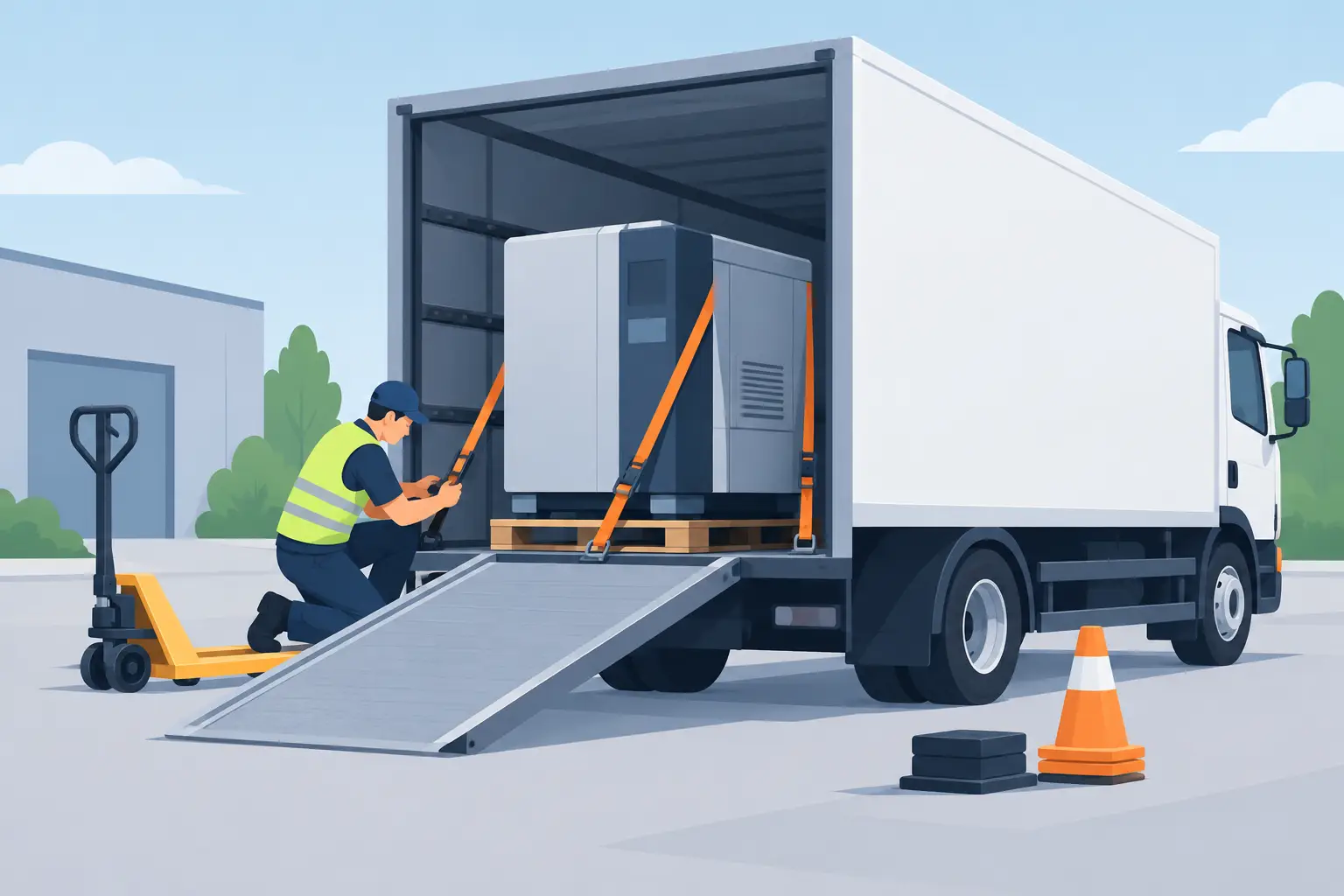
A professional hauler will use appropriate chains, binders, straps, and securement points based on the equipment and trailer configuration. Do not assume ordinary cargo straps are suitable for a heavy machine. Proper securement is about more than keeping equipment from rolling off the trailer. It controls movement under braking, cornering, bumps, and emergency maneuvers.
Confirm Route, Timing, and Delivery Conditions
The lowest-cost route is not always the best route for light equipment hauling. Trailer height, loaded width, traffic conditions, freeway construction, steep access roads, and delivery-site space all matter. Share the pickup and delivery time windows early, especially if the equipment must arrive before a concrete pour, rental return deadline, inspection, or service appointment.
At delivery, confirm who will receive the machine and whether someone authorized to operate it will be present. The unloading area should be clear, firm, and level enough for the trailer and equipment. If the equipment is being dropped at a repair shop, equipment yard, residence, or job site after hours, arrange access and instructions in advance.
Have the key documents ready when they apply: rental paperwork, proof of ownership, bill of sale, work order, delivery authorization, or site contact information. For commercial jobs, a purchase order number or receiving contact can prevent confusion after the equipment is unloaded.
Know When to Call for Specialized Help
Some equipment moves are straightforward. Others need a more detailed plan. Non-running machinery, equipment stuck in mud or sand, damaged forklifts, low-clearance machines, unusually wide loads, units with failed brakes, and equipment located down narrow access roads should be discussed with a trained dispatcher before a truck is sent.
That is where clear communication saves time. Pride Transport & Towing can assess the machine, access conditions, and destination requirements to determine the right approach for light equipment hauling throughout the West Valley and surrounding Phoenix routes. Giving accurate details from the start helps prevent a second trip or an unsafe attempt to load the wrong way.
A prepared pickup gives the transport operator room to do the job correctly. Clear the access, document the machine, secure loose items, and speak up about mechanical or site challenges. Those few steps make it far more likely your equipment arrives ready for the work waiting at the other end.