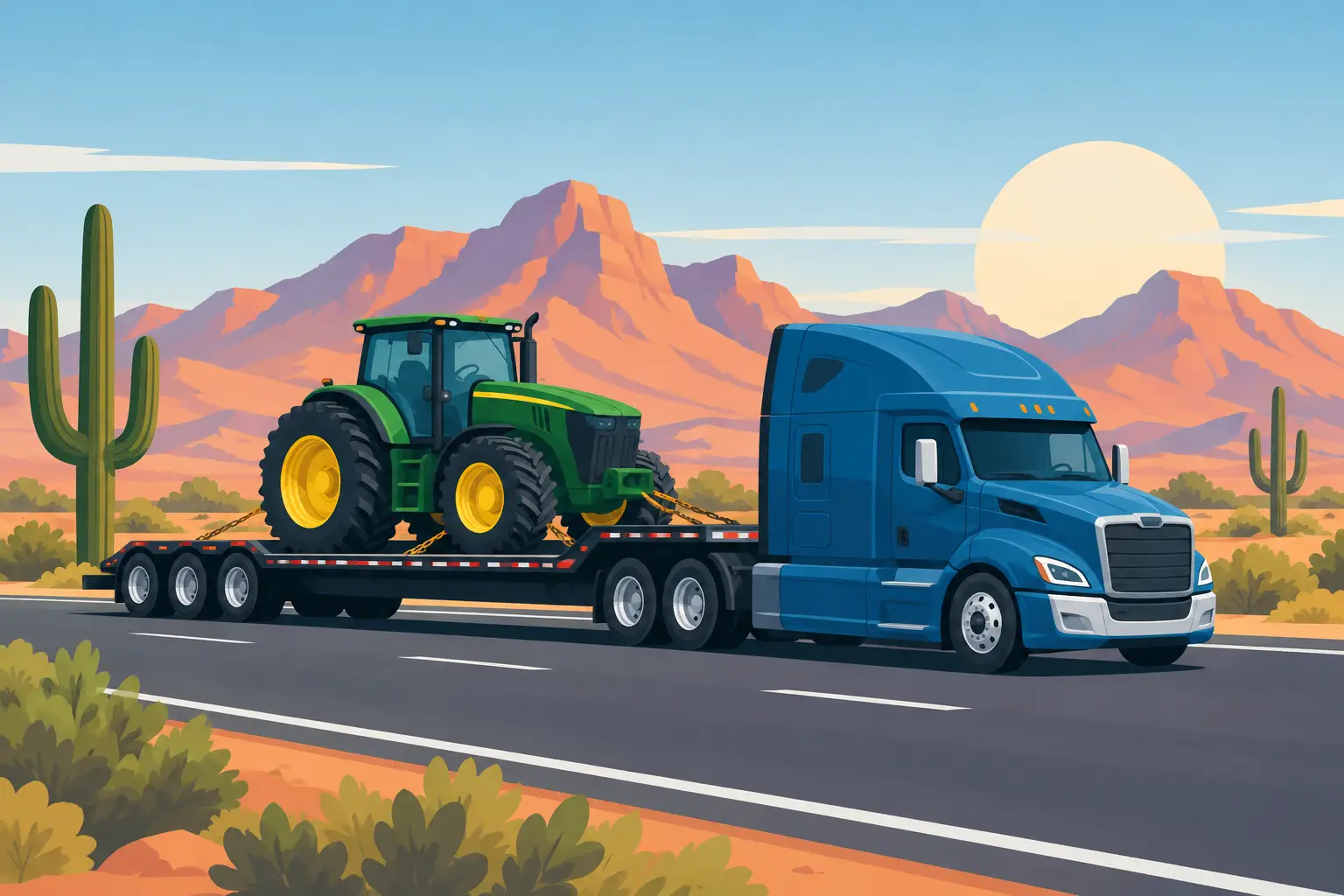
A compact tractor can look simple to move until it is sitting at the edge of a trailer ramp. Weight distribution shifts, attachments change the center of gravity, and Arizona heat can expose weak tires, worn straps, and overlooked mechanical issues fast. Reliable tractor hauling Arizona property owners, contractors, and equipment operators need starts well before the truck arrives.
Whether a tractor is headed from a Surprise property to a repair shop, moving between job sites in the West Valley, or being delivered after a purchase, the goal is the same: get it there without damage, delay, or a dangerous situation on the road. That takes the right trailer, correct securement, a qualified operator, and a route that matches the load.
What Makes Tractor Hauling Different
Tractors are not passenger vehicles with larger tires. Their weight is often concentrated toward the rear, especially on models with loaded tires, backhoes, rotary cutters, or other rear-mounted implements. A front-end loader can add bulk and change how the machine needs to sit on the deck. Even a smaller compact tractor may be too heavy for a trailer selected by appearance rather than its actual payload rating.
The first question is not simply, “Can it fit?” It is, “Can the trailer, tow vehicle, ramps, tie-down points, and route safely handle it?” A tractor that fits between the fenders may still be improperly balanced. Too much weight behind the trailer axles can create sway. Too much forward weight can overload the tow vehicle’s rear axle and make steering less stable.
Attachments also matter. A box blade, brush hog, pallet forks, or loader bucket can extend beyond the tractor itself. Those dimensions affect deck space, loading angle, trailer length, and clearance when making turns. If an attachment can be removed safely and doing so creates a more stable load, that may be the better option. It depends on the equipment, destination, and loading conditions.
Choosing the Right Trailer and Tow Setup
A professional hauling setup begins with confirmed numbers. The operator needs the tractor’s operating weight, plus the weight of every attachment, fuel, ballast, chains, and accessories traveling with it. Manufacturer dry weight is useful, but it may not reflect a tractor equipped for work.
A properly rated equipment trailer provides the deck strength, axle capacity, brakes, and tie-down locations needed for the job. A flatbed-style equipment trailer is often a practical choice because it gives the operator room to position the tractor correctly and accommodates machines that are wider than a typical utility trailer. The tow vehicle must also be rated for the total loaded trailer weight, not just the tractor alone.
Trailer brakes are especially important around Metro Phoenix traffic and on longer routes. An unexpected stop on I-10, US-60, Loop 303, or I-17 is no place to discover that a trailer is overloaded or poorly balanced. Good equipment does not replace careful driving, but it gives the driver the control needed to respond safely.
Loading Requires a Controlled Approach
Before loading, the trailer should be parked on firm, level ground whenever possible. Loose gravel, soft desert soil, uneven driveways, and sloped lots can turn a routine load into a recovery problem. The tow vehicle should be properly positioned, the trailer secured, and ramps fully set before the tractor moves.
The operator loads slowly and keeps the tractor centered. Loader arms and buckets should be kept low enough to reduce instability, while still allowing safe ramp clearance. Sudden steering corrections, quick throttle input, and attempts to load at an angle raise the risk of sliding off a ramp or striking a trailer fender.
Once on deck, the tractor should be positioned to achieve appropriate tongue weight. There is no one placement that works for every machine. A compact tractor with a loader may need a different position than a larger agricultural tractor with a rear implement. An experienced operator evaluates the entire load rather than following a one-size-fits-all rule.
Securement Is Not Just About Throwing on Chains
Tractor securement should use properly rated chains or tie-down assemblies attached to solid manufacturer-approved points. The tractor must be restrained against forward, rearward, and sideways movement. Four-point securement is a common standard for wheeled equipment because it stabilizes the machine from multiple directions.
Straps can work for certain applications when they are correctly rated and protected from sharp edges, but chains are often preferred for heavy equipment. The right choice depends on tractor weight, anchor points, trailer design, and the equipment being carried. Worn webbing, bent hooks, damaged binders, and improvised attachment points are not acceptable shortcuts.
Attachments need attention too. A loader bucket, mower deck, blade, or backhoe can move independently if it is not lowered, pinned, blocked, or otherwise secured as appropriate. The parking brake should be set, but it is not a substitute for tie-downs. The machine should remain secure even if the brake releases or a hydraulic component settles during transport.
A professional operator rechecks securement after the first few miles and during longer trips. Arizona’s heat, rough pavement, expansion joints, and vibration can loosen equipment over time. A quick inspection is far easier than dealing with a shifted load on the shoulder.
Route Planning Matters in Arizona
Arizona hauling conditions change quickly by location. A short move through Surprise, Peoria, Glendale, El Mirage, Sun City, or Waddell may involve busy intersections, construction zones, tight residential streets, and high-speed freeway access. A rural property may have narrow gates, wash crossings, soft shoulders, or limited turning space.
The fastest route is not always the best route for a loaded trailer. Low clearances, steep grades, heavy traffic periods, restricted access points, and poor road surfaces all affect the plan. The operator should know where the tractor is being picked up and where it will be unloaded, including whether there is safe room to turn around.
Desert heat adds another layer. Tire pressure, trailer bearings, cooling systems, and tie-down condition deserve extra attention during hot weather. For a scheduled move, early-day hauling can be a practical choice when it reduces heat stress and avoids the heaviest traffic. Emergency needs are different, which is why responsive dispatch and properly equipped transport capability matter.
When to Call a Professional Tractor Hauler
Some owners have the truck, trailer, and experience to move their own equipment. For a small tractor on a short route, that may be reasonable if every rating, loading condition, and securement requirement has been verified. But a professional hauler is the safer choice when the tractor is unfamiliar, oversized, disabled, heavily equipped, located on difficult terrain, or traveling across a busy regional corridor.
It is also smart to call for help when a tractor cannot drive onto the trailer under its own power. Winching a disabled machine requires controlled pulling, proper anchor points, and careful attention to cable or strap angles. Trying to force a dead tractor up ramps with another vehicle can damage equipment or injure someone in seconds.
Pride Transport & Towing provides light equipment hauling with the field awareness needed for tractors and related equipment. Clear details help dispatch send the right setup: tractor make and model, approximate weight, attachments, whether it runs, pickup and destination access, and any time restrictions at either location.
Prepare Your Tractor Before Pickup
A few steps before the hauler arrives can make the move faster and safer. Remove loose tools and personal items from the operator area, secure removable accessories, and let the dispatcher know about leaks, flat tires, steering problems, or hydraulic issues. If the equipment is stored behind a gate or on an unpaved lot, make sure access is available.
Take photos before loading if the tractor is newly purchased, being transported for repair, or includes valuable attachments. This is not about expecting a problem. It simply creates a clear record of the machine’s condition and helps everyone communicate precisely.
The right tractor haul should feel orderly from the first phone call to final unloading. Have the machine details ready, keep the pickup path clear, and choose a transporter that treats securement and route planning as part of the job, not an afterthought.