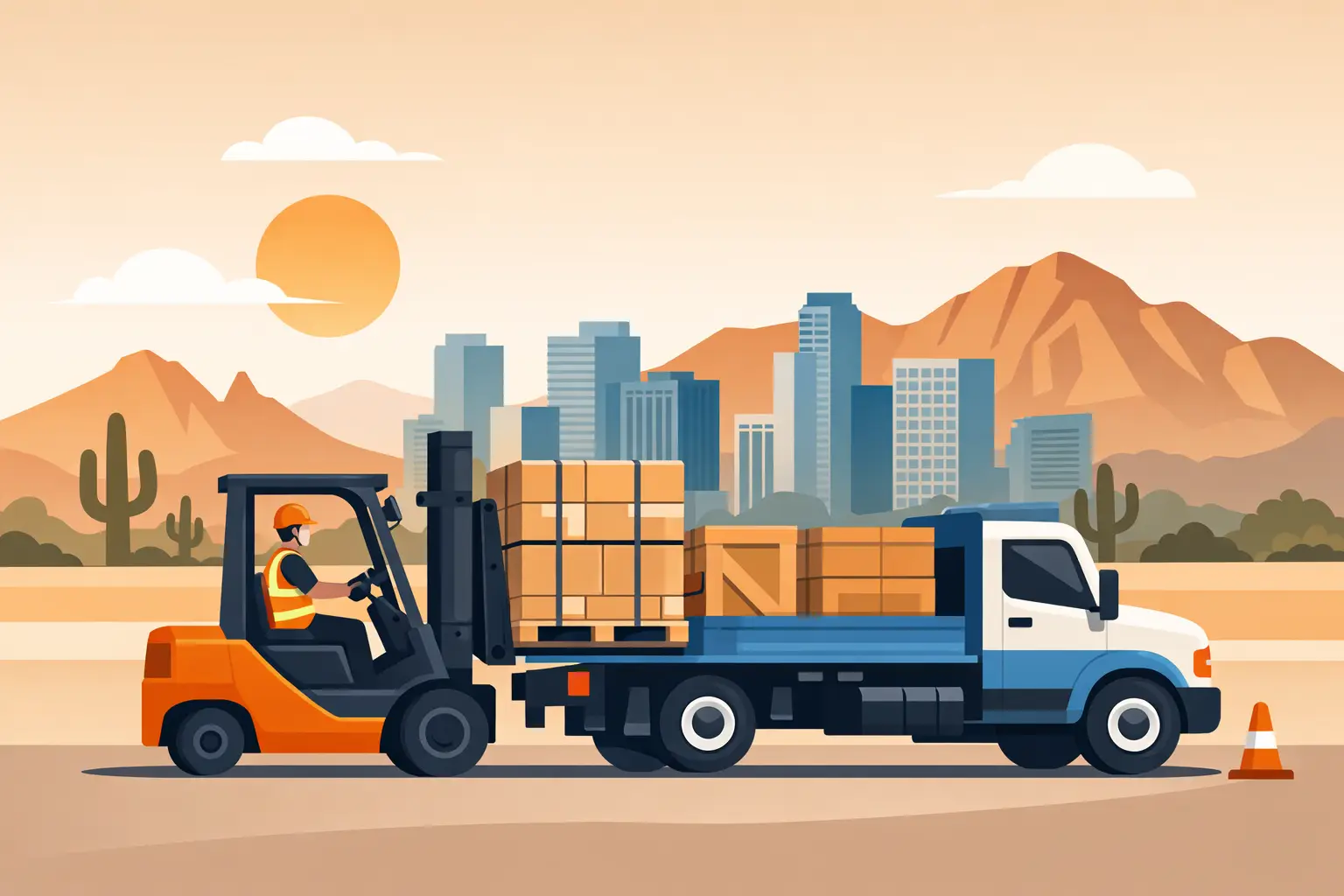
A forklift sitting disabled behind a warehouse, waiting at an auction yard, or needed at a new jobsite can bring work to a stop fast. A dependable forklift hauling service Phoenix businesses can call should do more than show up with a trailer. It should verify the machine, bring the right hauling setup, secure it correctly, and move it without creating another expensive problem.
For contractors, warehouse operators, mechanics, property managers, and small-business owners across the West Valley, forklift transport is often time-sensitive. Maybe a rental needs to go back before another billing day begins. Maybe a forklift will not start and needs repair. Maybe a newly purchased machine has to reach a site in Surprise, Peoria, Glendale, or farther across Metro Phoenix. The right plan keeps the move controlled from pickup through delivery.
What a Forklift Hauling Service Phoenix Should Handle
Forklifts are compact, but they are not simple loads. Their weight is concentrated, their center of gravity can be deceptive, and their shape changes depending on the mast, forks, carriage, battery type, and attachments. An operator needs accurate information before selecting a truck, trailer, winching method, and tie-down points.
A safe hauling job starts with the basics: the forklift make and model, approximate operating weight, overall height, whether it runs, and the pickup and delivery conditions. A small electric warehouse forklift may be straightforward to transport, while a larger pneumatic-tire or rough-terrain forklift may require a more capable trailer and more room to load. The difference matters.
The loading area matters just as much as the machine. A paved warehouse lot with open access is different from a dirt jobsite, a tight alley, a loading dock, or a location where another piece of equipment is blocking the exit. Giving the dispatcher a clear picture ahead of time helps prevent delays and helps ensure the correct equipment arrives.
Securement Is More Than Parking It on a Trailer
Proper forklift hauling is about keeping the equipment stable under braking, turns, freeway traffic, and uneven road conditions. The mast is typically lowered, the forks are positioned safely, and attachments are considered before movement begins. The forklift should be loaded with weight distribution in mind, then secured at appropriate points using rated chains, binders, straps, and wheel restraint methods suited to the equipment and carrier.
Not every transport call is identical. A running forklift can often be driven carefully onto a suitable trailer. A non-running machine may need to be winched on, which requires controlled pulling, a stable loading angle, and attention to the surface underneath. If the tires are flat, the steering is damaged, or the machine is stuck in soft ground, the recovery side of the job may need to be addressed before standard transport can begin.
This is where cutting corners can become costly. Improvised ramps, undersized trailers, and weak tie-down practices can put the forklift, nearby people, and other drivers at risk. They can also damage the mast, tires, hydraulic components, or attachment points. Hiring an experienced hauling provider is usually less expensive than correcting an avoidable loading or transport issue.
Battery, Propane, and Attachment Considerations
Fuel type and attachments should always be discussed when scheduling. Electric forklifts carry heavy batteries that affect total machine weight and balance. Propane units may have a cylinder mounted at the rear, while gas or diesel machines bring their own fuel and operational considerations. A reputable hauler will ask what type of unit is being moved rather than assuming all forklifts haul the same way.
Attachments can change the dimensions and loading requirements as well. Fork extensions, clamps, side shifters, booms, and specialty carriages may need extra clearance or additional securement. If an attachment can be removed safely before transport, doing so may reduce height, length, and the chance of contact during loading. It depends on the machine, the attachment, and where it is going.
When to Schedule Forklift Transport
Scheduled hauling works best when you know the forklift needs to move and can provide the details in advance. This is common for equipment purchases, rental returns, jobsite transfers, shop deliveries, and planned maintenance. Scheduling gives the transport provider time to confirm access, route needs, and the right carrier for the equipment.
But some forklift moves are urgent. A machine may quit during a busy shift, suffer a mechanical failure at a remote site, or need to be removed quickly after a property or lease issue. In those situations, a company with 24/7 dispatch capability can help coordinate an efficient response instead of leaving the equipment exposed or blocking operations.
Pride Transport & Towing serves the West Valley and broader Metro Phoenix transportation corridor with light equipment hauling and recovery support. That local coverage matters when a forklift needs to move between Surprise, El Mirage, Sun City, Waddell, Peoria, Glendale, or along routes such as I-10, Loop 303, US-60, and I-17.
Information That Helps Your Hauler Arrive Ready
The fastest way to get an accurate plan is to share useful details during the first call. You do not need to be an equipment expert, but photos and basic measurements can make a major difference. Have the make and model available if possible, along with the forklift’s approximate weight, mast height, whether it runs, and any visible damage or flat tires.
It also helps to explain the pickup surface, gate width, overhead clearance, and whether the machine is inside a warehouse or behind a fence. Tell the dispatcher about attachments, loose forks, propane cylinders, or any access restriction at either end of the trip. If the forklift is stranded in mud, on a slope, or near an excavation, say so right away. That may turn a normal haul into a winch-out and transport job.
For delivery, identify who will receive the equipment and where the driver can safely unload. A forklift should not be dropped in a congested traffic lane or on unstable ground just because it is the closest open space. A few minutes of delivery planning can save a crew from having to reposition the machine later.
Phoenix Heat and Road Conditions Add Real Variables
Phoenix-area hauling has its own operating conditions. Summer heat can affect people, tires, equipment, and timing. Construction zones, freeway congestion, and long distances between worksites can also change the best route or arrival window. A hauler should account for those factors instead of promising an unrealistic pickup time.
For longer moves, clearance and transport regulations may become part of the planning process, especially with taller masts or larger rough-terrain forklifts. Most standard forklift moves do not require special permits, but oversized or unusual equipment may. The right answer depends on the machine’s dimensions and the route, which is why accurate information up front is valuable.
Choose Care Over the Cheapest Shortcut
Price matters, especially when a broken forklift is already costing a business time. Still, the lowest quote is not always the best value if it does not account for machine weight, loading conditions, securement, or delivery access. Ask whether the provider can handle a non-running forklift, what equipment they plan to use, and whether they have experience hauling light equipment.
A professional transport operator will be direct about what is needed. Sometimes the move is simple. Other times, a heavier carrier, winching, extra labor, or better site access is necessary. Clear communication avoids surprises and gives you a safer, more predictable outcome.
When your forklift needs to move, get the machine details, clear the loading area, and make the call before a small equipment problem turns into lost work time. A properly planned haul puts the forklift where it needs to be and lets your crew focus on the job waiting for it.