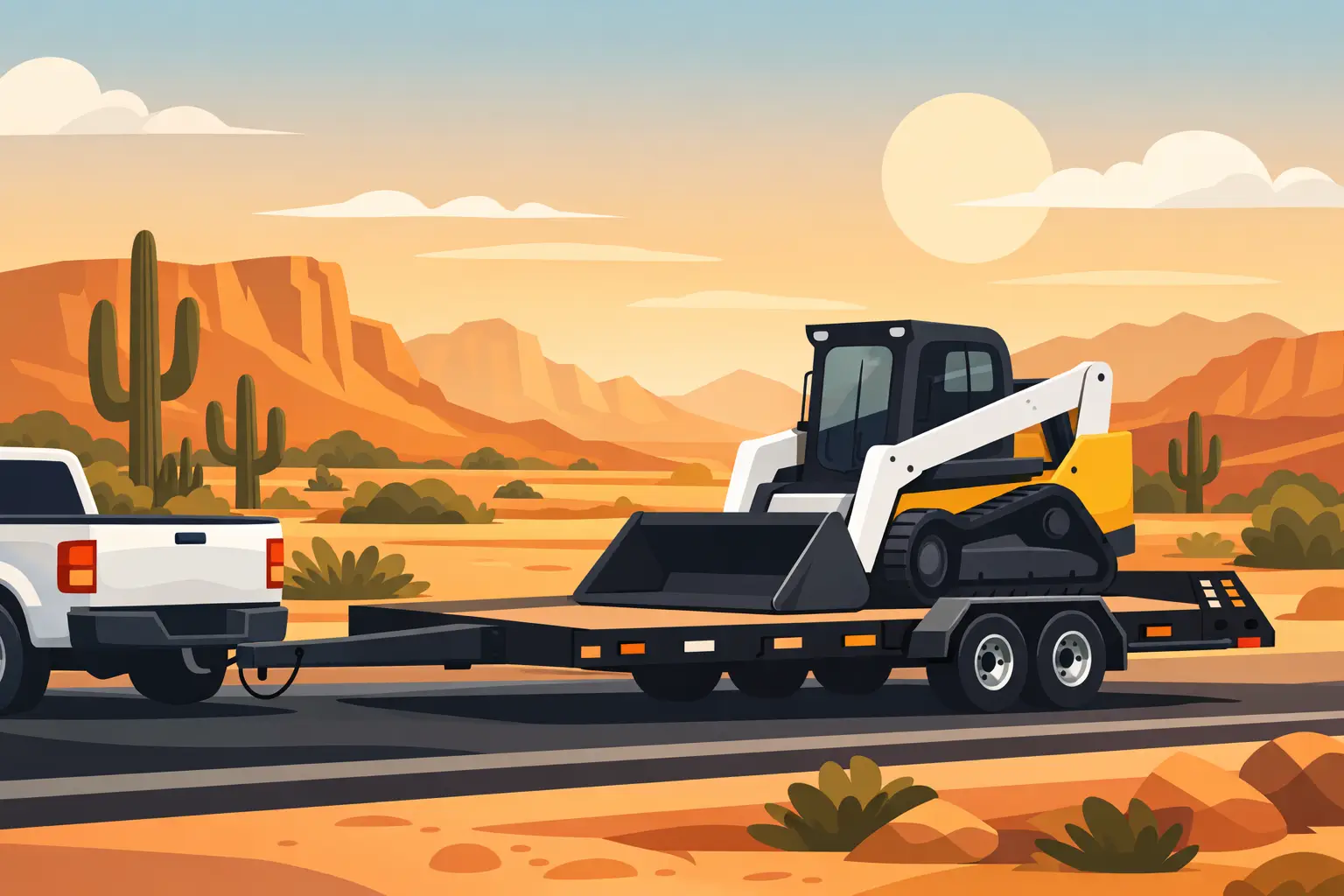
A skid steer sitting idle can hold up an entire jobsite. Whether it needs to move from a Surprise property to a West Valley build, a repair shop in Phoenix, or a new job across Arizona, the haul needs more than a trailer and a driver. Professional skid steer transport Arizona service starts with knowing the machine’s real weight, its dimensions, the pickup conditions, and the route ahead.
Skid steers are compact compared with full-size construction equipment, but they are not light equipment in the casual sense. A small machine may weigh several thousand pounds before attachments are added. A larger tracked skid steer with a bucket, forks, grapple, or enclosed cab can quickly change the transport plan. Proper hauling protects the machine, the trailer, other motorists, and the schedule your crew is working against.
Skid Steer Transport Arizona Jobs Require the Right Setup
The first question is not simply, “Can it fit on a trailer?” It is whether the tow vehicle, trailer, loading ramps, tie-down points, and securement equipment are rated for the complete load. That includes the skid steer, every attachment being carried, fuel, chains, binders, and anything else loaded with it.
A properly matched equipment trailer gives the operator enough deck length and capacity to position the machine for stable tongue weight. Loading a skid steer too far forward can overload the tow vehicle. Too far back can make the trailer unstable, especially at highway speed. Arizona freeways can move fast, and wind, lane changes, rough pavement, and traffic around I-10, Loop 303, US-60, and I-17 leave little room for an improperly balanced load.
Tracked and wheeled skid steers may need different handling at the loading point. Rubber tracks can be damaged by sharp edges or poor ramp alignment. Wheeled machines can lose traction on dusty steel ramps, especially after monsoon rain turns a dirt access road into mud. An experienced operator checks the approach, deck condition, ramp angle, and available space before attempting to load.
Attachments Change the Haul
A bucket may remain installed for transport if it can be safely lowered and secured, but attachments are not an afterthought. Forks, augers, trenchers, grapples, breakers, and brush cutters add weight, change the machine’s center of gravity, and create separate securement needs.
In some cases, hauling an attachment separately is the safer choice. It depends on trailer space, the attachment’s weight, the pickup location, and whether the machine can be secured without putting unnecessary pressure on hydraulic components. A good transport plan accounts for the complete package before the truck arrives.
What a Transport Company Needs Before Dispatch
Clear information helps avoid an under-equipped truck, a trailer that is too small, or a wasted trip to a difficult pickup site. When scheduling skid steer transport, be ready to provide the make and model if you have it, along with the machine’s approximate operating weight and whether it is wheeled or tracked.
The hauler should also know which attachments are going with the machine, whether it starts and drives under its own power, and whether there are loading problems such as a dead battery, flat tire, damaged track, hydraulic issue, or missing bucket. A non-running skid steer may require winching, a different loading angle, or additional recovery planning.
Pickup and delivery details matter just as much. A machine located behind a locked gate, inside a tight residential lot, at an active construction site, or on soft desert ground takes more planning than one parked on level pavement. Mention narrow access, overhead branches, loose gravel, steep driveways, deep washouts, parked vehicles, and any jobsite rules for entry or check-in.
Accurate information is not paperwork for its own sake. It allows the dispatcher to send equipment that can do the job safely and keeps your crew from waiting on a preventable delay.
Loading and Securement Should Never Be Rushed
Once the trailer is in position, loading is a controlled operation. The driver evaluates the ground, lines up the ramps, confirms clearance, and loads the skid steer slowly. Sudden steering corrections, excessive speed on ramps, or loading from uneven ground can create a rollover risk.
After the skid steer is positioned, the attachment is generally lowered to the trailer deck when appropriate, the machine is shut down, and the parking brake is set. The operator then secures the machine using rated chains, binders, or other approved tiedown equipment at designated securement points. The goal is to prevent forward, rearward, and side-to-side movement throughout the trip.
Soft straps are excellent for many specialty vehicles, but heavy equipment usually calls for properly rated chain securement and binders. The method must match the load. Using the wrong gear to avoid a few minutes of setup is not careful hauling.
The driver should inspect the securement after loading and recheck it during the trip. Chains can settle, loads can shift slightly, and temperature changes or road vibration can affect tension. This is especially relevant on longer Arizona runs where a haul may cross uneven jobsite roads, freeway expansion joints, and desert heat in the same day.
Transporting a Non-Running Skid Steer
A skid steer that will not start does not automatically mean it cannot be moved. It does mean the process changes. A professional hauler may use a winch to pull the machine onto the trailer, but the setup must be controlled and appropriate for the machine’s condition.
Before winching, the operator needs to confirm whether the machine can roll freely, whether the brakes are engaged, and whether damaged tracks, tires, or hydraulics create a drag or safety issue. Trying to force a disabled machine onto unsuitable ramps can damage the equipment or put people in a dangerous position. In some situations, on-site repair or additional recovery equipment may be the better first step.
Arizona Routes, Weather, and Timing Affect the Delivery
Arizona hauling is not one-size-fits-all. A skid steer moving from Sun City West to a nearby Peoria project may be a straightforward local transport. A move from the West Valley to a remote property, mountain community, or southern Arizona site requires more route planning.
Summer heat puts extra stress on tow vehicles, tires, and trailers. Monsoon season can bring sudden wind, dust, standing water, and slick roads. Rural sites may have unmaintained access roads that are fine for a skid steer but difficult for a loaded truck and trailer to enter or turn around in. A reliable operator plans for the conditions instead of assuming every address has easy access.
Timing also affects cost and convenience. Scheduled equipment transport is usually the best option when you know the machine needs to be moved before a project starts, after a rental period, or ahead of a repair appointment. Providing notice gives the hauler more flexibility to coordinate the right truck and trailer.
Urgent transport is different. A skid steer may break down at a jobsite, get stuck off-road, or need to be removed quickly after a property issue. For those situations, 24/7 dispatch and recovery experience matter. Pride Transport & Towing can assess the machine, access conditions, and urgency to determine whether a standard equipment haul, winch-out, or more involved recovery response is needed.
Prepare the Machine Before Pickup
You can make the transport safer and faster by preparing the skid steer before the truck arrives. Remove loose tools and personal items from the cab. Secure or remove detachable accessories. Make sure the operator has access to keys, gate codes, and site contacts. If the machine has a known mechanical issue, share it before dispatch rather than discovering it at the loading point.
If the pickup site is an active jobsite, clear the loading area of vehicles, pallets, material piles, and foot traffic. The truck needs enough room to align the trailer and deploy ramps on stable ground. A few minutes spent clearing the path can prevent a much longer delay.
At delivery, have a level unloading location ready whenever possible. The receiving crew should know when the machine is expected, where it needs to be placed, and whether any site restrictions apply. That keeps the driver from unloading on a public roadway or soft shoulder when a safer location is available.
Choose Care Over the Cheapest Quote
The lowest price is not always the lowest cost. A poorly secured skid steer, damaged track, bent attachment, delayed delivery, or failed loading attempt can cost far more than a properly planned haul. Ask whether the provider has suitable equipment, understands machinery securement, can handle a non-running unit if necessary, and communicates clearly about pickup timing.
Before your skid steer becomes the reason a crew is waiting, confirm the machine weight, attachments, access conditions, and destination details. A prepared call gives the transport operator what they need to move your equipment safely and get your job back on schedule.