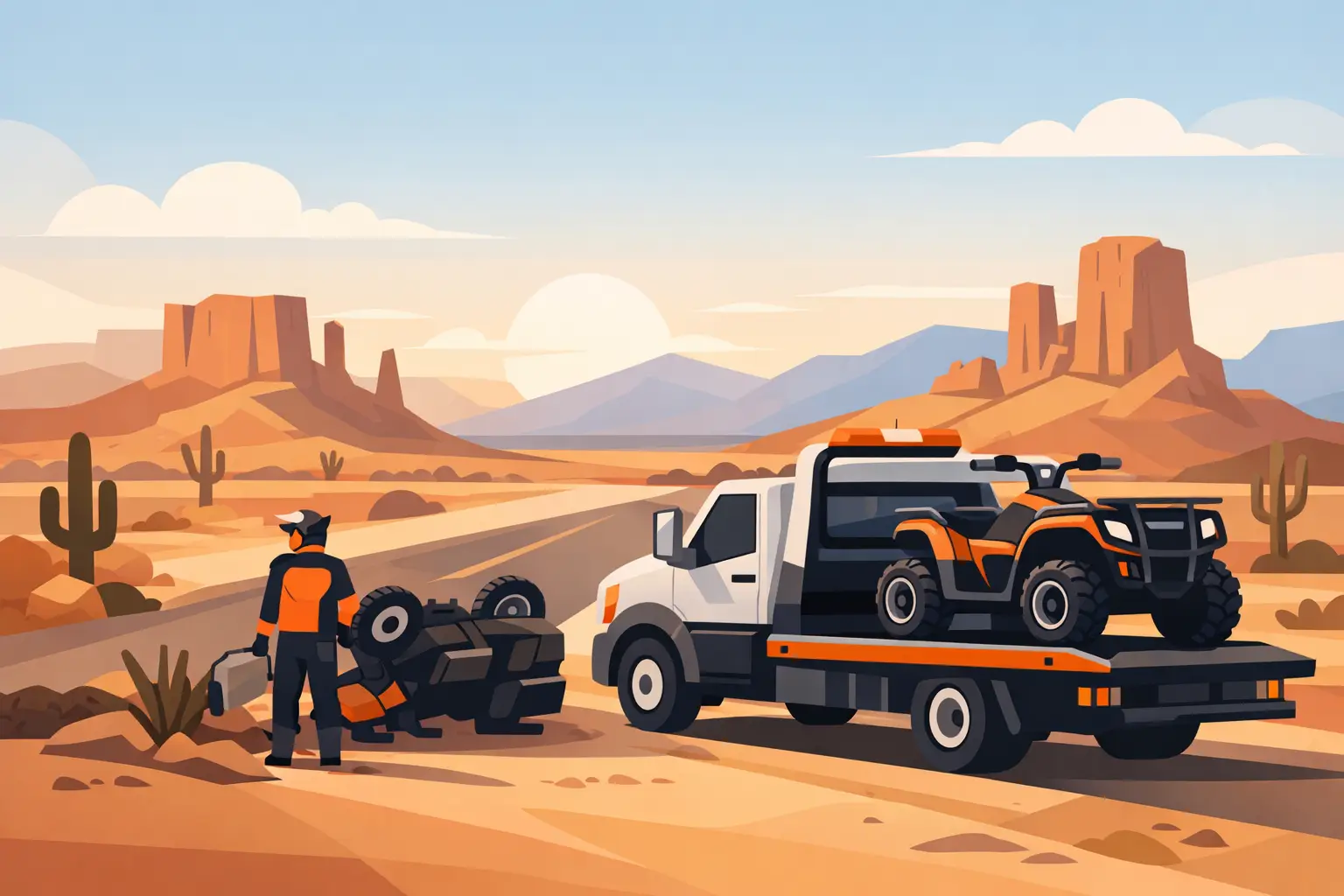
A trail day can change fast when an ATV loses a belt, blows a tire, takes on water, runs out of fuel, or gets buried in soft sand. An ATV towing service Arizona riders can depend on is not just about getting the machine moving. It is about recovering it without creating more damage, keeping riders out of danger, and getting the ATV to a repair shop, home, trailhead, or staging area safely.
Arizona terrain does not give much room for shortcuts. Loose desert sand, washouts, steep access roads, rocky trails, and summer heat can turn a minor mechanical issue into a recovery situation. The right response depends on where the ATV is, how it is positioned, and whether it can be safely loaded or needs controlled winching first.
When an ATV Needs Professional Towing
Some situations are obvious. A rollover, collision, broken axle, seized engine, or major steering damage means the ATV should not be ridden out. Continuing to operate it can worsen the damage or leave the rider stranded farther from a safe access point.
Other problems can look manageable until the terrain gets involved. An ATV with a flat tire may be easy to move on level ground, but not through deep sand or over rocks. A belt failure can leave the vehicle unable to move under its own power. If an ATV is stuck in a wash, on an embankment, or near a drop-off, pulling it with another recreational vehicle can put both machines and everyone nearby at risk.
Professional recovery is also a smart choice after a rollover, even if the ATV starts. Fluids may have shifted, suspension components can be bent, and the frame or steering may be compromised. A careful tow to a qualified repair facility is usually the safer call than trying to ride it back to the trailer.
What Safe ATV Recovery Looks Like in Arizona
ATV recovery is not the same as hooking up a passenger car on a paved shoulder. The operator needs to assess the ground, identify a stable recovery path, and choose attachment points that will not damage the ATV’s frame, suspension, steering, or body panels.
A controlled winch-out may be necessary when an ATV is stuck off-road but still accessible from a safe position. The goal is to use steady, measured force rather than a hard jerk that can break components or pull the vehicle into a worse position. In soft ground, the recovery plan may include repositioning the tow vehicle, changing the pull angle, or clearing a safer route before the ATV is moved.
Once recovered, the ATV should be loaded and secured for transport with the right equipment. Proper tie-down points and securement matter, especially for sport ATVs, side-by-sides, lifted machines, and models carrying racks, accessories, or aftermarket suspension. Careful loading prevents unnecessary movement in transit and helps protect the machine from damage on the way to its destination.
Terrain Changes the Recovery Plan
Arizona riders encounter very different conditions within a single day. Hard-packed desert roads may allow a straightforward pickup, while nearby sand, loose rock, mud after a storm, or narrow trail access can require a more technical approach.
It also depends on access. A tow truck cannot safely travel into every trail system or off-road area. When the machine is far from a maintained road, the best option may be to coordinate a recovery from the nearest safe access point. Clear details from the rider help the dispatcher send the right equipment and plan for the situation before arrival.
What to Tell an ATV Towing Service in Arizona
Accurate information saves time when you are waiting in the heat or trying to get off a trail before dark. When calling for assistance, be ready to explain the ATV type, the problem, and the closest known location. A trail name, cross streets, GPS coordinates, pin drop, landmark, or photo of the access route can all help.
Let the dispatcher know whether the ATV is on a road, at a trailhead, in sand, down an embankment, or stuck in a wash. Mention any trailer, additional off-road vehicles, passengers, or hazards nearby. If the ATV has rolled, is leaking fluids, has a damaged wheel, or cannot steer, say so directly. Those details affect how the vehicle is recovered and secured.
If your goal is transport rather than an emergency winch-out, provide the pickup and delivery locations, the ATV’s approximate size, and whether it is loaded on a trailer already. Scheduled transport can be useful when moving an ATV to a repair shop, a new property, an event, or a storage location.
What to Do While You Wait
Move people to a safe location away from traffic, unstable slopes, water crossings, and the recovery path. If the ATV is in a wash, do not remain there when storms are nearby. Flash flooding can develop quickly in desert drainage areas, even when the weather looks clear where you are standing.
Avoid wrapping a chain, tow strap, or rope around suspension arms, handlebars, racks, or other parts not designed for recovery. Do not stand near a tensioned line or between vehicles during an attempted pull. A broken strap or shifting vehicle can cause serious injuries in seconds.
If you are on a road or trail with limited visibility, use hazard lights if available and make the area visible without putting yourself in the path of other vehicles. Preserve phone battery, share your location with a trusted contact, and stay with the ATV when conditions are safe unless you have a better route to help.
Transporting ATVs Without Avoidable Damage
The lowest-priced tow is not always the best value if a machine is handled carelessly. ATVs have exposed suspension, plastic bodywork, racks, electronics, and accessories that can be damaged by poor loading or improper tie-down placement. High-value custom builds and newer side-by-sides need the same attention to securement as any specialty vehicle.
Flatbed-capable transport and proper straps allow an ATV to be carried rather than dragged. This is especially valuable for machines with drivetrain damage, locked wheels, or a bent suspension component. It also helps when an ATV cannot be safely placed on a customer trailer after a breakdown.
For riders in Surprise, Peoria, Glendale, Waddell, El Mirage, Sun City, Sun City West, and across the West Valley, response time matters. So does having an operator who understands that the job is not finished when the ATV reaches pavement. The machine should arrive where it needs to go in stable condition and without added damage from the recovery itself.
Recovery Help for the West Valley and Beyond
Pride Transport & Towing provides 24/7 dispatch for emergency towing, off-road winch-outs, ditch extractions, and transport needs throughout the Metro Phoenix corridor. Whether an ATV is disabled near a trailhead, stuck in difficult terrain with safe access, or needs careful transport to a shop, the right equipment and a deliberate recovery plan make the difference.
Before your next ride, save a reliable towing number, carry water and basic recovery gear, and make sure someone knows your route. If a breakdown does happen, stop before a small issue becomes a bigger recovery, share your location clearly, and get the machine moved the safe way.