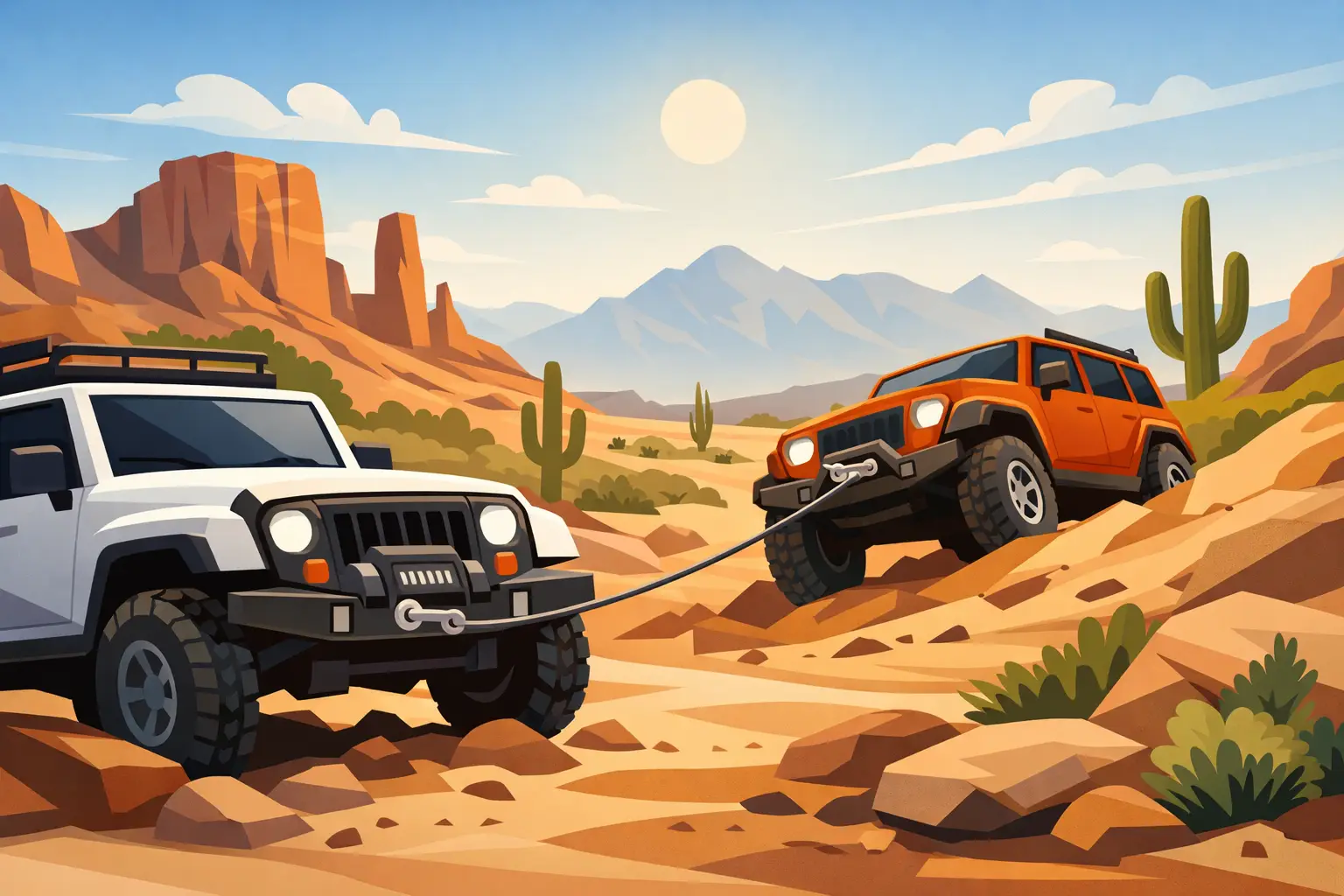
A desert trail can look firm right up to the moment your tires sink. Loose sand, a soft shoulder, a washed-out road, or deep ruts after monsoon weather can leave even a well-equipped truck unable to move. When you need an off road winch out Arizona drivers can rely on, the first priority is not getting moving fast. It is preventing the situation from becoming a rollover, an overheating problem, or unnecessary damage to your vehicle.
Across Surprise, Waddell, Peoria, the West Valley, and the open areas beyond Metro Phoenix, recovery conditions change quickly. A light two-wheel-drive vehicle may be buried in dry sand, while a four-wheel-drive pickup can be high-centered on a ridge or stuck at an angle in a ditch. Safe recovery starts with a clear assessment, the right anchor point, proper rigging, and an operator who knows when to pull, reposition, or use another method.
When to Call for an Off Road Winch Out in Arizona
Many drivers try a few basic steps before calling for help. That can be reasonable when the vehicle is on level ground, traction is only slightly reduced, and there is no risk of digging deeper. But repeated wheel spin is often what turns a minor stuck situation into a recovery that takes more time and care.
Call for professional help when your tires are buried, your vehicle is resting on its frame or skid plates, or the terrain drops away on either side. The same applies if you are near a wash, canal bank, drainage ditch, fence line, boulders, or other hazards. If the vehicle is tilted, do not attempt a hard pull with a friend’s truck. An uncontrolled tug can shift the vehicle, break a recovery point, damage the suspension, or pull a second vehicle into trouble.
A professional winch-out is also the better choice for low-clearance cars, luxury vehicles, collector cars, motorcycles, and vehicles with unknown or compromised tow points. These vehicles need deliberate handling, not improvised straps hooked to whatever metal is easiest to reach.
Stop Spinning and Assess the Ground
As soon as forward progress stops, ease off the accelerator. Spinning tires throw away the firm surface beneath them and create deeper holes. In Arizona sand, this can happen in seconds, especially with heavy pickups, work vans, trailers, and vehicles carrying gear.
Put the vehicle in park if it is safe to do so, set the parking brake, and turn on hazard lights. Look around before stepping out. Soft ground can extend farther than it appears, and desert terrain may conceal holes, sharp rocks, cactus, or unstable edges. At night, use a flashlight and stay aware of passing traffic if you are near a road or trail access point.
If you are stranded during extreme heat, move into shade if possible, conserve water, and avoid exhausting yourself digging or pushing. In monsoon conditions, never remain in or near an active wash. Flash flooding can arrive from rainfall many miles away, and a vehicle recovery is never worth taking that risk.
Why a Proper Winch Recovery Matters
Winching is controlled pulling, not simply dragging a vehicle out. The recovery operator evaluates the vehicle’s position, weight, tire depth, available traction, and direction of travel. They also locate a suitable anchor point and determine how to route the winch line without putting people or vehicle components in danger.
The safest recovery path is not always the direction you entered. Pulling straight backward may send the vehicle into a deeper rut, a rock, or a slope. In some situations, the operator may need to reposition the recovery truck, use a snatch block to change the pull angle, or clear material around the tires before beginning the pull.
Vehicle attachment matters just as much. Rated recovery points are designed to handle load. Suspension parts, bumpers, trailer hitches, and decorative tie-down points may not be. A failed attachment can become a dangerous projectile and may cause expensive damage. Experienced operators use appropriate recovery equipment and secure the vehicle at suitable points based on its design and condition.
For high-value, lowered, or specialty vehicles, careful attachment and loading are especially important. Pride Transport & Towing uses damage-conscious practices, including soft-strap handling where appropriate and flatbed-capable equipment for vehicles that need a safer path out and a protected ride afterward.
Information That Helps a Recovery Truck Reach You
Remote locations can be difficult to describe, particularly in desert areas where streets end and trails begin. A few details can help dispatch send the right equipment and reduce delays.
Be ready to provide your closest cross streets, trail name, mile marker, GPS coordinates, or a dropped location pin if your phone allows it. Explain whether you are on sand, dirt, rock, mud, a slope, or in a ditch. Let the dispatcher know your vehicle type, whether it is two-wheel drive or four-wheel drive, whether you are towing a trailer, and how deeply it is stuck.
Photos can be helpful when they can be safely taken, but do not walk into unsafe terrain to get one. Mention obstacles such as locked gates, narrow trail entrances, overhead branches, deep water, or soft approach roads. A recovery truck may need a different access route than a passenger vehicle.
Do Not Use These Shortcuts
A stuck vehicle creates pressure to try anything that sounds workable. Some common shortcuts create more risk than results.
Do not attach a tow strap to a bumper, axle component, steering linkage, or ball hitch unless the equipment and attachment point are specifically rated for that recovery. Do not stand near a tensioned winch line or tow strap. Keep passengers and bystanders well away from the recovery area, and never step over a loaded line.
Avoid aggressive rocking between drive and reverse. It can damage transmissions, CV joints, differentials, and driveline components, especially when tires suddenly catch traction. Using floor mats, branches, or random debris under the tires can also create hazards or damage the vehicle. Recovery boards and shovels have a place when used correctly on level terrain, but they are not a substitute for a controlled winch-out on a slope, in deep sand, or near water.
If your vehicle is equipped with traction control, consult the owner’s manual before changing settings. Some vehicles benefit from a specific off-road mode; others may need limited wheel-spin intervention to gain traction. It depends on the vehicle, terrain, and whether the tires are already deeply dug in.
What a Safe Recovery Looks Like
Once the operator arrives, they will inspect the scene before setting up. You may be asked to move passengers to a safe location, keep clear of the work zone, steer lightly as directed, or place the vehicle in neutral. Follow those instructions closely. A controlled recovery requires coordination, especially when the vehicle is at an angle or moving through tight terrain.
The operator may winch the vehicle only far enough to reach stable ground, then reassess before loading or towing it. That is a good sign. The goal is not to rush through the pull. The goal is to get your vehicle recovered without turning a stuck situation into underbody, drivetrain, body-panel, or tire damage.
After recovery, check for warning lights, tire damage, fluid leaks, overheating, and loose body panels. If the vehicle was pulled from deep sand or mud, inspect the wheels and brakes before continuing. If there is any doubt about safe operation, a flatbed tow is often the smarter next step.
Prepare Before Your Next Desert Drive
Arizona off-road travel rewards preparation. Carry drinking water, a charged phone, basic first-aid supplies, a flashlight, a tire-pressure gauge, and enough fuel for a detour. Let someone know where you are headed and when you expect to return. If you travel beyond maintained roads, use maps that work without cell service and avoid entering washes during unstable weather.
Recovery gear can help, but only if you understand how to use it and your vehicle has rated recovery points. A shovel, traction boards, a tire inflator, and a properly rated recovery strap are more useful than a collection of untested gadgets. Most importantly, know when conditions exceed your experience or equipment.
When sand, a ditch, or rough terrain stops your trip, stay calm, stay clear of loaded recovery equipment, and call for capable help. A careful winch-out gets your vehicle back to solid ground while protecting the people and equipment that matter most.