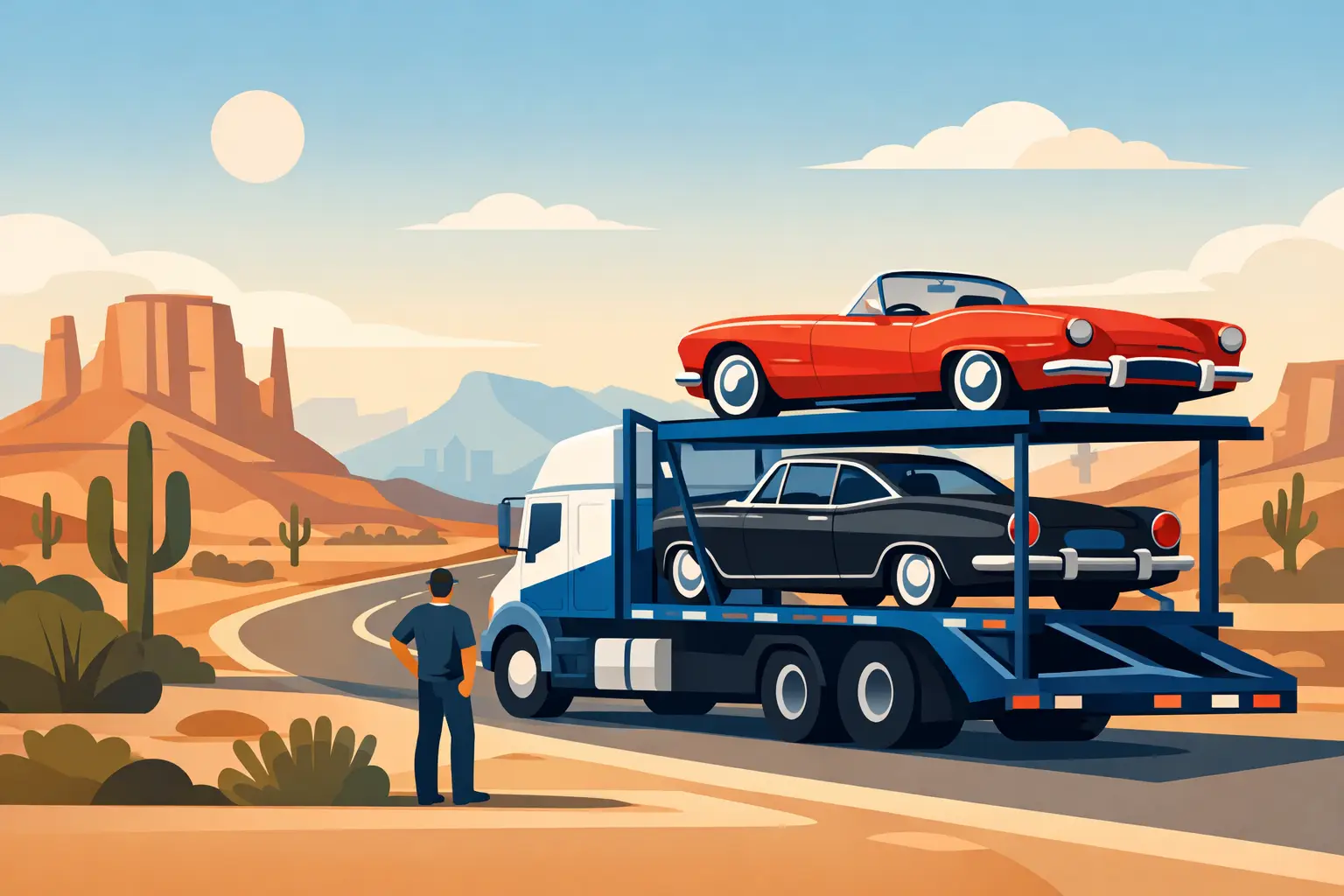
A classic car does not get treated like a routine tow. Whether it is a restored muscle car headed to a show, a collector vehicle moving to a new garage, or a project car that has been sitting for years, classic car transport Arizona owners arrange should start with one question: how will the vehicle be loaded and secured without creating new damage?
Heat, long freeway stretches, busy interchanges, low ride heights, aging tires, and limited-clearance bodywork all change the job. The right transport plan protects the paint, suspension, drivetrain, and trim from pickup through delivery. It also gives the owner a clear expectation of what will happen before the truck arrives.
Why Classic Car Transport in Arizona Needs Extra Planning
Arizona is a great place to own a collector vehicle, but local conditions can be hard on older cars. Extreme heat can expose weak cooling systems, old hoses, dry-rotted tires, and marginal batteries. A car that runs reliably around the neighborhood may not be the right candidate for a long drive across the Valley or down I-10.
Then there is the road itself. Routes around Surprise, Peoria, Glendale, Sun City, Waddell, and the wider Metro Phoenix area can involve high-speed freeway traffic, construction zones, and long distances between stops. If a classic vehicle has a carburetor issue, overheats, loses a belt, or develops a fuel-delivery problem, continuing to drive it can turn a manageable repair into a larger one.
Transport is also the better option when the vehicle is not currently registered, insured for road use, fully assembled, or safe to operate. That includes restoration projects, estate vehicles, auction purchases, and cars that have spent years parked in a garage. The goal is not simply to move the vehicle. It is to move it without asking it to do more than its current condition supports.
The Right Equipment Protects the Vehicle
For most classic cars, a flatbed is the preferred starting point. Carrying all four wheels off the ground prevents unnecessary wear and avoids the complications that can come with towing a rear-wheel-drive, front-wheel-drive, or all-wheel-drive vehicle incorrectly. It is particularly useful for vehicles with unknown mechanical condition or limited ground clearance.
Loading is where experience matters most. A low-profile Corvette, vintage Cadillac, custom hot rod, or lowered classic may need a careful approach angle to keep the front valance, exhaust, oil pan, rocker panels, or rear bumper from contacting the bed. Rushing the loading process or using the wrong angle can cause damage before the transport has even begun.
Soft straps are another important detail. A damage-conscious operator secures the vehicle by the tires when the setup allows, rather than wrapping chains around delicate suspension components, axle parts, or frame areas that may not be suitable tie-down points. Pride Transport & Towing uses soft-strap handling and flatbed-capable equipment because collector and luxury vehicles need a different standard of care than a disabled daily driver.
A winch should also be used with control, not force. If the vehicle does not run, has a seized brake, a flat tire, or cannot be shifted normally, the operator needs to assess the situation before pulling. The correct recovery approach depends on the vehicle’s condition, clearance, parking position, and access around it. Sometimes the safest answer is a slow, controlled load with additional protection and planning.
Open Flatbed or Enclosed Transport?
For a local move across the West Valley, an open flatbed is often the practical choice. It provides direct loading control, works well for short-distance transport, and gets a disabled vehicle out of an unsafe location quickly. For many owners, it offers the right balance of protection, availability, and cost.
Enclosed transport may make more sense for a long-distance move, a high-value show car, a freshly restored vehicle, or a car that needs protection from weather and road debris over hundreds of miles. The trade-off is usually scheduling flexibility and price. The best choice depends on the vehicle’s value, condition, destination, and how quickly it needs to move.
Prepare Your Classic Before Pickup
A few minutes of preparation can make transport safer and faster. Remove loose personal items from the interior and trunk, and take photos of the vehicle from several angles before pickup. This gives you a clear record of its condition and helps identify any existing cosmetic concerns.
Tell the dispatcher and operator about anything unusual before the truck arrives. Mention a non-working brake, locked steering wheel, dead battery, flat tire, fuel leak, missing wheels, custom bodywork, very low clearance, or a car that cannot be placed in neutral. Those details affect equipment selection and loading strategy.
If possible, have the keys available and ensure the pickup area has enough room for a flatbed to enter, load, and exit safely. A narrow residential street, crowded storage lot, or garage with a steep driveway is not necessarily a problem, but advance notice helps avoid delays. For scheduled moves, provide the exact pickup and delivery addresses, along with the best contact person at each location.
Do not try to inflate damaged tires, start a leaking vehicle, or force a stuck transmission just to make loading easier. An experienced operator would rather know the real condition of the car than arrive to an altered problem that creates a safety risk.
What Careful Loading Looks Like
A professional classic-car transport process begins with a walk-around. The operator checks the vehicle’s position, clearance, tires, steering, brakes, and visible condition. They also look for obstacles such as curbs, loose gravel, tight turns, overhead branches, or traffic exposure that could affect the load.
The vehicle is then lined up for the safest possible approach. Depending on its ride height and condition, that may mean using a gradual loading angle, careful winch control, and tire-based soft straps. Doors, hoods, trunks, and convertible tops should be closed and secured before travel. Once the vehicle is on the bed, the operator verifies that the securement is stable and that no straps are rubbing painted surfaces or vulnerable parts.
The job does not end when the truck pulls away. Securement should be checked during transport, especially on longer moves or after traveling over rough road surfaces. At delivery, the vehicle should be unloaded with the same patience used at pickup. A steep driveway or tight destination can require just as much care as the initial load.
Local Moves, Long-Distance Hauls, and Urgent Situations
Not every classic car move is planned weeks ahead. A vehicle can break down at a gas station, overheat on Loop 303, lose charging power near US-60, or suffer a flat tire on I-17. In those moments, a quick response still has to be a careful response. Tell dispatch that the vehicle is a classic, collector, luxury, exotic, or low-profile car so the right equipment can be assigned.
For planned transport, schedule as early as possible if the vehicle must arrive for a sale, show, mechanic appointment, restoration shop, or storage move. Early scheduling allows time to discuss access, vehicle condition, preferred timing, and the type of transport that fits the job. But when a problem happens after hours, 24/7 dispatch matters just as much as advance planning.
Questions to Ask Before You Book
Before arranging classic car transport in Arizona, ask whether the carrier can provide a flatbed and how the vehicle will be secured. Ask how they handle low-clearance vehicles, non-running cars, locked wheels, and cars with special loading concerns. A clear answer should describe the process, not just promise that the vehicle will be handled carefully.
You should also confirm the pickup and delivery details, expected timing, and any access issues at either end of the trip. If the car has a special feature or concern, such as wire wheels, a custom air dam, a weak parking brake, or a freshly painted exterior, say so plainly. Good transport starts with accurate information from the owner and a crew prepared to use it.
Your classic vehicle represents time, money, and personal history. When it needs to move, choose a transport team that treats careful loading, proper securement, and respectful handling as part of the job, not an upgrade.