A dead battery can turn a normal stop at a grocery store, jobsite, school pickup, or trailhead into a stressful delay. When you need a car jump start service in Surprise, the goal is simple: get a qualified operator to your location quickly, assess the problem safely, and give your vehicle the best chance of getting back on the road without causing damage.
Arizona heat is especially hard on batteries. A vehicle that started without hesitation last week may suddenly click once, show dim dash lights, or do nothing when you turn the key. A proper jump start can solve the immediate problem, but it should also help you understand whether the battery, charging system, cables, or another issue needs attention.
What a Car Jump Start Service in Surprise Includes
A roadside jump start is more than connecting cables and hoping for the best. A trained operator begins by confirming that the vehicle is safe to approach and that the battery is accessible. If you are on a busy roadway, in a parking lot with limited space, or on the shoulder of I-10, US-60, Loop 303, or I-17, vehicle position and traffic exposure matter just as much as the battery.
The operator will check for obvious concerns such as loose battery terminals, corrosion, damaged cables, fluid leaks, smoke, or a swollen battery case. If the battery is visibly damaged or there is a strong sulfur odor, jumping it may not be safe. In that situation, towing the vehicle for battery replacement or diagnostic service is the smarter choice.
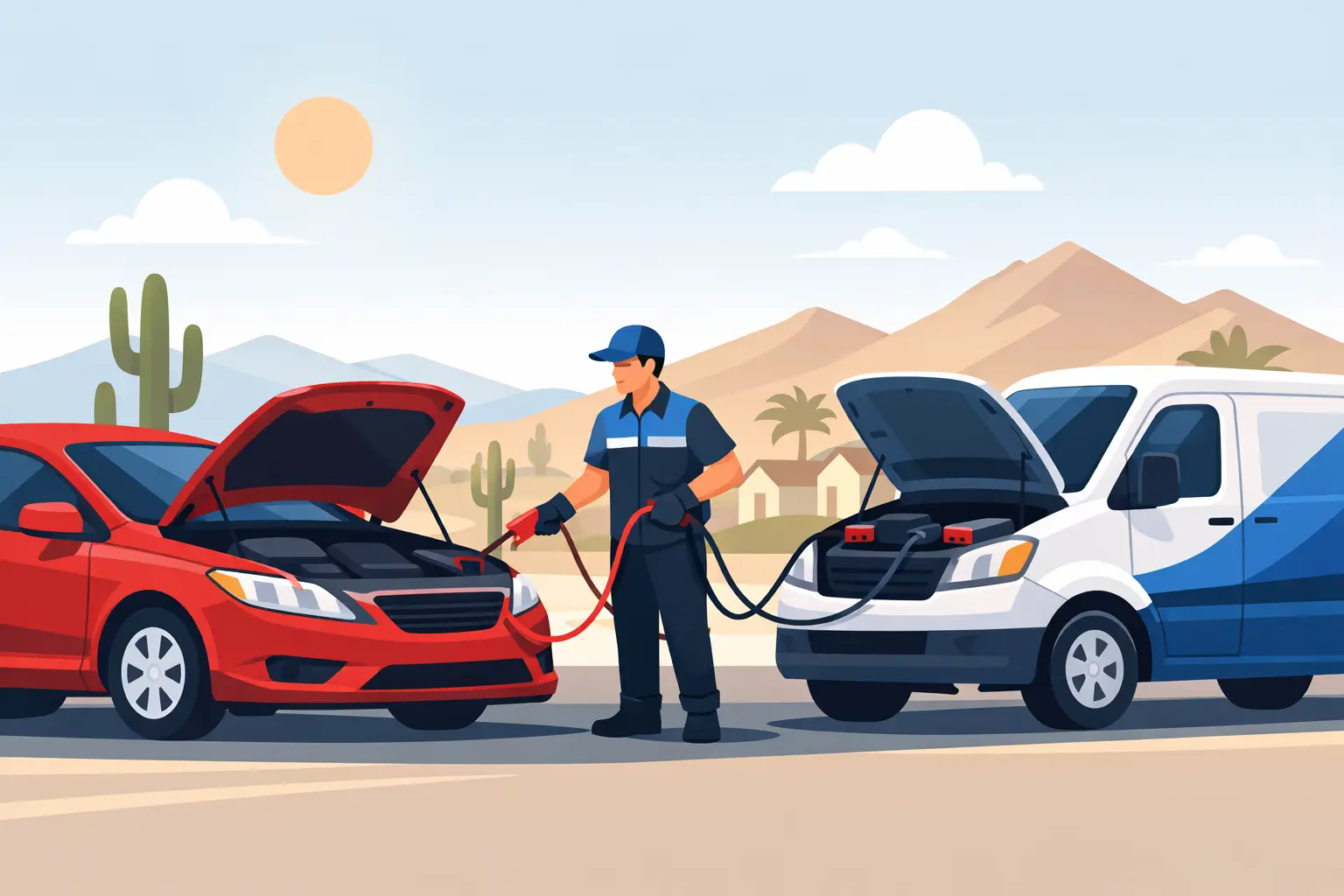
When conditions are safe, the operator uses proper jump equipment and correct connection points to deliver the needed boost. Many newer vehicles have designated remote jump terminals under the hood, while the battery may be located in the trunk, beneath a seat, or behind an access panel. Using the correct terminals helps protect sensitive electronics and avoids unnecessary damage.
Once the vehicle starts, the operator may advise you to let it run and drive it to a safe destination or a repair facility. That advice depends on the situation. A battery that was drained by an interior light may recover enough for a short trip. A battery that has reached the end of its service life can leave you stranded again as soon as the engine is shut off.
Signs You Need a Jump Start, Not a Tow
Most drivers recognize the familiar rapid clicking sound when they try to start the engine. Other signs include dim headlights, a weak or flickering instrument cluster, slow cranking, or a vehicle that will not unlock remotely. These symptoms often point to a low battery, especially after the vehicle has sat for several days.
A jump start is usually appropriate when the engine turns slowly or clicks but the vehicle otherwise appears normal. It can also help after an accessory was left on, such as a dome light, phone charger, audio system, or hatch light.
There are situations where a jump start may not solve the problem. If the engine cranks at normal speed but will not fire, the issue could involve fuel, ignition, sensors, or the anti-theft system. If the vehicle has no power at all, there may be a failed connection, blown fuse, or electrical fault. If warning lights remain on after the engine starts, or the battery warning light is illuminated, the alternator may not be charging correctly.
In those cases, repeatedly trying to start the vehicle can drain the battery further and add frustration without fixing the cause. A roadside operator can help determine whether a safe boost is worth trying or whether towing is the more efficient next step.
Why Surprise Heat Causes Battery Problems
Most drivers expect batteries to fail in winter, but the desert creates a different problem. Extreme summer temperatures accelerate internal battery wear. Heat can evaporate battery fluid, weaken internal components, and shorten the life of a battery that might otherwise have lasted longer in a milder climate.
That is why a battery can fail with little warning after a hot stretch in Surprise, Peoria, Glendale, El Mirage, Sun City, Sun City West, or Waddell. The failure may show up on the first cooler morning, after a vehicle sits during a work shift, or when an extra electrical load is added.
Age matters too. Once a battery is several years old, it becomes less dependable in high heat. If you have needed a boost recently, treat it as a warning rather than proof that the problem is resolved. Have the battery and charging system tested before the next long drive, especially before heading through the West Valley or across the Metro Phoenix corridor.
What to Do While You Wait for Roadside Help
Your first priority is location. If you can safely move the vehicle, get out of travel lanes and into a parking area, wide shoulder, or other protected space. Turn on your hazard lights. At night, keep yourself visible, but do not stand near moving traffic or attempt repairs from the roadway side of the vehicle.
When you call for help, provide the vehicle make, model, color, and your exact location. Nearby cross streets, freeway direction, mile markers, store names, or visible landmarks can help a dispatcher locate you faster. Mention whether you are in a garage, behind a locked gate, in a tight parking space, or on an unsafe shoulder, since access can affect the safest response plan.
Avoid connecting jumper cables from a stranger’s vehicle unless you are confident in the process and the setting is safe. Modern vehicles can have sensitive electrical systems, and incorrect connections can create expensive problems. Do not touch battery terminals if the battery is leaking, cracked, hot, or visibly swollen.
If you are traveling with children, pets, or a passenger with a medical need, let the dispatcher know. The operator can better plan the response when they understand the full roadside situation.
After Your Vehicle Starts: Do Not Ignore the Cause
Starting the engine is the immediate win, but the next few minutes matter. Turn off unnecessary electrical loads such as seat heaters, high-powered audio, chargers, and other accessories. If possible, drive directly to a trusted shop or parts store for a battery and charging-system check rather than stopping repeatedly on the way.
Watch for a battery warning light, dimming lights, unusual electrical behavior, or a rough-running engine. Those signs can indicate an alternator or electrical issue rather than a simple discharged battery. If the vehicle stalls shortly after the jump, do not keep requesting boosts. It likely needs professional diagnosis and may need a tow.
For a classic, luxury, exotic, or low-profile vehicle, the decision to tow should be made with care. A no-start problem does not justify rushing the loading process or using equipment that is not appropriate for the vehicle. Flatbed-capable service and damage-conscious handling protect the vehicle if a battery issue turns into a transport need.
Choosing Roadside Help When the Vehicle Will Not Start
The right roadside provider should be available when the problem happens, not only during standard business hours. Look for clear communication, an accurate location process, properly equipped operators, and a willingness to shift from a jump start to towing when the vehicle’s condition calls for it.
Pride Transport & Towing provides 24/7 roadside response for jump starts and towing throughout Surprise and the surrounding West Valley. The focus is not just on getting an engine to turn over. It is on handling the roadside scene safely, treating your vehicle with respect, and giving you a practical next step when a boost is not enough.
A dead battery is inconvenient, but it does not have to become an all-day problem. Stay in a safe location, provide clear details when you call, and let a properly equipped operator determine whether your vehicle needs a jump, a battery test, or a careful tow to the right repair destination.